
One major change across industries is the shift from complex, multi-material packaging to simpler, more sustainable designs. Mono-material packaging is gaining increasing attention from global brands. This type of packaging reduces waste and simplifies production processes. It also allows companies to maintain product quality while adopting more environmentally responsible practices.
Packaging has become more than a way to protect products. Brands now face growing pressure to reduce environmental impact while keeping performance, safety and quality high. This change has led companies to develop innovative and more responsible packaging solutions.
In this article, we will guide you through why brands are moving to mono-material packaging and how it differs from traditional flexible packaging. We will also explain material structure, performance benefits, cost trends and the main business reasons behind this shift.
Brands today face increasing pressure from consumers, governments and retailers to improve sustainability. Customers expect packaging to reduce waste and be compatible with recycling programs. Regulations are also becoming stricter, encouraging companies to use packaging that aligns with environmental goals.
Conventional flexible packaging struggles to meet these demands because it is made from different laminated films. These mixed materials make recycling difficult or impossible. As a result, brands are looking for alternatives that support sustainability without compromising product quality.
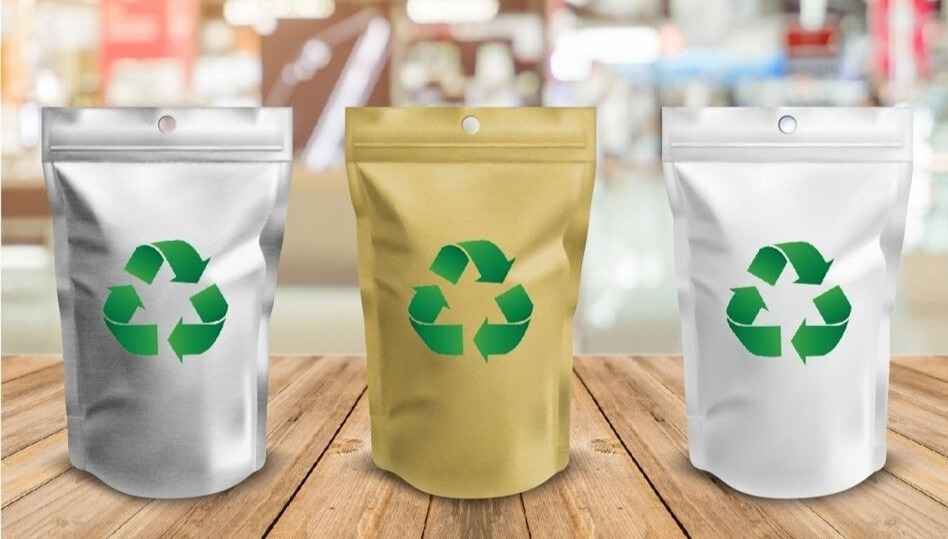
Mono-material packaging provides a practical solution. By using the same type of material for all layers, it is easier to recycle and helps brands move closer to their environmental goals.
Traditional flexible packaging uses laminated structures made from different materials such as PET and PE. This design provides strong barrier performance but creates major recycling challenges. Since the layers cannot be separated effectively, the packaging often ends up as waste.
For many years, this design was accepted because performance was the main focus. Today, environmental impact is equally important. Brands are realizing that strong performance alone is not enough if the packaging is difficult to recycle.
These challenges are a key reason why brands are moving away from conventional flexible packaging and adopting mono-material solutions that balance performance and sustainability.
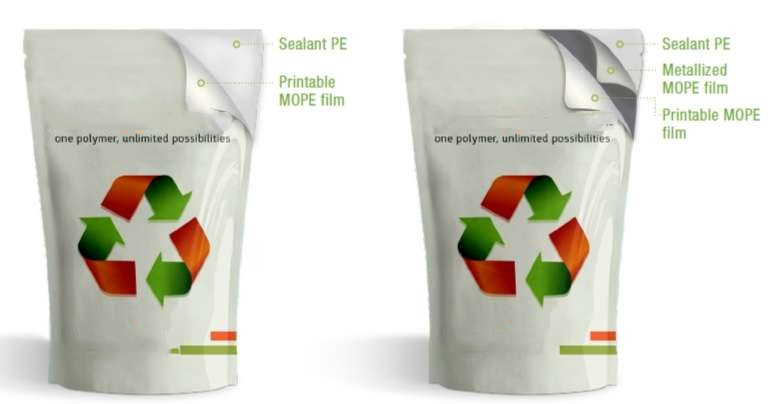
Mono-material packaging does not mean using a single thin film layer. It refers to packaging made from multiple layers of the same material. Such as PE laminated with PE is still considered mono-material packaging.
This design allows manufacturers to maintain strength, sealability and protection while keeping the packaging more recyclable. All layers behave the same way during recycling, making the process easier and more efficient.
In addition, understanding this definition is important because many brands once assumed mono-material packaging meant lower quality. Advances in technology have shown that this assumption is no longer true.
In the recyclable flexible packaging market, mono-material PE structures account for more than 90 percent of applications. PE is widely used because it is flexible, durable and compatible with existing recycling systems.
PE-based mono-material packaging can be used for a wide range of products, such as food and household goods. Its versatility makes it the top choice for brands that want to switch without major design changes. Mono-material PP structures also exist and make up about 10 percent of the market. These are used in specific applications where PP properties are better suited.
One of the main reasons brands are switching to mono-material packaging is its potential for easier recycling. Packaging made from the same material moves more smoothly through mechanical recycling systems.
Unlike mixed material packaging, mono-material structures do not need complex separation processes. This improves the likelihood of successful recycling and reduces contamination in recycling streams.
For brands, this means packaging that supports real recycling programs rather than just sustainability claims on paper.
Choosing the right packaging is crucial for both sustainability and efficiency.
The table below compares mono-material packaging with conventional flexible packaging, highlighting key differences in structure, recyclability, performance and environmental impact.
Feature | Mono-Material Packaging | Conventional Packaging |
Material Structure | Same material across layers | Mixed materials (PET/PE) |
Recyclability | Fully recyclable | Not recyclable |
Barrier Performance | High, meets 99% standards | High, traditional laminate |
Cost | Moderate, decreasing | Often lower initially |
Branding and Printing | Consistent and vibrant | Inconsistent due to varied surfaces |
Supply Chain Complexity | Simple and traceable | Complex |
Environmental Impact | Low waste, circular system | High waste |
This shows that mono-material packaging meets performance requirements while supporting sustainability and streamlining supply chains. Brands using it can lower environmental impact without sacrificing quality or efficiency.
Earlier versions of mono-material packaging had limited barrier performance, which made brands hesitant to use it, especially for products needing strong protection.
Advances in material science and film technology have changed this. Modern mono-material packaging can now meet about 99 percent of barrier requirements across industries. This improvement removes a major obstacle to adoption and allows brands to switch without compromising product safety or shelf life.
Cost was once a major concern for brands considering mono-material packaging, as it was more expensive than conventional flexible packaging.
Rising demand, better production efficiency and advances in technology have brought costs down significantly. Today, mono-material packaging is often priced close to conventional packaging in many markets.
This cost balance makes the switch practical for brands of all sizes, not just large global companies.
Sustainability has become a key part of brand identity. Consumers now link recyclable packaging with responsible and forward-thinking brands.
By adopting mono-material packaging, brands clearly communicate their environmental values. This builds trust and enhances brand perception in competitive markets.
Packaging is no longer invisible. Consumers notice, discuss and judge it, making material choice an important strategic decision.
Mono-material packaging simplifies supply chains by reducing material complexity. Using the same material across all layers improves consistency in sourcing, production and quality control.
This simplicity lowers production risks and increases efficiency over time. Brands benefit from more reliable packaging performance and fewer technical problems. Supply chain partners also favor simpler structures because they are easier to manage and scale.
Brands are responding to current demands and preparing for future regulations. Many upcoming packaging laws emphasize recyclability and material simplicity.
Mono-material packaging allows brands to stay ahead of these changes. By adopting it early, companies can reduce the risk of future redesigns and additional compliance costs.
This forward-looking approach makes mono-material packaging a strategic investment rather than a short-term trend.
Consumers are becoming more aware of environmental issues and expect packaging compatible with recycling programs. Surveys show that shoppers often favor brands using packaging that can be recycled. This shift strongly motivates brands to adopt mono-material packaging.
By offering packaging that supports recycling, brands can meet these expectations and avoid potential backlash from eco-conscious customers.
Recycling efficiency is a crucial factor in packaging design. Mixed-material laminates need complex separation, which can contaminate recycling streams. This reduces material recovery and increases processing costs.
Mono-material packaging makes recycling simpler. With all layers made from the same material, they can be processed together, lowering contamination risks and improving the yield of recycled material.
This simplicity appeals to both brands and recyclers. Companies can take part in circular economy programs more effectively, ensuring packaging supports environmental goals.
Maintaining high-quality branding is essential for consumer recognition and loyalty. Mono-material films respond consistently to printing inks, coatings and varnishes, allowing clear, vibrant and uniform graphics on all packages.
In conventional laminates, printing can be uneven because of differences in material surfaces. Mono-material solutions remove this problem, enabling premium-looking packaging without compromising sustainability.
Brands can now combine appealing design with environmental responsibility, ensuring every package reflects both quality and commitment to sustainability.
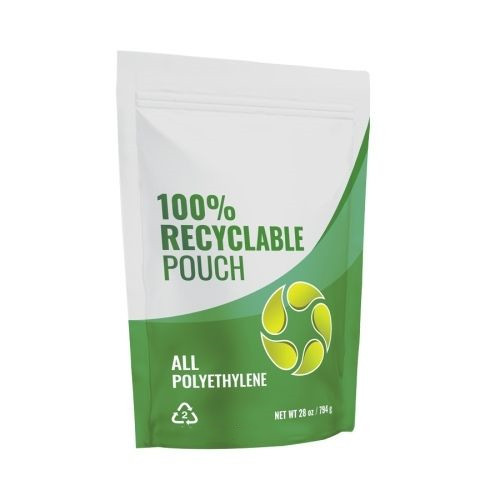
Mono-material packaging is highly versatile. It can be used for snacks, beverages, frozen foods and household items. Layer thickness, barrier properties and opacity can be adjusted without changing the core material.
This flexibility reduces the need for multiple packaging formats, simplifying production and inventory management. Brands can standardize packaging across different product lines. It also supports quick innovation, allowing changes in product design or market demands to be implemented without complicated adjustments to material types.
Tracking material origin and compliance is simpler with mono-material packaging. Since all layers use the same material, brands can trace the supply chain from production to end use more effectively.
This transparency helps in reporting sustainability performance to regulators, investors and customers. It also lowers the risk of sourcing problems or non-compliant materials entering the packaging stream. Companies gain better control over quality, ensuring every batch of packaging meets both performance and sustainability standards. This consistency reduces defects and minimizes production delays. It also strengthens trust with suppliers, retailers and consumers by delivering reliable, high-quality packaging every time.
Using fully recyclable mono-material packaging allows brands to significantly reduce waste. More of the packaging enters recycling streams instead of landfills, supporting a circular economy. It also lowers carbon emissions from producing new materials. Recycling PE or PP films uses less energy compared to making virgin films.
For brands, this delivers measurable environmental benefits, supports corporate social responsibility initiatives and builds consumer trust.
Advances in mono-material films now provide high barrier performance, similar to conventional laminates. New multilayer designs and surface treatments improve protection against oxygen, moisture and aroma loss.
Sealing technology has also improved, keeping packages durable and leak-free. These innovations allow brands to ensure product safety while not compromising recyclability.
As technology progresses, mono-material packaging continues to close any remaining performance gaps while remaining a dependable choice for a wide range of applications.
Mass adoption of mono-material packaging has improved production efficiency and lowered costs. Large-scale manufacturing reduces raw material waste and optimizes energy use.
Brands can now switch to sustainable packaging without a major price increase. Lower production costs also make eco-friendly packaging accessible to smaller brands, not just global corporations. This combination of affordability and sustainability makes mono-material packaging a strategic investment for long-term growth.
Brands today face growing pressure to balance performance, consumer expectations and environmental responsibility. Mono-material packaging provides a practical solution, allowing companies to offer recyclable, sustainable packaging without compromising product protection or quality. Its versatile applications, high barrier performance and consistent material structure make it a reliable, future-ready choice for many products.
Adopting mono-material packaging also enhances brand reputation and aligns with global sustainability trends. With production costs becoming more competitive and supply chains simplified, brands can implement eco-friendly solutions while maintaining efficiency. By embracing mono-material packaging, companies reduce their environmental impact and position themselves as leaders in innovation and responsible business practices.
LongdaPac is the leading mono-material recyclable pouches manufacturer in China. The main reason for the rapid growth of the business is more and more customers focus on sustainability. We are here to make our world more green.
Answer: Mono-material packaging is made from multiple layers of the same material, such as PE or PP. This design makes the packaging fully recyclable while maintaining strength, barrier performance and product protection.
Answer: Conventional flexible packaging is made from mixed materials, such as PET/PE laminates, which are not recyclable. Mono-material packaging uses the same material for all layers while making it fully recyclable and more environmentally friendly.
Answer: No. Modern mono-material films are designed to meet high barrier and sealing standards. They protect products from moisture, oxygen and aroma loss, providing performance comparable to traditional laminates.
Answer: Initially, it was more expensive. Technological advances, larger production scale and improved material efficiency have lowered costs, making mono-material packaging nearly the same price as conventional flexible packaging.
Answer: Yes. It is versatile and can be used for food, beverages, household products and personal care items. The material can be adjusted in thickness, opacity and barrier properties to meet the needs of different products.