
Sustainable packaging is becoming a top priority for businesses worldwide. Flexible packaging is a practical and versatile choice because it is lightweight, cost-effective, and suitable for many products. Not all flexible packaging is environmentally friendly. Conventional types often use multiple laminated films, making them non-recyclable and creating environmental challenges.
Recyclable flexible packaging offers a more sustainable alternative. Made from mono-material films, it provides environmental benefits while maintaining high performance. It is designed to meet modern barrier requirements and withstand daily handling, storage and transportation. Unlike conventional packaging, recyclable flexible solutions can be processed into new materials at the end of their life cycle while reducing waste and supporting circular economy goals.
In this blog, we will explain why recyclable flexible packaging is the better sustainable choice. We will also cover its comparison with conventional and biodegradable options, highlight its benefits, describe its material composition, discuss cost and barrier performance and show its applications in different industries.
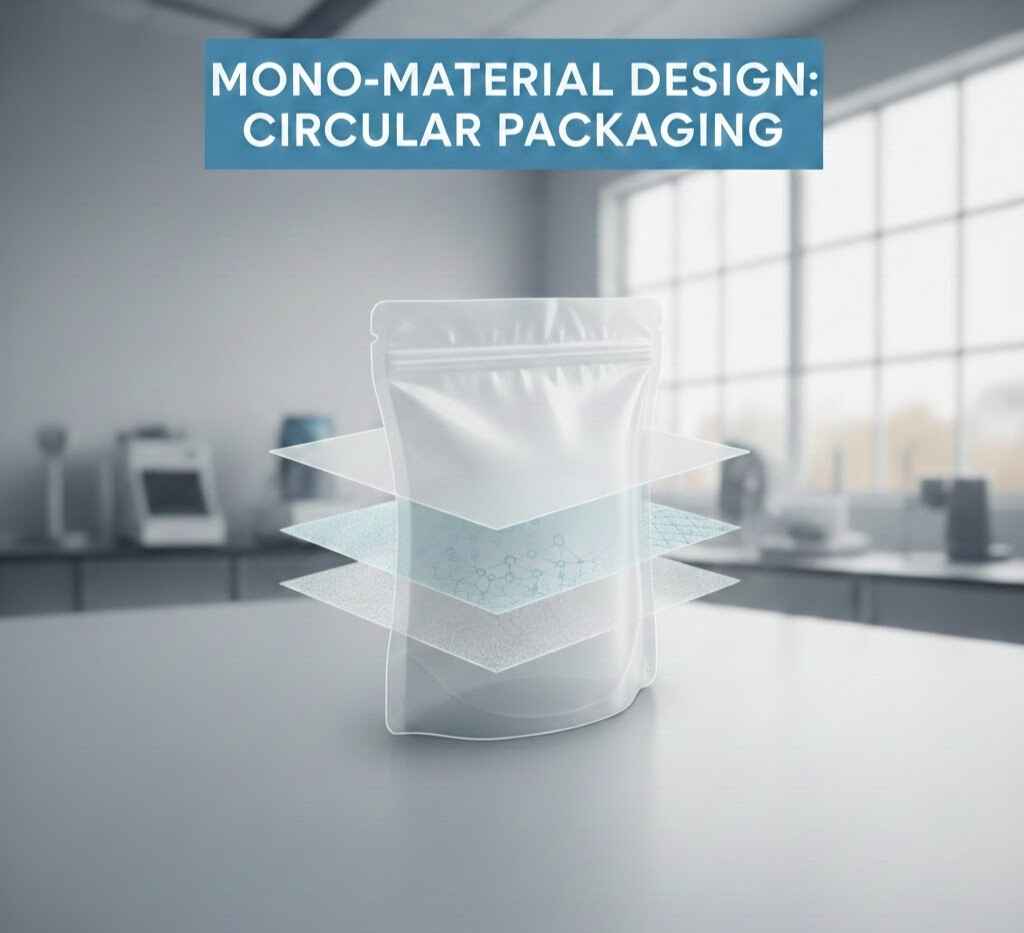
Recyclable flexible packaging is designed with sustainability in mind. The concept is simple because all layers of the packaging are made from the same type of material, commonly polyethylene (PE) or polypropylene (PP). This mono-material structure allows the packaging to be processed at recycling facilities while avoiding separation issues, unlike conventional laminates.
Even though it is made from a single material type, recyclable flexible packaging can include multiple layers. Each layer serves a specific function, such as moisture protection, strength or printability. The advantage is that all layers can be recycled together while maintaining performance and reducing environmental impact.
This type of packaging also provides durability comparable to conventional materials. It can withstand high-speed production, transportation and storage while avoiding tearing or compromising product integrity. The combination of strength and recyclability makes it an ideal choice for businesses aiming to meet both operational and sustainability goals.
Conventional flexible packaging usually uses laminated films made from different materials, such as PET/PE or PET/PP combinations. While these laminates provide excellent barrier properties and print quality, they are not recyclable because the different materials cannot be separated efficiently during recycling processes.
Recyclable flexible packaging avoids this problem by using mono-material laminates, such as PE/PE or PP/PP. All layers are made from the same base material, allowing the packaging to be fully recycled. This distinction is important in reducing landfill waste while minimizing the carbon footprint associated with packaging disposal.
The shift from conventional to recyclable flexible packaging also supports regulatory compliance. Many regions now require packaging to be recyclable or reusable. By using mono-material solutions, companies meet these standards while demonstrating a commitment to sustainability.
Most recyclable flexible packaging is made from polyethylene (PE), which accounts for over 90% of production, while polypropylene (PP) makes up around 10% for special barrier or heat-resistant needs.
Mono-material does not mean a single layer. Multiple layers are used for strength, barrier protection and print quality, but all layers are made from the same material to keep the packaging fully recyclable.
By adjusting layer thickness and structure, manufacturers can achieve high performance and durability while avoiding non-recyclable films, balancing protection with sustainability.
Historically, recyclable flexible packaging was more expensive than conventional flexible packaging. This higher cost often discouraged adoption while it still offered environmental benefits. Technological advancements and increased production scale have now significantly reduced costs.
Today, the cost difference between conventional and recyclable flexible packaging is minimal in many markets. Companies can adopt sustainable packaging while avoiding substantial financial impact. The long-term benefits, including brand reputation and compliance with environmental regulations, often outweigh the small cost difference.
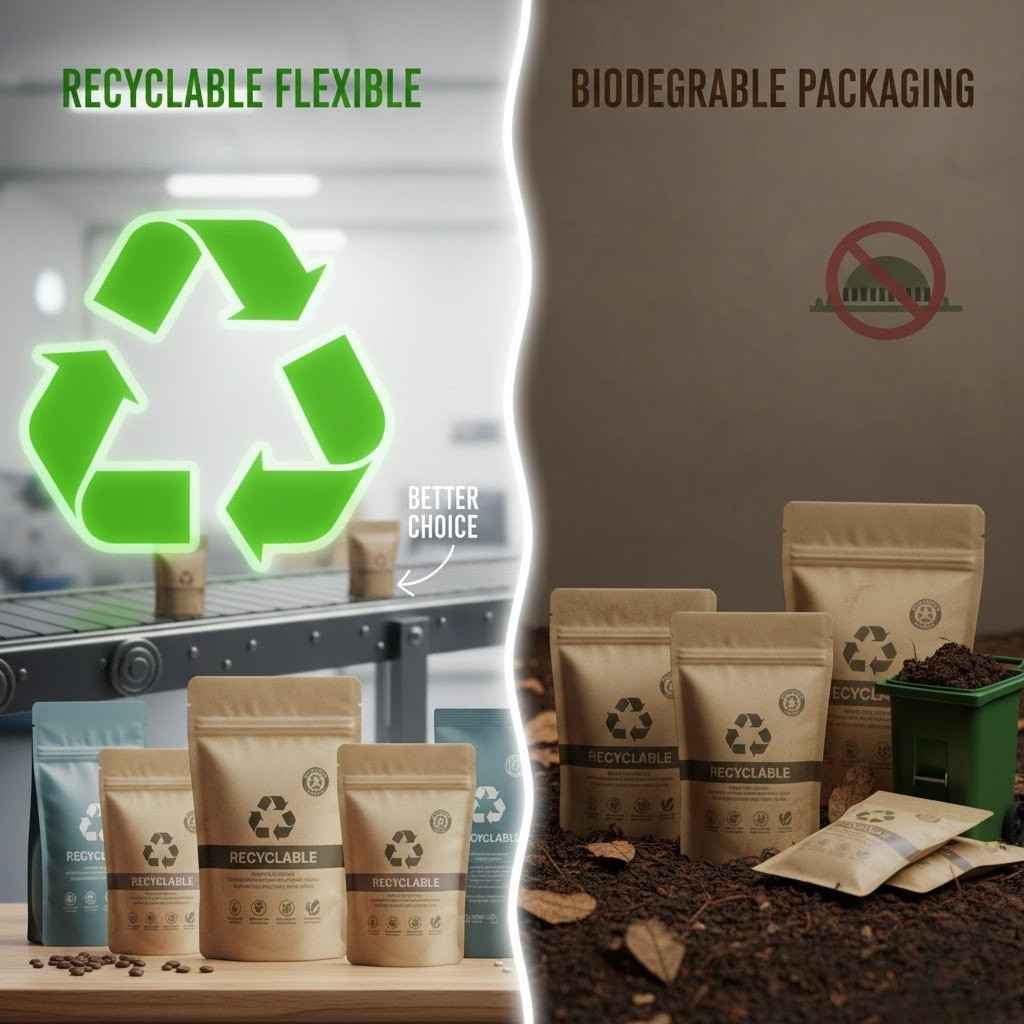
Biodegradable packaging is also considered sustainable, but it has several limitations. Biodegradable materials often come with higher costs, lower barrier performance and quality concerns. They may degrade under certain conditions, which can compromise product safety.
Recyclable flexible packaging maintains product protection while being environmentally responsible. It does not compromise quality or barrier functionality, making it a better option for both businesses and consumers.
The recyclability of mono-material films ensures that packaging can re-enter the production cycle, while biodegradable packaging typically ends up in compost or landfill, offering limited reuse potential.
Barrier functionality is essential for protecting products from moisture, oxygen, light and other environmental factors. Early recyclable flexible packaging solutions had lower barrier performance compared to conventional laminates.
Modern mono-material designs can meet up to 99% of barrier requirements for most applications. Advanced engineering ensures that recyclable films provide adequate protection for food, pharmaceuticals and consumer goods while maintaining recyclability.
This improvement removes a major drawback that previously limited the adoption of recyclable flexible packaging. Companies no longer have to choose between sustainability and product safety.
Recyclable flexible packaging is highly versatile. It can be used for a variety of products, such as snacks, beverages, personal care items and pharmaceuticals. Its ability to be printed and laminated while maintaining recyclability allows brands to keep visual appeal and marketing effectiveness.
Industries benefit from its flexibility in size, shape and barrier needs. It can be designed to withstand shipping, storage and consumer handling while remaining environmentally sustainable.
This versatility makes recyclable flexible packaging a practical solution for businesses transitioning to sustainable packaging while avoiding disruption to operations or brand image.
Recyclable flexible packaging offers significant environmental advantages. Its mono-material construction allows it to be efficiently processed at recycling facilities while reducing landfill waste and supporting a circular economy. By replacing non-recyclable laminates, it helps minimize environmental impact while promoting sustainable production practices.
The lightweight nature of flexible packaging also lowers transportation emissions because less material and reduced weight result in lower fuel consumption during distribution. Companies adopting recyclable packaging demonstrate a strong commitment to sustainability while enhancing their brand image and gaining consumer trust, and loyalty.
Mono-material design is at the heart of recyclable packaging. By using layers made entirely of the same polymer, such as PE or PP, packaging can be efficiently recycled. This approach prevents contamination issues often encountered in mixed-material laminates.
Multiple layers in a mono-material design serve different purposes. Some layers provide mechanical strength, others improve barrier functionality and certain layers enhance print quality. By keeping all layers the same material, recyclability is preserved without sacrificing performance.
This design strategy supports the circular economy, as packaging materials can re-enter the production cycle instead of ending up in landfills. Companies adopting mono-material solutions are taking tangible steps toward sustainable operations.
Many governments and regulatory bodies are implementing stricter rules regarding packaging waste. Recyclable flexible packaging allows companies to comply with these regulations while proactively reducing environmental impact.
Market demand is also a strong driver. Consumers are increasingly aware of sustainability issues and favor products packaged responsibly. Businesses adopting recyclable flexible packaging position themselves as environmentally conscious while enhancing brand reputation and market competitiveness.
This combination of regulatory compliance and market appeal makes recyclable flexible packaging a strategic choice for long-term business growth.
Investing in recyclable flexible packaging is not only environmentally responsible but also economically strategic. By reducing waste and promoting circular material use, companies can lower disposal costs while supporting sustainable supply chains.
Additionally, brands benefit from positive consumer perception. Sustainable packaging is often associated with innovation, responsibility and quality. This can lead to increased customer loyalty and stronger market positioning.
Adopting recyclable flexible packaging allows companies to align financial performance with environmental stewardship while achieving both operational and brand advantages.
Recyclable flexible packaging is evolving rapidly. New technologies improve barrier properties and allow high-quality printing while maintaining recyclability. PE layers can now block moisture and oxygen while keeping all layers recyclable.
These innovations make packaging more versatile and visually appealing, letting companies maintain strong branding while staying sustainable.
In addition, these advancements help expand recyclable packaging into new industries and product types. With better performance and design options, businesses can adopt eco-friendly packaging without compromising quality or consumer appeal.
Recyclable flexible packaging provides clear benefits compared to conventional and biodegradable options, while maintaining its position as a better choice for businesses focused on sustainability.
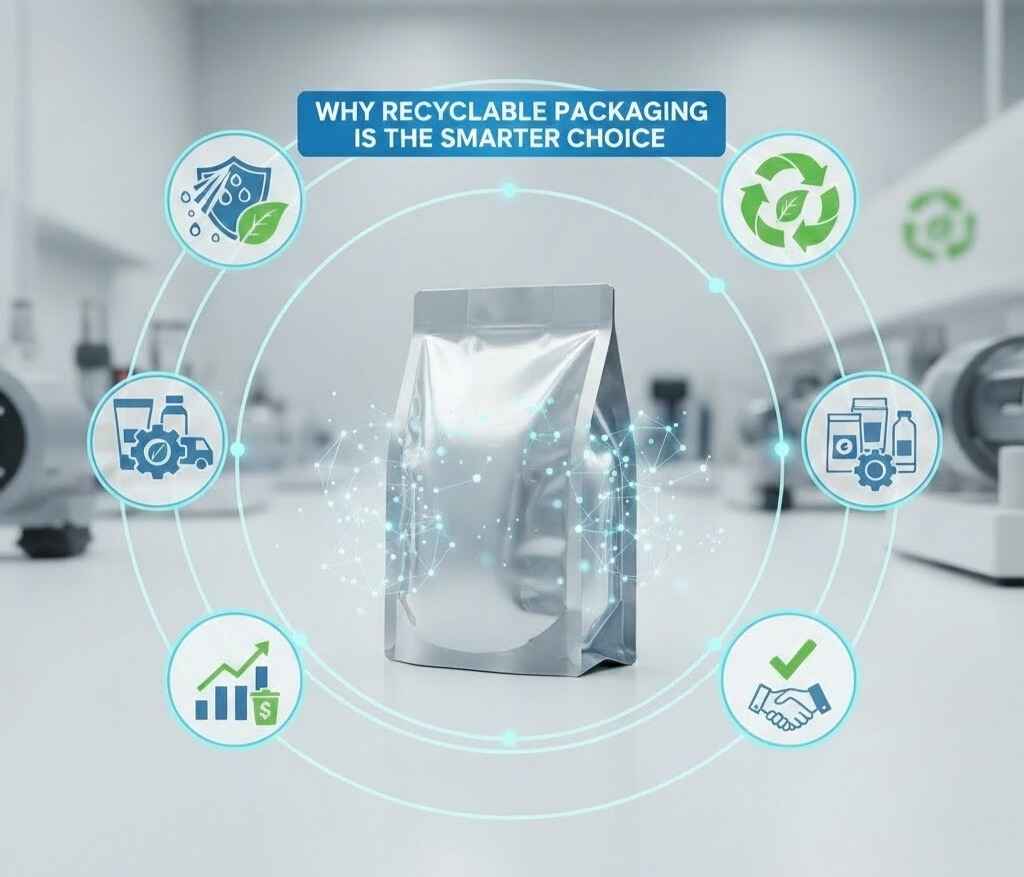
Recyclable flexible packaging combines product protection, environmental benefits, versatility, cost savings and brand value while making it a smarter choice for modern businesses.
Recyclable flexible packaging contributes to sustainability beyond its recyclability. Its lightweight construction reduces transportation energy and emissions. Less material means lower fuel consumption and decreased greenhouse gas output.
In addition, recyclable packaging reduces the volume of waste sent to landfills. By facilitating reuse and reprocessing, companies can significantly cut environmental impact over the product’s lifecycle.
Choosing recyclable flexible packaging signals a commitment to long-term sustainability goals. It aligns with corporate social responsibility initiatives and supports regulatory compliance in regions with strict packaging standards.
Sustainable packaging is increasingly influencing consumer choices. Shoppers prefer products with packaging that can be recycled or reused. Recyclable flexible packaging provides a clear environmental advantage over conventional and biodegradable options.
By communicating the recyclability of packaging, companies strengthen brand image and foster customer loyalty. Products packaged in recyclable films are perceived as modern, responsible and environmentally conscious.
This growing consumer awareness is a driving factor for businesses to invest in recyclable packaging. It combines sustainability with market competitiveness, creating value for both companies and consumers.
Recyclable flexible packaging is very versatile and is used in many industries. Products such as food, beverages, personal care items and pharmaceuticals gain advantages from its protective and sustainable qualities.
Its applications include:
These points show that recyclable packaging can meet the needs of various sectors while maintaining both performance and sustainability.
Biodegradable and recyclable packaging are both seen as sustainable, but they work in different ways. Biodegradable packaging breaks down under certain conditions, such as high heat or industrial composting and may not protect products well during storage or transport.
Recyclable flexible packaging keeps products safe, maintains barrier performance and can be reused in a closed-loop system.
For businesses, recyclable packaging is more reliable, cost-effective and easier to comply with regulations compared to biodegradable options.
The initial cost of recyclable flexible packaging used to be higher than conventional laminates. Improvements in production efficiency and technology have reduced this difference. Today, many companies can adopt recyclable packaging with minimal financial impact.
Businesses can also lower disposal costs by promoting recycling and reducing landfill waste. Over time, these savings help balance the slightly higher production costs of recyclable films.
In addition, the combination of cost efficiency, environmental benefits and brand value makes recyclable packaging a valuable investment for companies of all sizes.
The future of packaging is closely linked to sustainability. Governments and consumers are seeking more eco-friendly solutions, creating opportunities for recyclable flexible packaging.
Continuous investment in research and development will improve barrier properties, printing quality and production efficiency. Companies adopting these materials now position themselves as leaders in sustainability.
As recycling infrastructure grows worldwide, recyclable flexible packaging will become the standard. Businesses that make the transition early will gain regulatory compliance, cost savings and stronger brand loyalty.
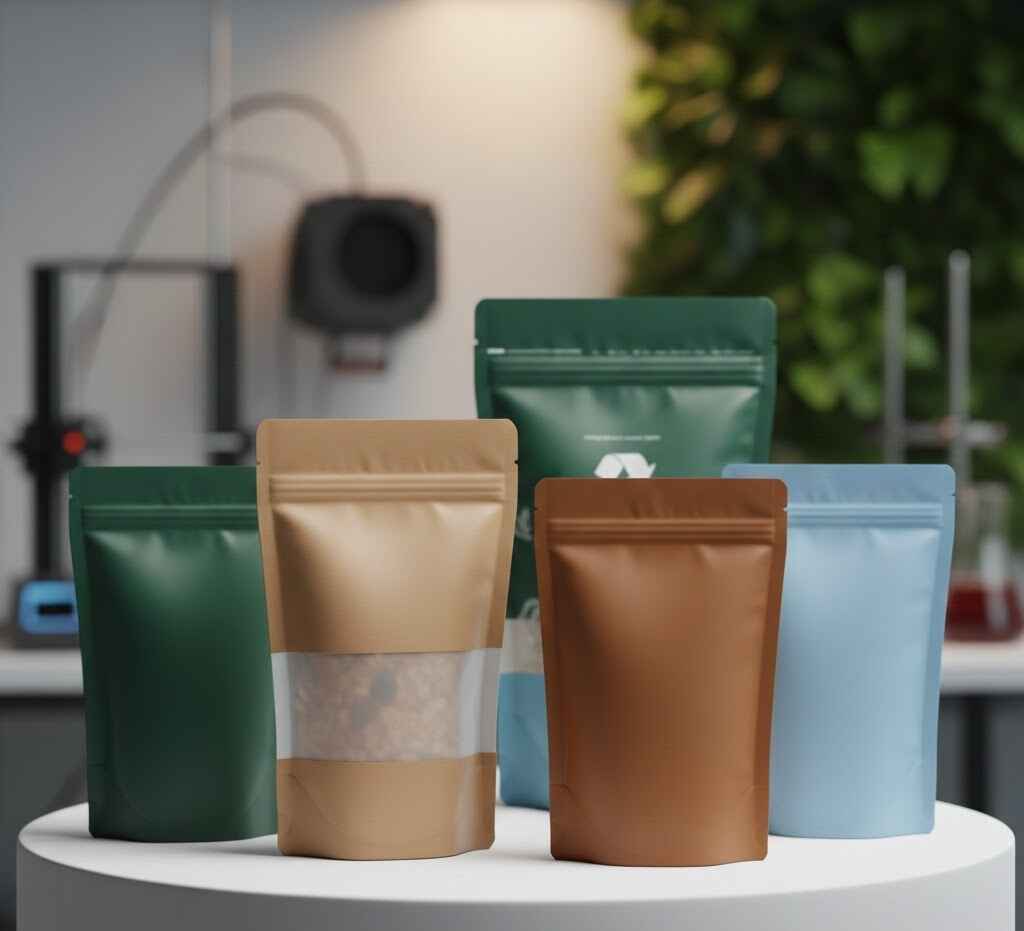
Recyclable flexible packaging has proven to be a sustainable and practical solution for modern businesses. Unlike conventional or biodegradable options, it offers strong product protection, environmental responsibility, versatility and long-term cost efficiency. Mono-material designs allow these packages to be fully recycled, reducing waste and supporting a circular economy.
Biodegradable packaging may appear eco-friendly, but it cannot be recycled and often lacks the durability and barrier performance required for many products. Choosing recyclable flexible packaging ensures quality, safety and sustainability at the same time, while making it the smarter choice for companies focused on long-term growth and environmental responsibility.
By adopting recyclable flexible packaging, businesses not only meet regulations and consumer expectations but also contribute to a greener and more responsible future.
Longdapac is the leading sustainable flexible packaging supplier from China. We used to do both recyclable and biodegradable packaging, but now we focus more on recyclable packaging cause it is more the trend for the sustainable packaging.
Answer: Recyclable flexible packaging is made from mono-material layers, typically polyethylene (PE) or polypropylene (PP), which allows the entire package to be recycled at processing facilities.
Answer: No. Biodegradable packaging is made to break down under specific conditions and cannot be recycled, unlike mono-material recyclable packaging.
Answer: Conventional packaging uses multiple laminated films that cannot be recycled. Recyclable flexible packaging is made from layers of the same material, which reduces waste while keeping products protected.
Answer: Initially, costs may be slightly higher than conventional packaging. Over time, savings on waste management, compliance and environmental benefits make it cost-effective.
Answer: Industries such as food, beverages, personal care and pharmaceuticals benefit greatly, as this packaging provides strong barriers, preserves product quality and supports sustainability goals.