
In recent years, both businesses and consumers have become more aware of the environmental impact of packaging. As sustainability gains importance, companies are seeking solutions that reduce waste, lower environmental impact and maintain product quality, while making recyclable flexible packaging a practical choice because it provides durability, cost efficiency, and environmental responsibility for many industries and uses.
Recyclable flexible packaging involves more than simply selecting a material that can be recycled. Companies need to carefully consider barrier performance, material choice, design features, cost efficiency and overall sustainability. These factors ensure that packaging protects products, supports recycling processes, aligns with corporate sustainability goals and meets consumer expectations for environmentally responsible solutions.
In this article, we will explain the key factors for selecting effective recyclable flexible packaging. We will also cover material selection, cost, barrier performance, design, sustainability, regulatory compliance, consumer perception and supply chain considerations.
Recyclable flexible packaging is typically made from mono-material films, where all layers use the same type of polymer. This consistency allows the material to be easily processed in recycling systems. Traditional multi-layered laminates, such as PET/PE, cannot be recycled because separating the different materials is not practical.
The most commonly used materials include:
Mono-material films may have multiple layers of the same polymer to enhance sealing strength, mechanical durability and barrier performance while remaining fully compatible with recycling processes.
Recyclable flexible packaging once cost more than conventional multi-layer films due to technical requirements and limited availability of mono-material films.
Recent developments have significantly lowered costs, bringing prices closer to traditional packaging. Companies should consider both the initial investment and long-term savings, including reduced waste management expenses and enhanced brand image.
Choosing recyclable packaging carefully enables businesses to meet sustainability goals without sacrificing financial efficiency. A detailed cost analysis ensures the solution is both environmentally responsible and economically practical.
Barrier performance protects products from external factors such as moisture, oxygen and light. Mono-material films initially had lower barrier properties than multi-layered packaging, which limited their applications.
Recent innovations have enhanced barrier performance, allowing some recyclable films to meet up to 99% of the standards previously achieved with multi-layer laminates. Companies need to evaluate product sensitivity and ensure packaging offers sufficient protection to maintain quality and shelf life, ensuring consumer satisfaction.
Recyclable flexible packaging is gaining popularity as businesses and consumers seek environmentally responsible solutions. Its design meets functional requirements while addressing concerns about waste and resource conservation.
This type of packaging offers clear sustainability benefits:
Although biodegradable packaging is another eco-friendly option, it often comes with higher costs, lower quality and weaker barrier performance. Recyclable mono-material packaging remains a practical and long-term choice for businesses.
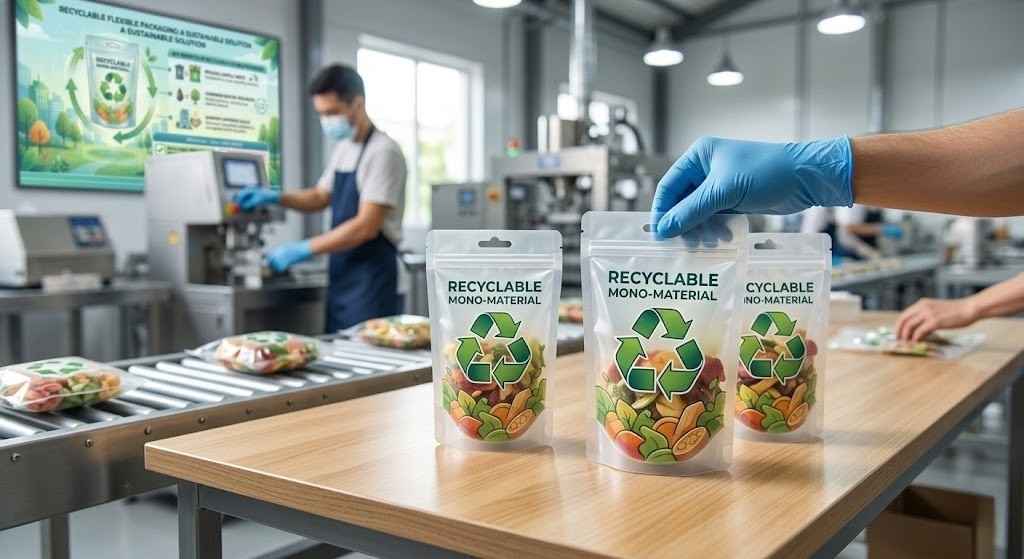
Selecting the right polymer is essential for both product protection and recyclability. The most commonly used materials are PE and PP.
Material selection should take into account the product type, manufacturing process and local recycling infrastructure. Using the wrong material can compromise both product safety and the recyclability of the packaging.
Packaging design impacts both product performance and recyclability. Effective design focuses on:
A thoughtfully designed package combines visual appeal, user convenience and environmental responsibility, ensuring efficiency for manufacturers and consumers.
Meeting environmental regulations is crucial for packaging selection.
Compliance requirements may include:
Recyclable flexible packaging generally conforms to global sustainability standards, reducing compliance risks and ensuring smooth operations across regions.
Before choosing a packaging option, it is important to compare factors such as cost, barrier performance, durability and consumer perception. The table below illustrates the differences between conventional multi-layer packaging and recyclable flexible packaging.
Key Factor | Conventional Multi-layer Packaging | Recyclable Flexible Packaging | Details |
Material Cost | Low to Medium | Medium to High | Costs are decreasing with new technologies |
Barrier Performance | High | Moderate to High | Modern mono-material films meet up to 99% of barrier requirements |
Recyclability | No | Yes | PE/PE and PP/PP films |
Durability | High | High | Multiple mono-material layers enhance strength |
Consumer Perception | Neutral | Positive | Eco-conscious consumers prefer recyclable packaging |
This comparison shows that recyclable flexible packaging provides a balance between performance and sustainability. Although it may involve slightly higher costs, it delivers sufficient barrier performance, durability and improved consumer perception, making it a practical choice for businesses that prioritize both functionality and environmental responsibility.
Consumer perception is increasingly shaped by sustainable packaging choices. Recyclable flexible packaging strengthens brand image and customer loyalty.
Key points include:
Companies that communicate recyclability effectively enjoy positive consumer engagement and enhanced brand credibility.
Packaging must integrate seamlessly into the supply chain.
Important factors include:
A well-coordinated supply chain ensures that packaging can be efficiently produced, processed, and recycled, supporting both sustainability and operational efficiency.
The packaging industry is constantly evolving to meet sustainability goals and consumer expectations. New mono-material films are being developed with improved mechanical properties and better barrier performance. Companies are also exploring bio-based PE and PP alternatives, which reduce dependence on fossil fuels while maintaining strength and durability.
These innovations allow flexible packaging to compete with conventional materials while reducing environmental impact. Businesses that adopt these materials can enhance brand reputation and contribute to global sustainability targets.
Advanced material development also emphasizes heat resistance, flexibility and chemical stability, ensuring products remain protected during storage and transport.
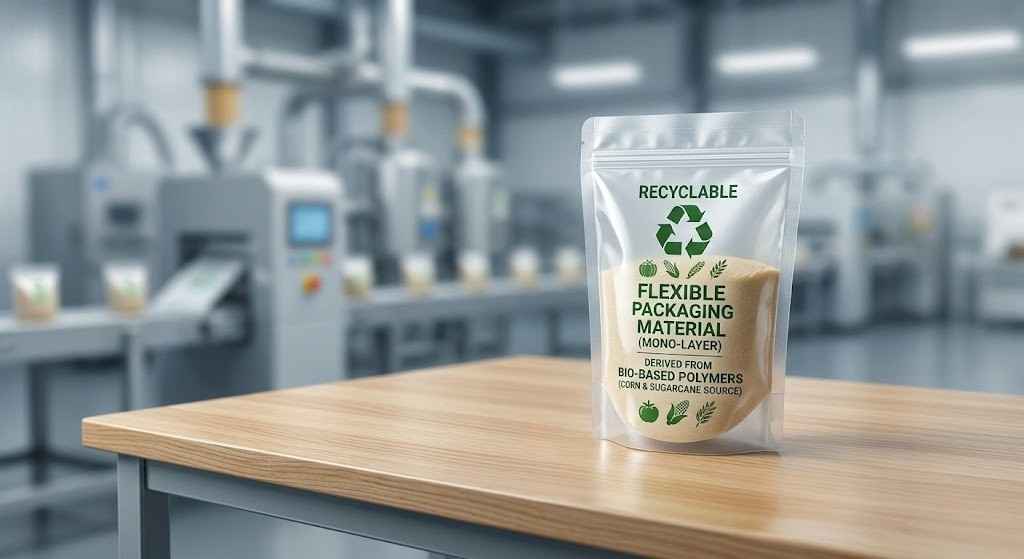
Modern flexible packaging often uses functional additives to enhance performance. These additives improve barrier properties, limit oxygen and moisture penetration and increase the durability of packaging films.
Common types include:
Coatings can also be applied to enhance print quality and surface appearance without affecting the integrity of mono-material packaging. Choosing the right combination of additives ensures the packaging meets both functional and visual requirements.
Sealing quality is a critical aspect of packaging efficiency. Weak seals can cause leaks, shorten shelf life and compromise product safety.
Recyclable flexible packaging, which uses mono-material films, requires precise sealing methods. Common techniques include heat sealing, ultrasonic sealing and induction sealing. Each method must be carefully optimized to ensure strong seals without slowing production.
Investing in proper sealing equipment enhances operational efficiency, reduces product waste and ensures packaging performs reliably throughout the supply chain.
Different products have unique packaging requirements. Factors such as moisture sensitivity, gas sensitivity, and temperature tolerance influence material choice and design.
Powders and dry goods need strong moisture barriers, while liquids require durable seals and puncture resistance. Flexible packaging should be tailored to each product to maintain quality during storage, transport and consumer use.
Assessing compatibility helps prevent spoilage, product damage and returns, ensuring customer satisfaction and strengthening brand trust.
Extending shelf life is a key goal of packaging. Flexible films can be designed with controlled barrier properties to limit oxidation, moisture penetration, and light exposure.
Packaging layers can also include modified atmospheres or oxygen scavengers to further extend product freshness. This helps perishable goods stay fresh longer and reduces food waste in both retail and consumer settings.
Optimizing shelf life improves product appeal and minimizes losses throughout the supply chain.
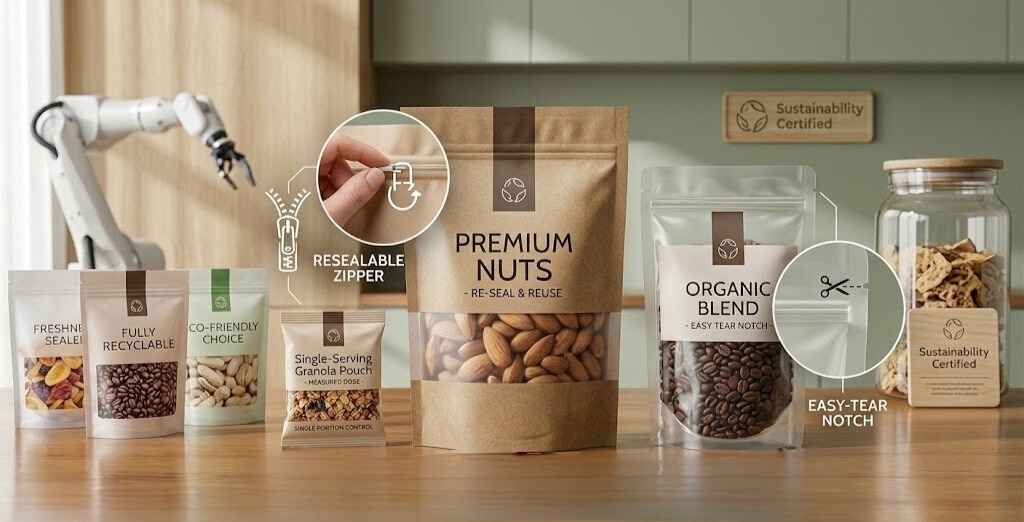
Modern packaging increasingly includes user-friendly features that enhance convenience:
These features improve the overall user experience, help reduce product waste and encourage repeat purchases. Packaging that combines convenience with sustainability strengthens brand appeal.
Packaging must endure the challenges of transportation, including compression, vibration and temperature changes. Flexible mono-material films are lightweight, helping reduce shipping costs, and can be designed to provide stacking strength and puncture resistance.
Well-engineered packaging minimizes damage during transit and supports efficient palletization and storage. By addressing logistics requirements during the design stage, businesses can reduce waste and ensure products reach their destination in optimal condition.
Visual appeal is vital for engaging consumers. Flexible packaging supports high-quality printing, including digital and gravure techniques, allowing vibrant colors and clear brand messaging.
Mono-material films can handle multiple printing processes without affecting functionality. Creative packaging designs help products stand out on shelves while remaining environmentally responsible.
Strong branding enhances consumer recognition, builds loyalty, and communicates both quality and sustainability values.
Compliance with packaging and labeling regulations is essential. Flexible packaging must provide accurate product information, expiration dates and safety warnings.
For international markets, labels should also meet regional requirements, such as FDA guidelines, EU food contact regulations, or local environmental labeling standards. Ensuring compliance helps avoid penalties, recalls, or shipment delays.
Clear labeling also informs consumers about proper product use and disposal, strengthening brand trust.
Recyclable flexible packaging is designed for recovery and certifications or third-party verification can strengthen credibility. Recognized eco-certifications provide assurance to consumers and business partners.
These certifications confirm sustainability claims, improve market acceptance and support corporate responsibility reporting. Businesses should consider third-party verification during packaging development to demonstrate transparency and commitment.
Flexible packaging helps reduce waste through lightweight design and efficient material use. By minimizing film thickness while maintaining strength and barrier performance, companies can lower material consumption without compromising product protection.
Design strategies such as optimizing bag shapes, reducing overpackaging and standardizing formats further enhance sustainability. Effective waste reduction not only lowers costs but also reinforces a company’s commitment to environmental responsibility.
The future of flexible packaging includes advanced mono-material films, smart packaging features and bio-based additives. Innovations aim to improve barrier performance, reduce weight and enhance consumer convenience while maintaining environmental responsibility.
Smart packaging technologies, such as QR codes for traceability or freshness indicators, can be integrated to boost consumer engagement and supply chain visibility. Companies that adopt these innovations position themselves as leaders in sustainable and functional packaging solutions.
Recyclable flexible packaging offers a practical and sustainable solution for modern businesses. By selecting mono-material films with optimized design, barrier performance and functionality, companies can protect products effectively while supporting environmental responsibility. Using such packaging also enhances brand image, ensures regulatory compliance and meets the growing demand for sustainable practices.
As the industry evolves, businesses that adopt recyclable flexible packaging enjoy long-term benefits, including reduced material waste, lower transportation costs and higher consumer satisfaction. Thoughtful consideration of material choice, design, supply chain requirements and performance ensures packaging that balances durability, cost-efficiency, and sustainability.
Longdapac is the leading 100% recyclable mono-material flexible packaging supplier. The high barrier and sustainability are the keep factors in selecting the correct recyclable packaging.
Answer: Recyclable flexible packaging is made from mono-material films, such as PE/PE or PP/PP, where all layers consist of the same polymer. This consistency allows the packaging to enter standard recycling streams without the need for separation.
Answer: While initially more expensive, advances in manufacturing have lowered costs, making recyclable flexible packaging comparable to conventional multi-layer films. Businesses can achieve long-term savings through reduced material waste, lower transportation expenses and enhanced brand value.
Answer: Yes, modern mono-material films can meet up to 99% of barrier requirements, protecting products from moisture, oxygen and light. Advanced film technologies provide quality and shelf life comparable to conventional laminated packaging.
Answer: Features such as resealable zippers, easy-tear notches and portion-controlled formats improve consumer convenience. Strong sealing, durable layer structures, and functional additives help maintain product integrity during storage and transport.
Answer: Recyclable flexible packaging helps companies achieve corporate sustainability goals by reducing landfill waste, conserving resources and supporting recycling systems. It also enhances brand image among eco-conscious consumers and ensures alignment with environmental regulations.