
Choosing the right packaging is essential for protecting, storing and presenting a product effectively. A carefully chosen packaging solution helps preserve product quality and ensures efficient handling during transportation and storage. Today, businesses are focusing on packaging that delivers strong performance while meeting current environmental standards.
Recyclable flexible packaging is becoming a popular choice for businesses aiming to enhance sustainability without compromising performance. Many industries are moving away from conventional packaging that uses mixed materials. This change is driven by the demand for solutions that are easier to recycle and better aligned with long-term environmental goals.
In this blog, we will explain how to choose the right recyclable flexible packaging for your product. We will also cover key factors, material types, performance features, and practical considerations to help you make a confident and informed decision.
Recyclable flexible packaging is designed to reduce waste and support sustainability. It is usually made with mono-material structures, where all layers consist of the same type of material. This design makes the packaging easier to process and reuse compared to conventional options.
Conventional flexible packaging is often created by combining different films such as PET and PE. These mixed layers make recycling difficult because they cannot be separated efficiently. As a result, this type of packaging is not recyclable and frequently becomes waste.
Recyclable flexible packaging addresses this problem by using structures such as PE/PE or PP/PP. Even if it contains multiple layers, all layers are made from the same material, making recycling practical and effective.
The mono-material structure is the foundation of recyclable flexible packaging. It ensures that all layers are made from the same polymer, enhancing recyclability without compromising the overall design.
This structure allows manufacturers to create multi-layered packaging that offers strength and protection while maintaining a single material composition. It is important to note that mono-material does not mean a single layer, but multiple layers made from the same material.
Using mono-material packaging also simplifies the recycling process. It reduces sorting challenges and increases the likelihood of the packaging being successfully recycled after use.
Every product has unique packaging needs, so it is important to first understand the requirements of your product. Factors such as product type, shelf life, storage conditions and handling must be considered before choosing packaging.
Products sensitive to moisture, air, or contamination need packaging with strong protective features. Others may require packaging that emphasizes flexibility and ease of use.
By clearly defining product requirements, you can choose recyclable flexible packaging that offers the right balance of protection, usability and sustainability.
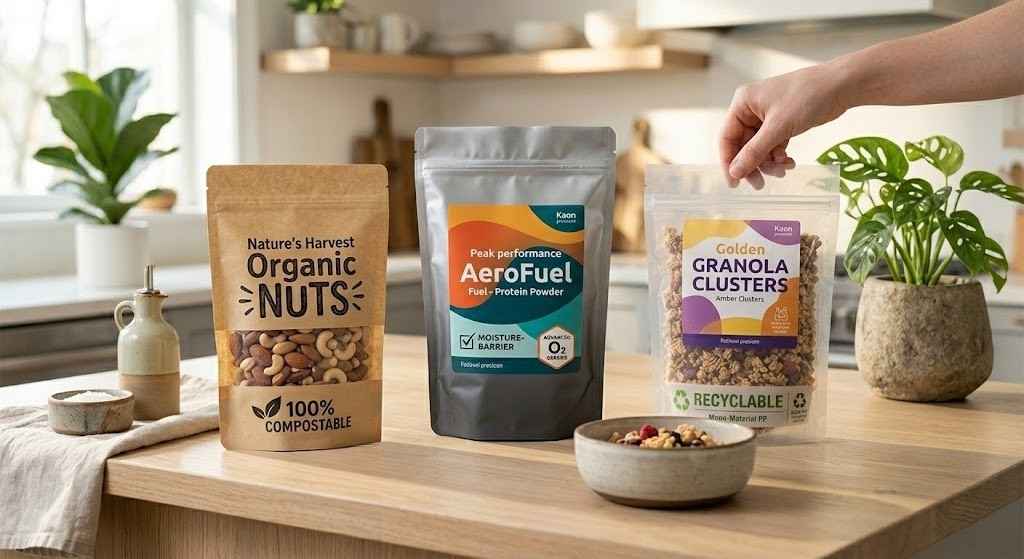
Barrier performance is an important factor when choosing packaging, as it determines how well the packaging protects the product from external elements such as moisture, oxygen and light.
In the past, recyclable flexible packaging offered lower barrier performance compared to conventional materials. Recent advancements, however, have greatly improved its capabilities.
In addition, recyclable flexible packaging can meet nearly all barrier requirements for most products, making it a reliable choice for maintaining product quality across a wide range of applications.
Cost is an important factor when choosing packaging. Recyclable flexible packaging was once more expensive than conventional options, which limited its use in some industries.
Now, this cost gap is narrowing. Advances in manufacturing and growing demand have made recyclable packaging more affordable and competitive. Businesses can now adopt recyclable flexible packaging without a significant increase in cost, making it both a practical and sustainable choice.
Packaging needs to be strong enough to protect the product during storage and transportation. It should withstand damage from handling, pressure and environmental conditions.
Recyclable flexible packaging made from mono-material provides good strength and durability. Multiple layers of the same material can be added to improve performance without affecting recyclability.
Choosing the right thickness and structure ensures the packaging remains reliable throughout its use while maintaining its sustainable benefits.
Sustainability has become a major factor in packaging decisions. Businesses are focusing on solutions that minimize environmental impact and support recycling systems.
Recyclable flexible packaging provides a practical way to achieve sustainability goals. It helps reduce waste and promotes responsible material use without compromising performance. Selecting sustainable packaging also enhances brand value and meets customer expectations in today’s market.
Selecting the wrong packaging can result in product damage and higher costs. It is important to avoid common mistakes during the decision-making process.
Key mistakes to avoid include:
Avoiding these errors ensures that the chosen packaging meets both performance and sustainability objectives.
Recyclable flexible packaging primarily uses mono-material PE and mono-material PP, each with distinct characteristics suited to different product needs.
Mono-material PE is the most commonly used option, covering over 90 percent of applications. It provides good flexibility, durability and ease of processing, making it suitable for a wide range of products.
Mono-material PP represents a smaller share, around 10 percent, and is often selected for applications that require higher stiffness and temperature resistance. Choosing between PE and PP depends on the specific performance requirements of your product.
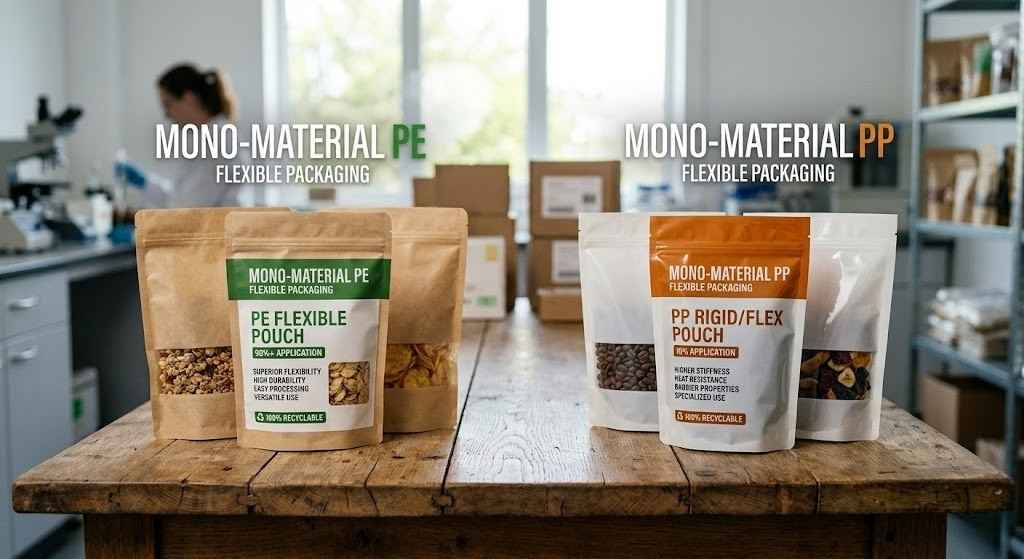
Shelf life is a major consideration when selecting packaging. The right recyclable flexible packaging helps preserve product freshness and quality over time. Factors such as moisture, light and oxygen exposure can affect how long a product remains usable.
Modern recyclable flexible packaging can use multiple layers of the same material to improve protection. Layers of PE can reduce moisture transmission, while PP layers can resist heat and maintain strength.
Understanding your product’s sensitivity to environmental factors ensures you select packaging that effectively and reliably extends shelf life.
Packaging is not only functional but also reflects your brand. Recyclable flexible packaging allows customization in design, color and printing. Businesses can include logos, product information and marketing messages without affecting recyclability.
Mono-material structures support a range of printing techniques. Advanced inks and coatings can be applied to PE or PP layers while remaining environmentally friendly.
Investing in visually appealing recyclable packaging helps your product stand out on the shelf while maintaining sustainability.
Understanding the differences between conventional and recyclable flexible packaging is crucial for selecting the right solution for your products. Packaging affects not only product protection and shelf life but also its environmental impact. By comparing key features, businesses can determine which option best meets both operational requirements and sustainability goals.
Recyclable flexible packaging has developed to provide many benefits that were once associated only with conventional packaging, including strength, barrier protection and cost-effectiveness. Evaluating these features side by side allows companies to make informed choices while supporting environmentally responsible practices.
Feature | Conventional Flexible Packaging | Recyclable Flexible Packaging |
Material Structure | Mixed layers (PET/PE) | Mono material (PE/PE, PP/PP) |
Recyclability | Not recyclable | Recyclable |
Cost | Lower (previously) | Slightly higher but decreasing |
Barrier Performance | High | Improved and meets most needs |
Sustainability | Limited | Environment friendly |
This comparison demonstrates that recyclable flexible packaging is now a practical and sustainable choice for modern businesses. By selecting mono-material packaging, companies can effectively protect their products while minimizing environmental impact and presenting their brand as responsible and future-focused.
For food products, packaging must meet safety and hygiene standards. Recyclable flexible packaging is designed to comply with food contact regulations in many regions.
Using mono-material films such as PE/PE lowers the risk of contamination during processing and recycling. It also ensures that packaging remains safe for storing and transporting food items. Proper selection ensures your product meets safety requirements while supporting environmental goals.
Products may experience different temperatures during storage, transportation, or display. Packaging must withstand these variations without being damaged.
Recyclable flexible packaging can be designed to resist heat and cold by using appropriate polymer grades and layer structures. PP is often selected for higher temperature resistance, while PE provides flexibility at lower temperatures.
Understanding the temperature conditions your product may face helps in selecting the right recyclable packaging.
Packaging must be strong enough to withstand handling and transportation. Lightweight yet durable recyclable flexible packaging protects products while helping reduce shipping costs.
Mono-material structures can be designed to resist tearing, punctures and pressure. They can also be optimized for stacking, which improves warehouse and transport efficiency. Selecting packaging that supports efficient handling reduces product losses and enhances operational performance.
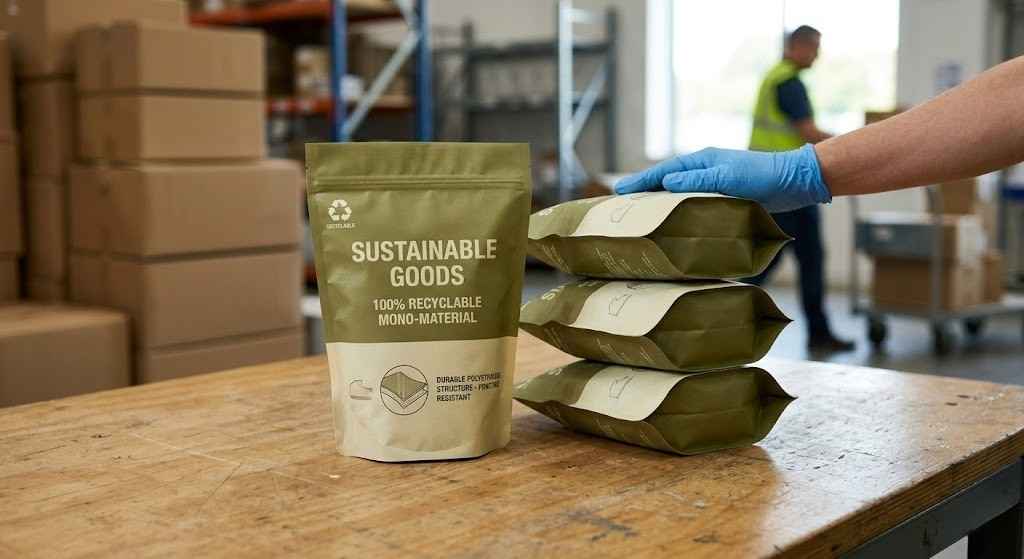
Many businesses use automated filling and packaging systems, so it is important to ensure that recyclable flexible packaging works well with machinery.
Mono-material films are easier to process on automated lines. They can be sealed, filled and labeled without the issues that often occur with mixed materials. Ensuring compatibility with production systems helps prevent delays and improves overall efficiency.
Sustainable packaging is often assessed through certifications and compliance standards. Selecting recyclable flexible packaging with recognized environmental certifications helps build customer trust.
Certifications such as ISO 14001, FSC, or local recycling guidelines show that the packaging meets specific sustainability requirements. This supports marketing claims and ensures regulatory compliance.
Verifying certifications before selection ensures your packaging meets global and local environmental standards.
Packaging design should also prioritize user convenience, as it plays a key role in the overall consumer experience. Features such as resealable closures, easy-to-open edges, and flexible shapes make products more accessible and practical for daily use.
Recyclable flexible packaging can incorporate these user-friendly features without compromising its mono-material structure. Advances in packaging technology, including zipper seals, tear notches, and spouts, allow businesses to create designs that are both functional and environmentally responsible.
By focusing on convenience, businesses not only improve customer satisfaction but also encourage repeat purchases and strengthen brand loyalty.
The demand for recyclable flexible packaging is steadily growing across industries. Consumers are increasingly choosing products with sustainable packaging, making recyclability a major driver in the market.
Advances in polymer technology and processing methods have enhanced barrier performance, reduced costs and increased design flexibility. These improvements make recyclable packaging suitable for a broader range of products and applications.
Businesses that adopt recyclable flexible packaging early can position themselves as environmentally responsible brands, build consumer trust and gain a competitive advantage in the market.
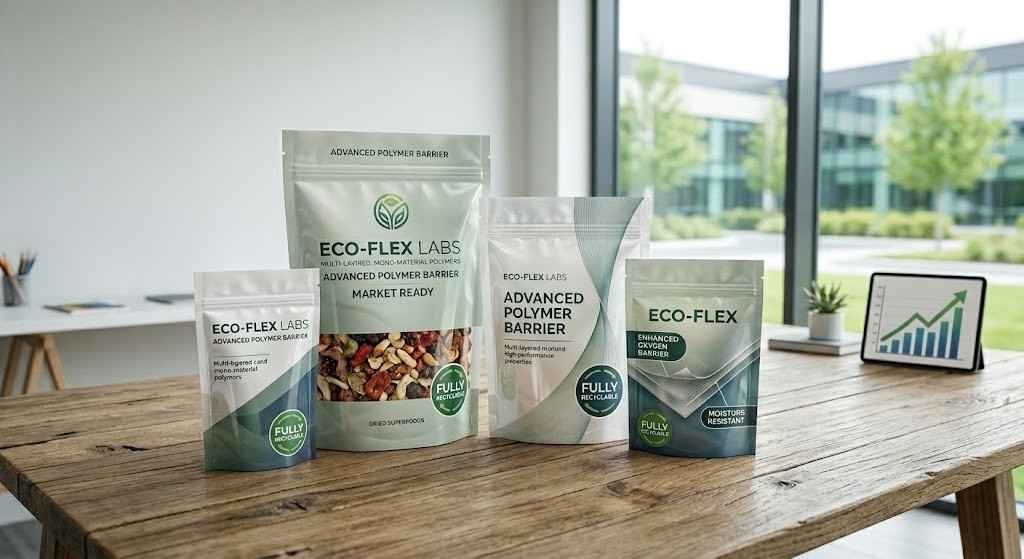
Recyclable packaging provides an effective solution for businesses aiming for sustainability without compromising product protection. Made from mono-material structures such as PE/PE or PP/PP, it offers durability, strong barrier performance and compatibility with modern production processes. By selecting the right material and design, companies can maintain product quality while supporting environmental responsibility.
Unlike conventional flexible packaging, which cannot be recycled due to mixed material layers, recyclable flexible packaging reduces waste and supports recycling systems. Using it not only meets consumer and regulatory expectations but also positions a brand as environmentally conscious and prepared for the future.
Besides all of that, you can simply check with the recyclable flexible packaging manufacturer, normally they can recommend the right packaging for you.
Longdapac is the leading recyclable packaging manufacturer in China, we got more than 6 years experience in this field, we can provide recycalble pouches of different applications, bag types, barrier requirements and different quantity.
Answer: Mono-material packaging is made entirely from the same type of material in all layers, such as PE/PE or PP/PP, which makes it recyclable. In contrast, conventional flexible packaging cannot be recycled.
Answer: Mono-material construction ensures that all layers are made from a single polymer, enabling recycling while preserving strength and barrier protection.
Answer: Most products can use recyclable flexible packaging, but the choice of material (PE or PP) and layer design depends on product requirements such as barrier protection and handling needs.
Answer: Recyclable flexible packaging was once more expensive, but costs are steadily decreasing. Today, it is often priced similarly to conventional options while providing greater sustainability.
Answer: No. Conventional flexible packaging is made from mixed materials such as PET/PE, which makes it non-recyclable.