
Packaging plays a very important role in protecting products, improving usability and supporting supply chain efficiency. In today’s competitive market, businesses are searching for packaging solutions that are strong, cost effective and environmentally responsible. Flexible packaging has become a modern solution that fulfills these requirements in a more efficient way compared to traditional rigid packaging formats.
Flexible packaging is becoming a preferred choice across many industries because it combines a lightweight structure with strong performance. It helps reduce material usage, improves transportation efficiency and supports sustainability goals. Flexible packaging easily adapts to different product shapes and storage conditions, making it highly practical for modern supply chains where speed, efficiency and cost control are very important.
In this article, we will explain why flexible packaging is better than rigid packaging. We will also cover how recyclable flexible packaging is improving the industry, what mono material means and how innovation is helping companies achieve both performance and sustainability at the same time.
The packaging industry has gone through major changes over time. In earlier years, rigid packaging was the most common solution. It was widely used because it provided strong protection and durability for different types of products.
Rigid packaging became popular in industries such as food, beverages, and personal care because it was considered safe and reliable. As global demand increased, industries began to face challenges such as high material usage, storage difficulties and higher transportation costs.
Over time, flexible packaging emerged as a more advanced solution. It brought better efficiency, lower weight and improved design flexibility. With continuous improvements in material technology, flexible packaging has now become a strong competitor to rigid packaging and is widely used across global supply chains.
Recyclable flexible packaging is an advanced solution designed to improve environmental performance. It is based on mono material structures, where all layers of the packaging are made from the same type of polymer.
This design allows the packaging to be recycled more efficiently compared to traditional laminated materials that combine different types of plastics. Recyclable flexible packaging is becoming more important as industries move toward sustainable and circular packaging systems.
Flexible packaging offers a major advantage in space optimization. It can be stored in flat rolls before filling, which significantly reduces warehouse space requirements.
Flexible packaging becomes even more efficient after filling because it adjusts to the shape of the product. This removes unnecessary empty space and improves packing density during transportation.
Rigid packaging always keeps a fixed shape, which means it occupies the same space whether it is full or empty. This creates inefficiency in storage systems and increases logistics costs.
In large scale industries, this difference becomes very important because better space utilization directly improves operational efficiency and reduces overall expenses.
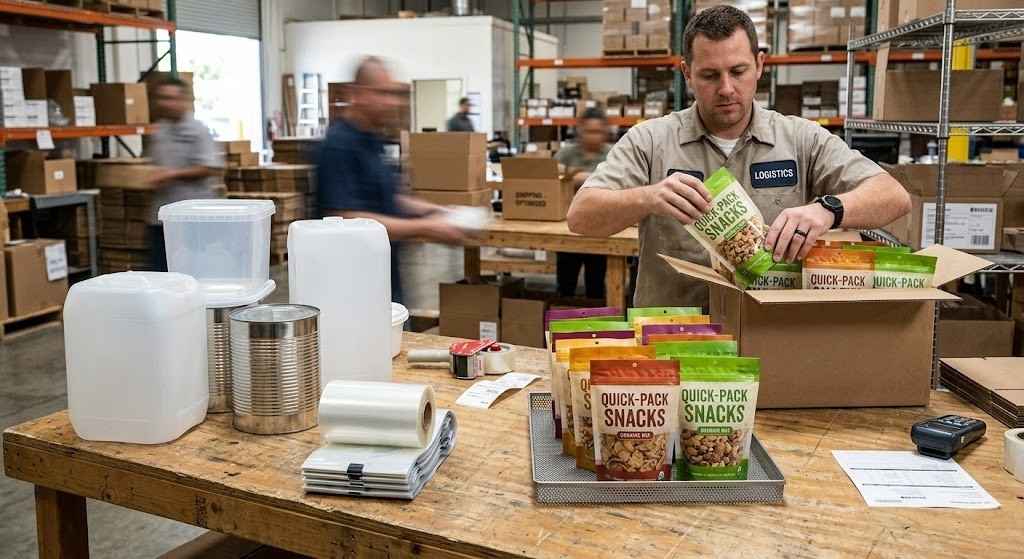
One of the key strengths of flexible packaging is its lower material usage. It uses significantly less plastic or polymer compared to rigid packaging while still providing strong protection.
This reduced use of raw material helps lower production costs and reduces environmental impact. It also allows manufacturers to produce more units with fewer resources, improving overall production efficiency. Lower material consumption also helps reduce industrial waste. This makes flexible packaging a more sustainable choice for companies focused on long term environmental responsibility.
Flexible packaging plays an important role in improving supply chain performance. Its lightweight structure allows more units to be transported in a single shipment, which reduces logistics costs.
Lower transportation weight also helps reduce fuel consumption. This directly supports lower carbon emissions and improves environmental performance in distribution networks.
It also improves handling efficiency in warehouses and retail environments. Flexible packaging is easier to manage compared to heavy rigid containers, which speeds up operations and reduces effort.
Cost efficiency is one of the strongest reasons why flexible packaging is widely used today. It reduces costs in multiple areas including production, storage, transportation and handling.
Rigid packaging involves higher costs due to heavy material requirements and complex manufacturing processes. Flexible packaging simplifies production and reduces overall operational expenses.
Over time, these savings become very significant for large industries. Businesses benefit from improved profit margins and better resource utilization.
Flexible packaging is designed to be lightweight without reducing its performance. Advanced film technology helps it protect products from moisture, oxygen and contamination.
Even with less material, it performs effectively in real transportation and storage conditions. It can withstand pressure, movement and handling stress without losing its strength.
Rigid packaging needs more material to achieve similar performance, which increases weight and cost. Flexible packaging provides a better balance between protection, efficiency and sustainability.
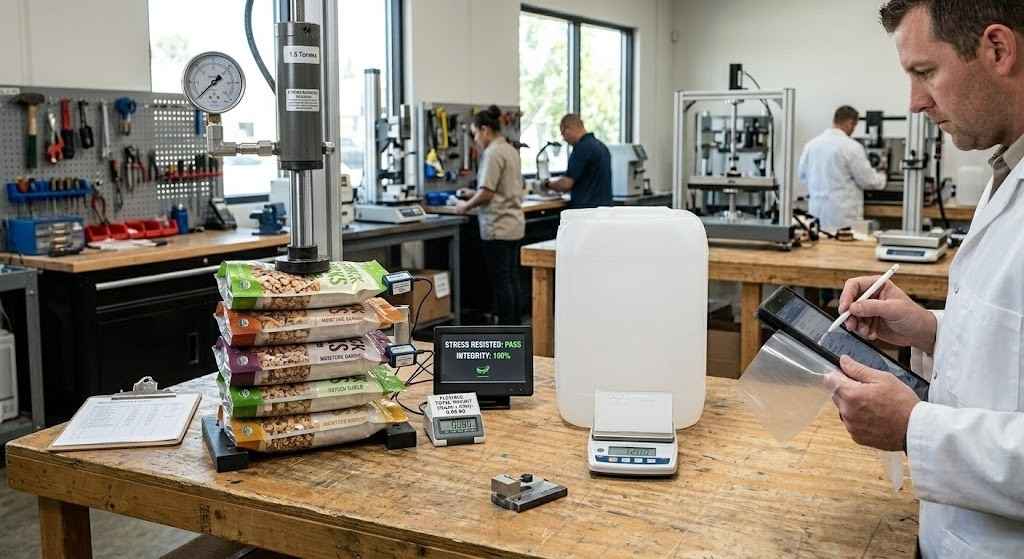
Flexible packaging is designed to perform reliably in complex and fast moving supply chain environments. During transportation and storage, products are often exposed to external pressures such as stacking weight, vibration and temperature changes.
Flexible materials can adjust under pressure without losing their structural strength. This helps protect the product from damage even when external conditions are not stable.
Rigid packaging, although strong in a fixed shape, does not perform as well under changing pressure conditions. When exposed to uneven stacking or sudden impact, it may crack or deform, which increases the risk of product damage during distribution.
Mono material does not mean a single layer structure. It refers to packaging made from multiple layers that are all based on the same material type, such as PE or PP.
This structure helps maintain strength, durability and barrier protection while still keeping the material recyclable.
Most recyclable flexible packaging is made from:
This material system ensures strong performance while also supporting environmental goals, making it suitable for modern packaging requirements.
Sustainability has become an important focus in modern packaging decisions. Flexible packaging supports sustainability by using less material and reducing environmental impact during production and transportation.
It helps companies lower their carbon footprint and move toward more responsible packaging solutions. This is especially important as global regulations and consumer awareness continue to grow.
Recyclable flexible packaging further improves sustainability by allowing materials to be reused instead of turning into waste. This supports circular economy goals in the packaging industry.
Mechanical stress is one of the most common challenges in packaging logistics. It occurs during loading, unloading and repeated handling of goods across the supply chain.
Flexible packaging is designed to absorb this stress instead of resisting it in a rigid way. Its layered structure helps distribute pressure evenly, which reduces the risk of product damage.
Rigid packaging cannot absorb mechanical stress effectively. Instead, the stress is directly transferred to the structure, which may lead to dents, cracks or even breakage depending on the material type.
Flexible and rigid packaging both play an important role in different industries, but their performance differs in terms of cost, efficiency and sustainability. Flexible packaging is more commonly used in modern supply chains because it requires fewer resources and provides higher operational efficiency.
The comparison below explains the main differences in a simple and clear way.
Aspect | Flexible Packaging | Rigid Packaging |
Material Consumption | Uses significantly less raw material | Requires more raw material |
Storage Requirements | Takes minimal space, highly efficient storage | Occupies fixed and larger storage space |
Transportation Cost | Lower due to lightweight structure | Higher due to heavy weight |
Design and Customization | Highly flexible and easy to customize | Limited due to fixed molds and shapes |
Product Weight Impact | Lightweight, reduces overall shipment weight | Heavier, increases logistics load |
Environmental Impact | Lower impact, recyclable options available | Higher impact in most cases |
Flexible packaging offers better efficiency in most areas, especially in cost, storage and transportation. It is more suitable for modern industries where speed, sustainability and optimization are important, while rigid packaging is still used in limited traditional applications.
Flexible packaging is highly suitable for modern high speed production systems. It is produced in continuous roll formats, which allows uninterrupted processing and faster output rates.
This scalability is especially important for industries that require large quantities of packaging in short time periods. It helps reduce production delays and improves supply chain responsiveness. Rigid packaging depends on mold based production systems, which involve multiple steps such as shaping, cooling and finishing. These steps slow down production and increase operational complexity.
Flexible packaging is widely used across many industries because of its adaptability. It can be used for food products, beverages, pharmaceuticals, cosmetics, agricultural products and industrial materials.
Its ability to adapt to different product types without major design changes makes it a highly versatile solution.
Rigid packaging is more limited because each product category often requires specific molds, shapes or container types. This increases production complexity and reduces flexibility in use.
Transportation damage is a major issue in global supply chains. Products often travel long distances and go through multiple handling stages before reaching the final destination.
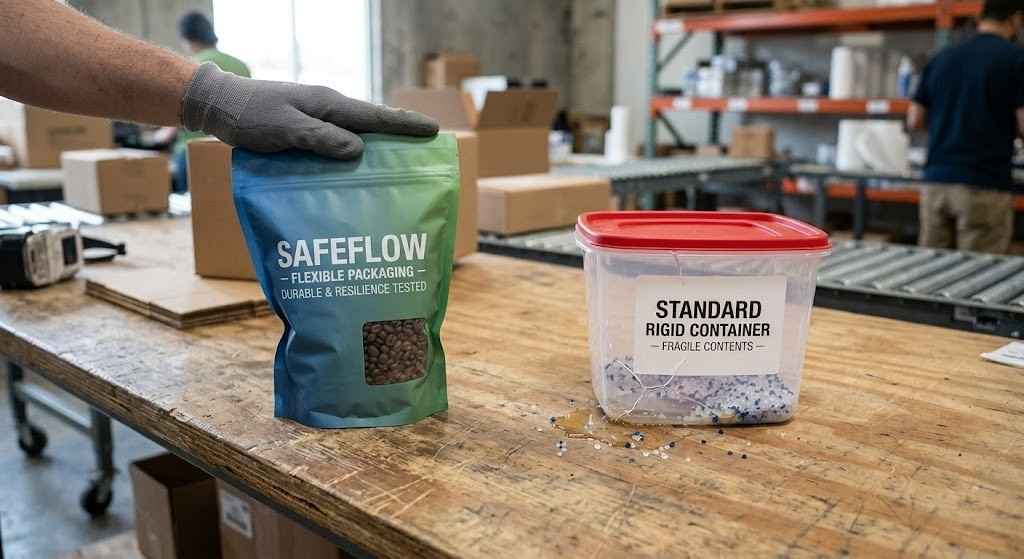
Flexible packaging significantly reduces the risk of damage because it is not rigid or brittle. It can absorb external pressure and movement without breaking. Rigid packaging is more easily damaged during transportation. Even minor impacts during shipping can cause cracks, leaks or structural failure, leading to product loss.
Flexible packaging offers strong advantages in warehouse storage systems. Before filling, it can be stored in compact roll form, which significantly reduces space requirements.
After filling, flexible packaging takes up less space compared to rigid containers, allowing better stacking efficiency and improved storage use.
Rigid packaging occupies fixed space regardless of its usage condition. This reduces storage efficiency and increases warehouse costs, especially in large scale operations.
Flexible packaging plays an important role in reducing environmental impact. Its lower material usage helps reduce waste generation during both production and disposal stages.
It also helps lower transportation emissions because of its lightweight structure, which reduces fuel consumption during distribution.
Recyclable flexible packaging further improves sustainability by enabling material recovery and reuse. This supports circular economy models that aim to reduce waste and improve resource efficiency.
The flexible packaging industry is continuously evolving through innovations in material science and engineering. New developments have significantly improved strength, durability and barrier performance over time.
Modern flexible packaging can now meet demanding industrial requirements that were previously possible only with rigid systems. These innovations include improved sealing technology, better oxygen resistance, and enhanced recyclability, making flexible packaging more efficient and ready for future needs.
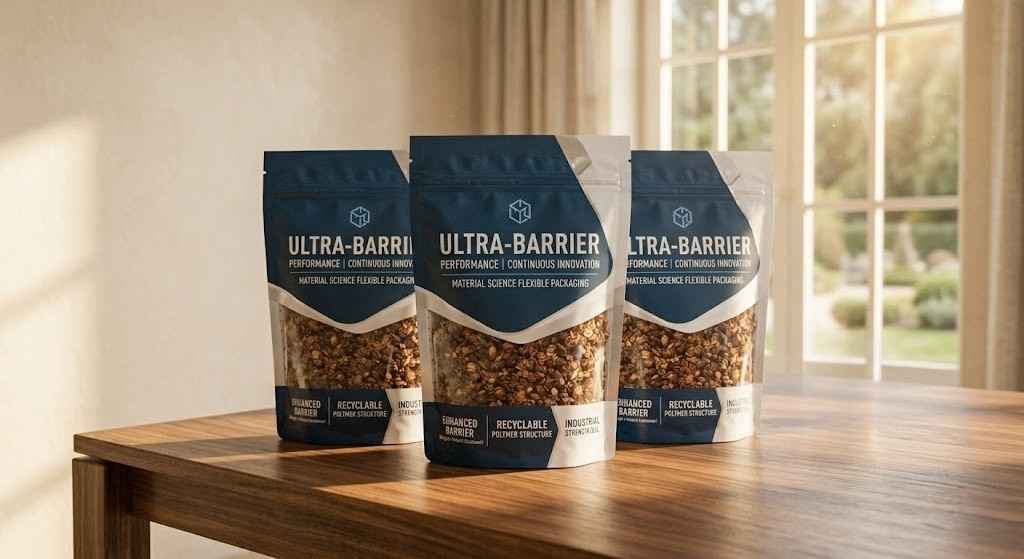
Flexible packaging is a more efficient and modern solution than rigid packaging in today’s fast moving industries. It performs better in material usage, transportation efficiency, storage optimization and cost effectiveness. With continuous technological improvements, it provides strong protection while using fewer resources, which makes it suitable for large scale supply chains. The shift toward recyclable flexible packaging also shows that the industry is moving in a more sustainable direction. Rigid packaging still has limited uses, while flexible packaging is becoming the preferred choice for businesses that want to balance performance, cost and environmental responsibility in a practical way.
Longdapac is one of the leading recyclable pouches manufacturers from China. The quality is good with reputation, this is the future trend of plastic packaging.
Answer: Flexible packaging is a type of packaging made from flexible materials, such as plastic films, pouches or wraps, that can easily change shape and adjust according to product requirements.
Answer: It is better because it uses less material, reduces transportation costs, saves storage space and provides higher efficiency in modern supply chains.
Answer: Yes, recyclable flexible packaging is available and is usually made from mono materials such as PE or PP, which can be processed more easily than mixed materials.
Answer: Mono material means all layers of the packaging are made from the same type of material, such as all PE layers, even if the structure contains multiple layers.
Answer: Yes, flexible packaging is considered the future because it is cost effective, lightweight, efficient and increasingly shifting toward recyclable and sustainable solutions.