
Packaging is changing rapidly as businesses face growing sustainability expectations and stricter regulatory requirements. In the European Union, the Packaging and Packaging Waste Regulation (PPWR) provides a broad framework for improving packaging sustainability. It covers areas such as material safety, recyclability and packaging design. The regulation applies to packaging placed on the EU market, regardless of its material or origin. This means companies supplying products to European markets need to understand how their packaging materials and structures meet the new requirements.
The Packaging and Packaging Waste Regulation (PPWR) is an important EU regulation that sets requirements for packaging placed on the European Union market. It covers key areas such as packaging recyclability, material safety and packaging design while promoting efficient resource use and reducing packaging waste. For flexible packaging manufacturers and businesses supplying products to the EU market, understanding these requirements is becoming increasingly important. Packaging structures now need to be developed with greater attention to their materials, chemical composition, recyclability and compatibility with suitable recycling systems.
Actually recyclable packaginges are one of the most important goal for PPWR. It is sustainable.
In this article, we will explain the common packaging challenges businesses face under PPWR and how recyclable flexible packaging can help address these challenges. We will also explore the EU scope of the regulation, material complexity, chemical requirements, PFAS, heavy metals, recyclability, packaging design and the practical role of mono-material flexible structures.
The Packaging and Packaging Waste Regulation, commonly known as PPWR, is Regulation (EU) 2025/40 on packaging and packaging waste. It establishes sustainability and packaging requirements across the packaging life cycle. The regulation entered into force on 11 February 2025 and will generally apply from 12 August 2026.
An important point is that PPWR should not be described as a worldwide packaging regulation. It is an EU regulation, although companies outside the EU can also be affected when their packaging is placed on the EU market. The regulation covers packaging regardless of its material or origin, meaning flexible packaging supplied to the EU market also needs to meet the relevant requirements.
For packaging manufacturers and brand owners, this regulation changes how packaging needs to be planned and developed. Businesses can no longer focus only on product protection, appearance and production efficiency. They also need to consider whether their packaging structures can meet regulatory requirements and support effective recycling at the end of their useful life.
When it comes to flexible packaging, there are mainly 4 sectors:
1: PFAS Tests
2: Heavy-Metal Declaration
3: Food contact safety
4: Recyclability
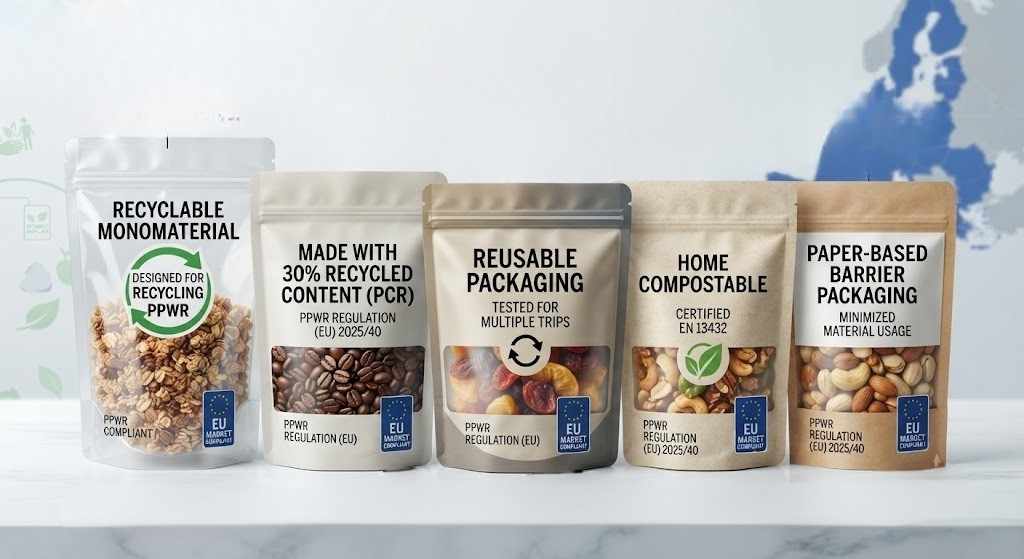
One common challenge with conventional flexible packaging is the use of multiple material types within a single structure. Different films can be combined to provide strength, sealing performance, print quality and barrier protection. While these functions are important, structures made from incompatible materials can create challenges when the packaging reaches a recycling facility.
The challenge is not simply the number of layers. A multi-layer structure can still be recyclable when its layers and components are designed to work within an appropriate recycling system. The key consideration is whether the overall packaging can be effectively collected, sorted and recycled into useful secondary raw materials.
Recyclable flexible packaging can help address this challenge by using a mono-material structure, such as PE-based or PP-based structures where the relevant layers are made from the same main polymer family. Mono-material does not mean that the packaging has only one physical layer. It can contain several functional layers while maintaining material compatibility. This approach can make the packaging more suitable for material recycling when it also meets the relevant collection, sorting and recycling requirements.
PFAS is another important consideration under PPWR, particularly for food-contact packaging. PFAS refers to a large group of per- and polyfluoroalkyl substances. Article 5 of PPWR introduces specific restrictions on PFAS in food-contact packaging. From 12 August 2026, food-contact packaging cannot be placed on the EU market when PFAS concentrations meet or exceed the specified limits, subject to the conditions and interaction with other applicable EU legislation.
The regulation sets a limit of 25 parts per billion (ppb) for any individual PFAS under targeted PFAS analysis and 250 ppb for the sum of PFAS under the specified analytical method. It also sets a 50 ppm limit for PFAS, including polymeric PFAS, with the calculation subject to the conditions stated in the regulation.
This makes PFAS management an important part of packaging development for businesses supplying food-contact products to the EU market. Recyclable flexible packaging can support this transition when manufacturers select suitable materials and components that meet the applicable chemical and food-contact requirements. However, recyclability alone does not guarantee regulatory compliance.
The PPWR also includes requirements concerning certain heavy metals. The regulation states that the combined concentration of lead, cadmium, mercury and hexavalent chromium present in packaging or packaging components must not exceed 100 mg/kg, subject to the regulatory provisions and interaction with other applicable EU legislation.
This requirement adds another important consideration to packaging material selection. A packaging structure may need to meet both recycling-related requirements and restrictions on substances of concern. Therefore, manufacturers need to evaluate the complete packaging system rather than focusing only on the primary film.
Recyclable flexible packaging can help manufacturers move toward simpler and more controlled material structures. However, not every mono-material structure automatically meets the heavy-metal requirements. Compliance depends on the actual materials and components used. Proper material specifications and effective supplier controls remain essential for ensuring compliance.
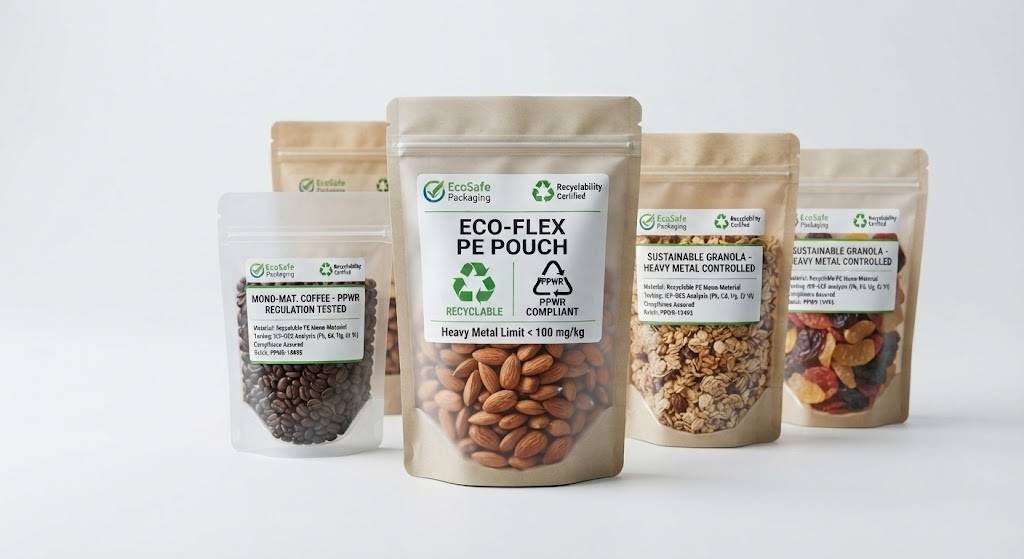
PPWR establishes a clear principle that packaging placed on the EU market must be recyclable. Under Article 6, packaging is considered recyclable when it is designed for material recycling and can produce secondary raw materials of sufficient quality. Once it becomes waste, it must also be suitable for separate collection, sorting into specific waste streams and recycling at scale according to the applicable methodology.
This requirement goes beyond simply describing a package as “recyclable.” The packaging structure needs to work within the complete recycling chain. Its design, materials, components and format can all affect how effectively it can be collected, sorted and processed.
This is where recyclable flexible packaging can provide a practical approach. A well-designed mono-material flexible structure can reduce material incompatibility while maintaining the functions required for effective packaging. The goal is not simply to replace one film with another but to design the complete structure with its end-of-life pathway in mind.
Material complexity is one of the key areas packaging developers need to consider when working toward greater recyclability. Traditional flexible packaging can combine different polymers because each material may provide specific properties. However, using multiple polymer families can make the overall structure more difficult to manage within a material recycling system.
Mono-material design offers a different approach. Instead of relying on several polymer families, packaging can be developed around one main polymer family while still using multiple layers to provide the required functional properties. This can simplify the material structure and improve compatibility with the intended recycling stream.
The result is not simply a thinner package. The main benefit is a packaging structure designed with material compatibility and recycling in mind. When combined with suitable collection, sorting and recycling infrastructure, this approach can help businesses move closer to the recyclability expectations established under PPWR.
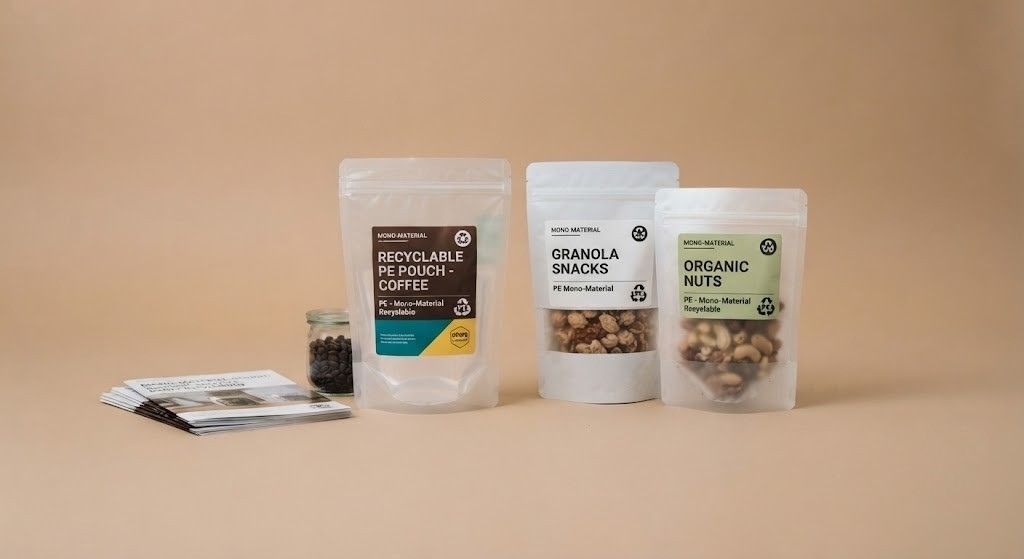
Packaging must protect products throughout storage, transportation and use. Therefore, the transition toward recyclable packaging cannot ignore important factors such as barrier performance, sealing ability, strength and product safety. A packaging structure that is recyclable but cannot provide adequate product protection would not be a practical solution.
Recyclable flexible packaging is designed to balance these requirements through carefully developed material structures. Depending on the product and application, flexible packaging may require protection against moisture, oxygen, light, grease or other external factors. The suitable material structure depends on the specific product needs rather than following a single universal approach.
The main challenge is developing a structure that delivers the required performance while remaining compatible with the intended recycling pathway. This is why packaging development needs to consider product requirements and end-of-life requirements together rather than treating sustainability as a separate process.
PPWR takes recyclability beyond the idea that a package should simply contain recyclable materials. The regulation connects recyclability with material recycling, collection, sorting and recycling at scale. This means packaging design needs to consider the complete lifecycle of the package, including what happens after the product has been used.
For flexible packaging, this can influence decisions about the main polymer, layers, components and overall structure. A packaging design that performs well during manufacturing may still require adjustments if certain components create challenges during sorting or recycling processes.
Recyclable flexible packaging provides a design approach where these factors can be considered from the beginning. By developing packaging around a compatible material family and the intended recycling pathway, manufacturers can reduce some of the structural challenges associated with complex packaging designs.
The final challenge is bringing all packaging decisions together. PPWR does not address packaging as a single issue. Instead, it follows a broader life-cycle approach that includes environmental sustainability, labelling, waste prevention, reuse and producer responsibility.
For flexible packaging manufacturers and brand owners, this means packaging development needs to consider multiple factors at the same time. A successful design should be practical for production, suitable for the product and aligned with the relevant requirements for the European market. Businesses should also maintain proper technical documentation and supporting evidence to demonstrate compliance where required.
Recyclable flexible packaging can become part of this broader strategy by providing a format that combines efficient material use with functional packaging performance. Instead of selecting packaging based only on appearance or production convenience, businesses can evaluate the complete design based on its intended use, material structure, labelling requirements and end-of-life pathway.
A practical packaging strategy can focus on:
When these factors are considered together, recyclable flexible packaging can offer more than a simple material change. It can become part of a wider packaging strategy designed to meet changing European requirements while maintaining practical performance and efficient resource use.
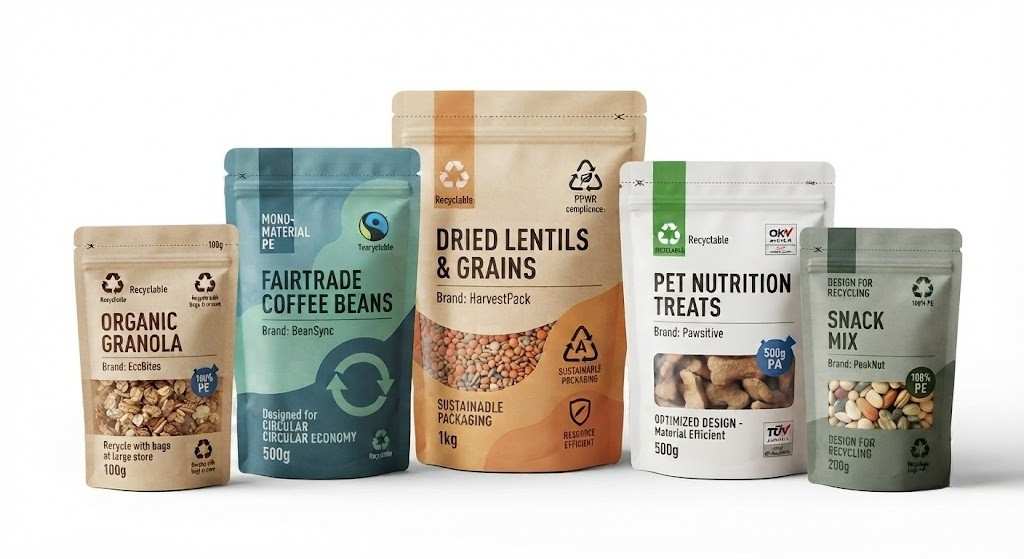
PPWR is changing how businesses need to approach packaging placed on the European Union market. For flexible packaging, the main challenge is balancing regulatory requirements with product protection, material efficiency and practical packaging performance. Recyclable flexible packaging can help address these challenges through carefully designed material structures, efficient formats and packaging solutions developed with recycling and resource efficiency in mind. By selecting suitable materials, reducing unnecessary packaging, improving space efficiency and considering producer responsibility and clear disposal information, businesses can develop packaging that is better prepared for the changing European market. The goal is not simply to use less packaging but to create flexible packaging that performs its required function while supporting a more efficient and responsible packaging system.
Longdapac is one of the leading recyclable flexible packaging manufacturer in China. Actually our packagings are well qualified PPWR cause it is recyclable. And it is always safe cause we are using the good raw material and production process. We will make sure every pouch we make is food contact safe.
Answer: PPWR, or the Packaging and Packaging Waste Regulation, is an EU regulation that sets requirements for packaging placed on the European Union market. It covers several areas of packaging management, including sustainability, recyclability, waste prevention, material safety, labelling and producer responsibility. For flexible packaging, PPWR is important because businesses need to consider how their packaging is designed, which materials and components it contains, how it can be managed after use and whether it meets the applicable requirements for the EU market. Companies outside the EU can also be affected when their packaging is supplied to the European market.
Answer: Recyclable flexible packaging can help businesses move toward packaging designs that are more suitable for recycling while maintaining the functional properties required for different products. Depending on the application, recyclable structures can use compatible polymer-based materials and carefully selected components to support the intended recycling pathway. Flexible formats can also help reduce unnecessary packaging weight and volume when they are designed appropriately for the product. However, simply describing a package as recyclable does not confirm compliance with PPWR. The complete packaging structure, its components, intended recycling route and other applicable requirements need to be properly evaluated.
Answer: PPWR introduces specific restrictions on PFAS in food-contact packaging. From 12 August 2026, food-contact packaging cannot be placed on the EU market when the applicable PFAS concentrations meet or exceed the limits established by the regulation. These limits include 25 parts per billion for any individual PFAS under targeted PFAS analysis and 250 parts per billion for the total amount of PFAS under the specified analytical method. A separate 50 parts per million limit applies to PFAS, including polymeric PFAS, subject to the calculation rules defined in the regulation. Businesses supplying food-contact flexible packaging to the EU should therefore review the materials and components used in their packaging and verify compliance with the applicable PFAS requirements.
Answer: Yes, PPWR establishes restrictions on the combined concentration of lead, cadmium, mercury and hexavalent chromium in packaging and packaging components. The combined concentration must not exceed 100 mg/kg, subject to the specific provisions and exemptions established under the regulation. This requirement means packaging manufacturers and businesses need to carefully evaluate the substances present in their packaging materials and components rather than focusing only on the main packaging film. Proper material specifications, supplier information and compliance checks can help businesses ensure that their packaging structures meet the relevant requirements before being placed on the EU market.
Answer: No, Mono-material flexible packaging can support recyclable packaging design, but using a mono-material structure does not automatically mean that the packaging complies with all PPWR requirements. Compliance depends on the complete packaging design and the specific requirements applicable to the product and packaging format. Businesses may still need to consider factors such as recyclability, chemical restrictions, packaging minimisation, labelling, producer responsibility and other relevant provisions. A mono-material structure can provide a strong foundation for recyclable flexible packaging, but manufacturers should evaluate the complete structure and maintain proper technical evidence to demonstrate that the packaging meets the applicable EU requirements.