
Packaging plays an important role in protecting products during storage, transport and use. At the same time, more attention is being given to what happens to packaging after it has served its initial purpose. A package that becomes waste after a single use may still contain valuable material that could potentially return to the production cycle. This is where recyclable flexible packaging becomes important. By designing packaging with recycling in mind, the material can have the potential to remain useful beyond its first packaging application.
Recyclable flexible packaging is becoming increasingly relevant as the European Union moves toward a packaging system that places greater emphasis on recyclability, material recovery and the use of secondary raw materials. Regulation (EU) 2025/40 on packaging and packaging waste, commonly known as the PPWR, entered into force on 11 February 2025 and generally applies from 12 August 2026. The regulation sets requirements for packaging recyclability and includes conditions related to material recycling, separate collection, sorting and recycling at scale.
In this blog, we will guide you through how recyclable flexible packaging can support a longer material life under PPWR and why packaging design matters after its first use. We will also cover how material selection, recycling-focused structures, secondary raw materials and thoughtful packaging design can work together to support a more circular material cycle.
A longer material life does not mean that a packaging pouch physically lasts longer during use. Instead, it refers to the possibility that the material can continue to provide value after the original package becomes waste. When packaging is designed for material recycling, its material may have the opportunity to become secondary raw material instead of ending its useful role after the first packaging application.
This concept changes how packaging can be viewed. The process begins with the production of the packaging, followed by product protection, distribution and use. After use, the material enters the waste management system. If the packaging can be collected, sorted and recycled under the relevant conditions, the recovered material may potentially be used to make new products. The PPWR connects recyclability with the ability to obtain secondary raw materials of sufficient quality to replace primary raw materials.
Therefore, recyclable flexible packaging can support a longer material life by considering what happens after use rather than focusing only on the package’s first application.
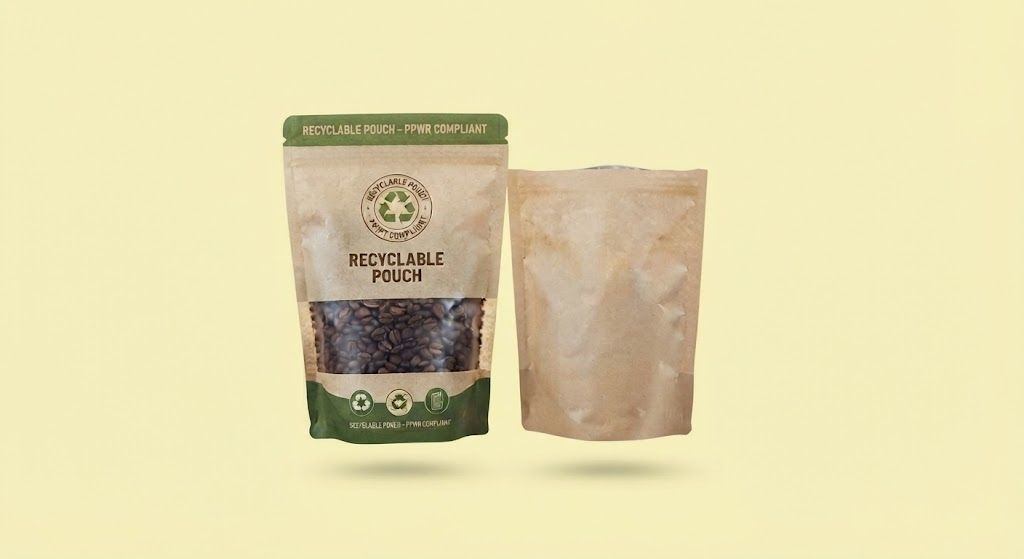
The material selected for flexible packaging directly influences how the package can be designed for recycling. Packaging structures may contain several layers because each layer can provide a specific function. However, when the goal is material recycling, the compatibility of these materials with recycling processes is an important consideration.
Mono-material structures can help simplify this approach when the required packaging performance can be achieved within the same polymer family. In flexible packaging, PE-based structures are one example of this design approach. A package can still contain multiple layers while keeping those layers within the same polymer family instead of combining different material families that may create additional challenges during recycling. However, this does not mean that every mono-material package is automatically compliant with the PPWR. The regulation looks beyond the material type and requires packaging to meet applicable recyclability criteria. These include design for recycling and, when the packaging becomes waste, the ability to be separately collected, sorted into specific waste streams and recycled at scale under the applicable conditions.
Recyclable flexible packaging is designed with the future recycling stage in mind. The goal is not simply to make a package from a recyclable polymer but to develop a structure that can work within the relevant recycling system. This requires careful attention to the complete packaging structure and how it interacts with collection, sorting and recycling processes.
When a packaging structure is compatible with material recycling, the recovered material may have a clearer pathway toward becoming a secondary raw material. This is important because the value of recyclable packaging is not limited to the time when it protects the product. Its design can also influence what happens to the material after it becomes waste.
The PPWR makes this connection particularly important. Under Article 6, packaging recyclability is linked to material recycling and the use of resulting secondary raw materials of sufficient quality. The regulation also establishes requirements related to collection, sorting and recycling at scale.
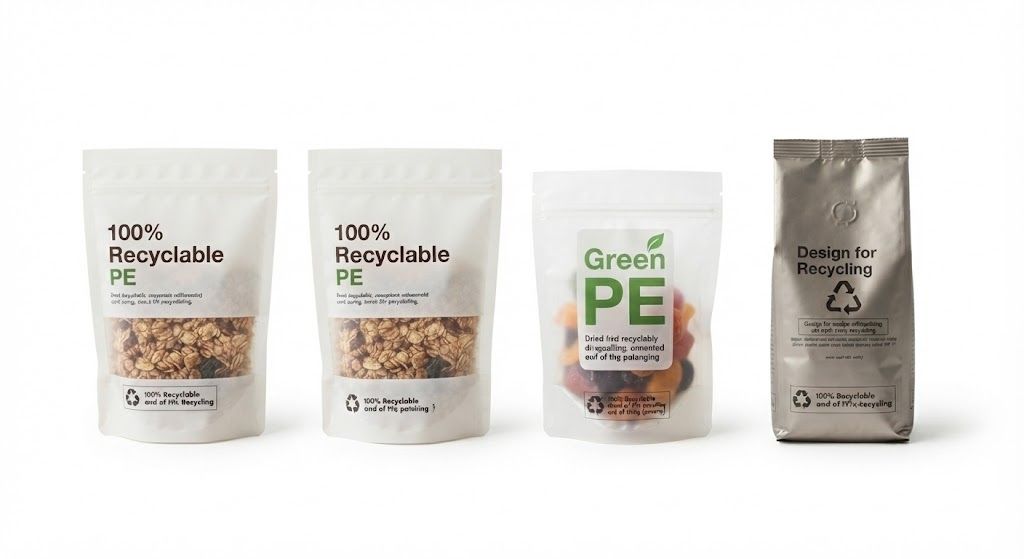
The idea of secondary raw materials is central to the concept of material life. Primary raw materials are newly sourced materials used to manufacture products and packaging, while secondary raw materials are recovered from waste and prepared for reuse in production.
The PPWR recyclability framework specifically refers to secondary raw materials being of sufficient quality to replace the primary raw materials they substitute. This means recycling is not simply about collecting packaging waste. The recovered material must have sufficient quality and a clear pathway into further production.
For recyclable flexible packaging, this creates an important design objective. The package should be developed with consideration for the material’s potential next stage. When suitable packaging enters an effective collection, sorting and recycling system, its material can potentially be used in another application instead of ending its useful role with the original package.
Packaging design decisions made before production can influence what happens to the material after use. Designers can consider the polymer family, layer structure, required functional properties and compatibility with applicable recycling criteria at an early stage.
This forward-looking approach can help connect the package’s first function with its potential future use as a material. Instead of considering only whether the package protects the product effectively, the design process can also consider whether its material structure is suitable for the intended recycling pathway.
At the same time, recyclability should always be assessed against the applicable PPWR criteria and technical requirements rather than assumed based on a single feature. Recyclable flexible packaging must perform its primary packaging function while also being designed with its end-of-use pathway in mind.
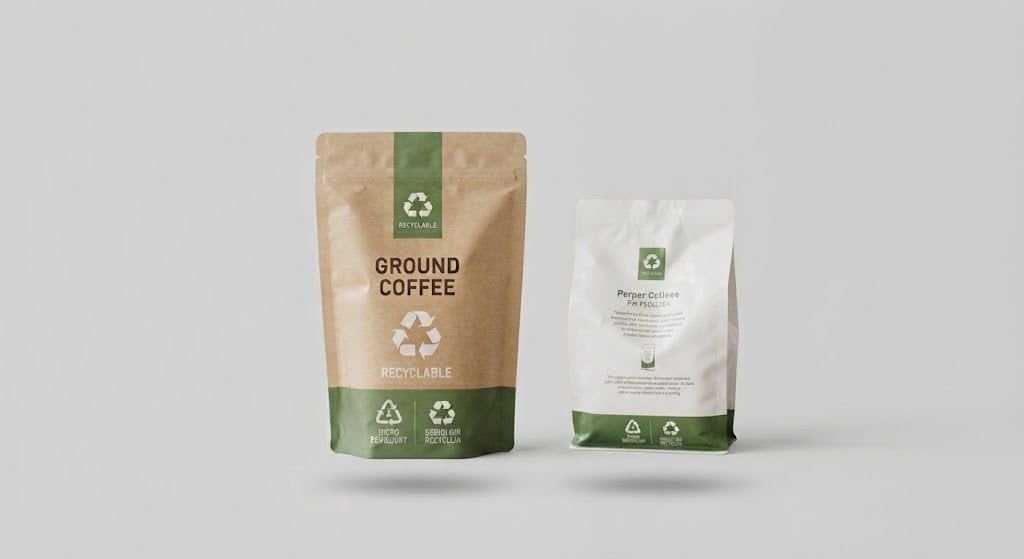
The usefulness of recycled material depends greatly on the quality of the material produced through the recycling process. Simply processing packaging waste does not guarantee that the resulting material will be suitable for every future application. Its properties, consistency and cleanliness can affect where it can be used.
The PPWR connects recyclability with the production of secondary raw materials of sufficient quality. Its framework considers whether recycled materials can replace primary raw materials while maintaining suitable quality for their intended use. This makes the quality of recycled material an important part of the wider packaging cycle.
For flexible packaging, this means that material quality can influence what happens after recycling. Recovered material may be suitable for different applications depending on its characteristics and the requirements of the next product. Its continued value does not depend on being made into the exact same pouch again. Instead, the recovered material can continue to provide value when it meets the technical requirements of an appropriate next use.
Post-consumer recycled polyethylene, commonly known as PCR PE, can connect previously used plastic with new production. When suitable recovered polyethylene is available and meets the necessary requirements, it can be used as a material input for future plastic products. This gives recovered material a potential role beyond its original packaging application.
It is important to distinguish recycled content from recyclability because these are related but different concepts. Recyclability concerns whether packaging can meet the applicable conditions for recycling, while recycled content refers to the amount of qualifying recovered material incorporated into new plastic packaging. The PPWR addresses these areas through separate provisions, including Article 6 on recyclability and Article 7 on recycled content.
For recyclable flexible packaging, this distinction allows manufacturers to consider different stages of the material cycle. The package can be developed with its future recycling pathway in mind, while suitable PCR PE can potentially become part of a later production stage. These approaches can therefore contribute to different stages within a broader material cycle.
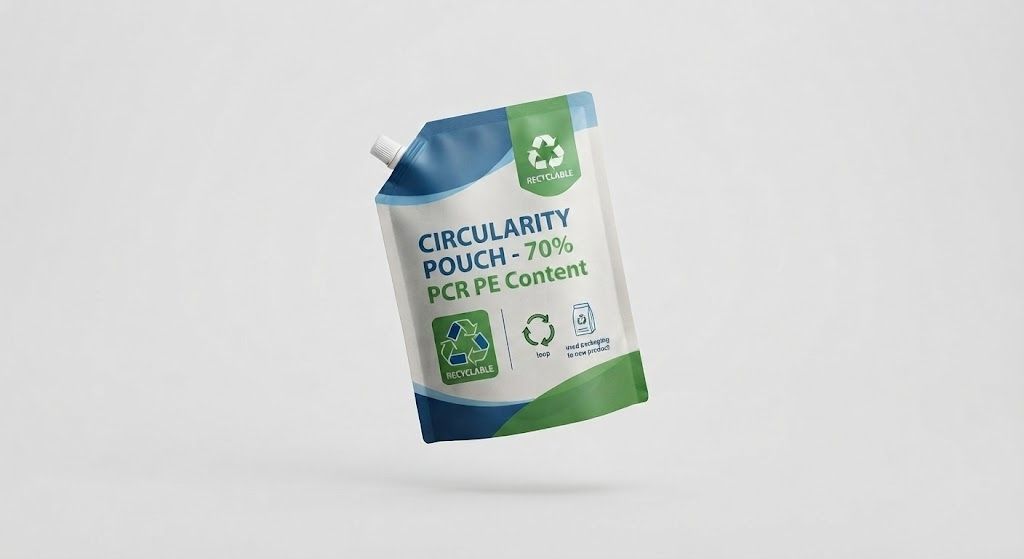
Recyclable flexible packaging can support a longer material life by considering what happens to packaging after its first use. Under the PPWR, recyclability is connected with material recycling, secondary raw materials and the conditions required for packaging waste to be collected, sorted and recycled at scale. Recycled content requirements also create a connection between recovered plastic and future packaging production. When packaging is designed with suitable materials, controlled composition and future recycling pathways in mind, its material may have the potential to remain useful beyond its original application.
However, a longer material life should not be understood as a guarantee that every package will be collected or recycled. Actual outcomes depend on the packaging structure, applicable technical criteria, collection systems, sorting processes and available recycling infrastructure. For businesses supplying packaging to the EU market, considering these factors during the design stage can help develop packaging that is better prepared for the direction of the PPWR while maintaining the protection and performance required for its intended product.
Longdapac is one of the leading recyclable flexible packaging suppliers in China. Longer material life means less waste and less consuption raw material. And this is the sustainable behavior.
Answer: A longer material life means that the value of packaging material can potentially continue after the original packaging has completed its first use. Instead of viewing the material only in terms of its first application, recyclable flexible packaging considers whether the material can enter an appropriate recycling pathway after use and potentially become a useful secondary raw material. This does not mean that the same package will automatically be made into another package or that recycling will take place in every location. The actual outcome depends on factors such as collection, sorting, recycling processes, material quality and the requirements of the applicable recycling system. Under the PPWR, this broader approach is relevant because recyclability is connected with material recycling and the production of secondary raw materials of sufficient quality.
Answer: PPWR, or Regulation (EU) 2025/40, establishes requirements for packaging and packaging waste in the European Union and applies to packaging placed on the EU market. Its provisions cover areas such as recyclability, recycled content, substances of concern and the systems needed to collect, sort and recycle packaging waste. For recyclable flexible packaging, this means that simply describing a package as recyclable is not enough to establish compliance. The packaging must meet the applicable criteria and conditions set by the regulation and related technical requirements. This makes packaging design, material selection and the intended recycling pathway important considerations for businesses that place flexible packaging on the EU market.
Answer: Yes, recyclable flexible packaging can contain recycled material when that material is suitable for the intended application and meets the relevant technical and regulatory requirements. Recyclability and recycled content are different concepts, so packaging designed for recycling does not automatically need to contain recycled material, while packaging that contains recycled material is not automatically recyclable. The PPWR addresses these areas separately, including recyclability requirements under Article 6 and recycled-content requirements for plastic packaging under Article 7. The use of post-consumer recycled polyethylene, or PCR PE, can connect previously used plastic with new production when the recovered material has the required properties and is permitted for the intended application.
Answer: Material composition is important because the substances and materials used in packaging can affect its performance, regulatory status and potential treatment after use. Flexible packaging may contain polymers, additives, coatings and other components that support functions such as protection, sealing and barrier performance, so these elements need to be considered as part of the complete packaging structure. The PPWR also includes requirements concerning substances of concern, including specific restrictions on PFAS in food-contact packaging from 12 August 2026 and a combined limit of 100 mg/kg for lead, cadmium, mercury and hexavalent chromium, subject to the regulation’s provisions and exemptions. Therefore, manufacturers need to consider the complete material composition rather than focusing only on the main polymer.
Answer: No, recyclable flexible packaging does not automatically comply with the PPWR simply because it uses a recyclable material or a mono-material structure. The PPWR sets specific conditions for packaging recyclability, including requirements related to the ability to recycle packaging into secondary raw materials and, at the relevant stages, the ability to collect, sort and recycle packaging waste at scale. Other provisions of the regulation also cover areas such as recycled content and substances of concern. Therefore, compliance needs to be assessed based on the requirements that apply to the specific packaging, its placement on the EU market and the applicable date. A recyclable flexible packaging structure can support these requirements, but actual compliance depends on whether the complete package meets the relevant PPWR criteria.