
Packaging is an essential part of modern product distribution because it helps products move through storage, transportation and retail efficiently. Flexible packaging has become a widely used option because it offers practical formats while using relatively lightweight structures. However, packaging requirements in the European Union are changing, and businesses are placing greater focus on recyclable packaging designs. The Packaging and Packaging Waste Regulation (PPWR) places greater emphasis on recyclability, packaging design and the development of a more circular packaging system.
Recyclable Flexible Packaging provides a positive option for businesses looking to review their existing packaging structures under these changing requirements. It can be designed with compatible material structures, such as mono-material PE, while continuing to support the functional needs of flexible packaging. Rather than treating recyclability as a separate feature, businesses can consider it as part of the overall packaging design. This approach creates an opportunity to move from certain conventional structures to recyclable alternatives while continuing to use practical pouch formats.
In this article, we will explain how Recyclable Flexible Packaging can become a valuable alternative to conventional flexible packaging under PPWR. We will also discuss its material structure, the importance of PPWR, mono-material design, packaging functionality, barrier performance and the role of recyclable structures in modern pouch development.
Recyclable pouch is developed with recycling considerations built into the packaging structure. One important approach is the use of mono-material structures, where the primary layers belong to the same polymer family. PE-based structures, such as PE/PE, can provide a practical foundation for recyclable flexible packaging because the main layers are made from compatible materials.
This approach gives packaging manufacturers an opportunity to rethink conventional structures that may combine different material families. Instead of using several unrelated polymers for different functions, the packaging structure can be developed around a more consistent material direction. This can support a clearer approach to material selection and recycling considerations. Recyclable Flexible Packaging can also retain the useful characteristics of flexible formats. It can be produced in different pouch designs and adapted to various product requirements. This makes it more than a packaging solution focused only on recyclability. It can also serve as a practical option for businesses looking to combine functionality with a recycling-focused material strategy.
The Packaging and Packaging Waste Regulation, known as PPWR, establishes common rules for packaging and packaging waste across the European Union. Regulation (EU) 2025/40 entered into force on 11 February 2025 and generally applies from 12 August 2026. The regulation covers packaging placed on the EU market regardless of its material or origin.
A major focus of the regulation is improving packaging recyclability. Article 6 sets requirements for recyclable packaging, design for recycling, the production of high-quality secondary raw materials and recycling at scale. These requirements make recyclability an increasingly important consideration when businesses develop or select packaging structures.
For flexible packaging, this provides a clear reason to review existing material choices. Businesses can assess whether their current packaging structures meet the applicable requirements and whether recyclable alternatives can provide the required performance. Recyclable Flexible Packaging can therefore become an important option when reviewing and selecting packaging structures.
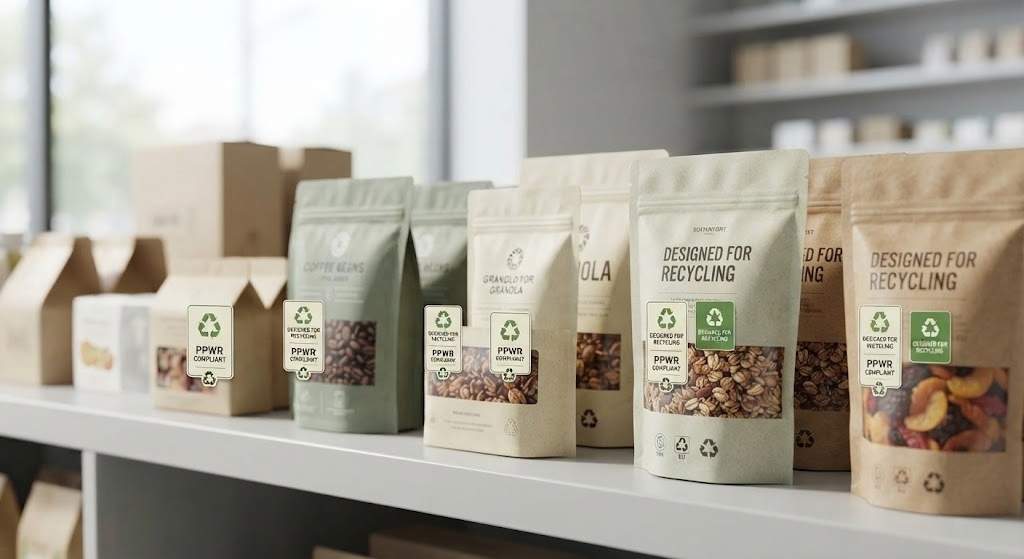
Mono-material design is an important concept in recyclable flexible packaging. In this approach, the main packaging layers are based on the same polymer family rather than combining different polymer families. PE/PE is one such structure, while PP/PP can be another suitable structure depending on the packaging application.
Using a compatible polymer family can help reduce material complexity within the main packaging structure. This provides a clearer material foundation for packaging development and allows manufacturers to focus on how the structure can support recycling while still meeting the required functional properties. It is important to understand that mono-material construction alone does not automatically mean that every package complies with PPWR. The complete packaging structure still needs to be assessed against the applicable requirements. Even so, mono-material design provides a valuable starting point for developing packaging with recycling considerations in mind.
Recyclable packaging must still perform its main packaging functions. A pouch needs to maintain its structure during filling, sealing, handling, transportation and storage. Therefore, moving to a recyclable structure should not mean giving up the functional qualities required for the packaged product.
Modern recyclable flexible packaging can be developed to provide useful mechanical and sealing properties. The structure can be selected based on the product, pouch format and production requirements. This allows manufacturers to consider recycling goals while continuing to focus on practical packaging performance.
This balanced approach is important because effective packaging needs to perform well throughout its intended use. Recyclable Flexible Packaging therefore brings together two important considerations: developing a structure with recycling in mind and ensuring that the package remains suitable for its intended application.
Barrier performance is another important consideration when developing flexible packaging. Different products may require protection against moisture, oxygen or light, and the required level depends on the product and its specific packaging conditions.
Recyclable Flexible Packaging can be developed with barrier-focused structures to support these requirements. Different technologies and material combinations can be considered during the development process while maintaining the overall recyclable packaging direction.
For applications that require strong protection, barrier performance can be evaluated alongside material compatibility. This allows businesses to select a structure based on the actual requirements of the product rather than assuming that recyclable packaging must have limited functional performance.
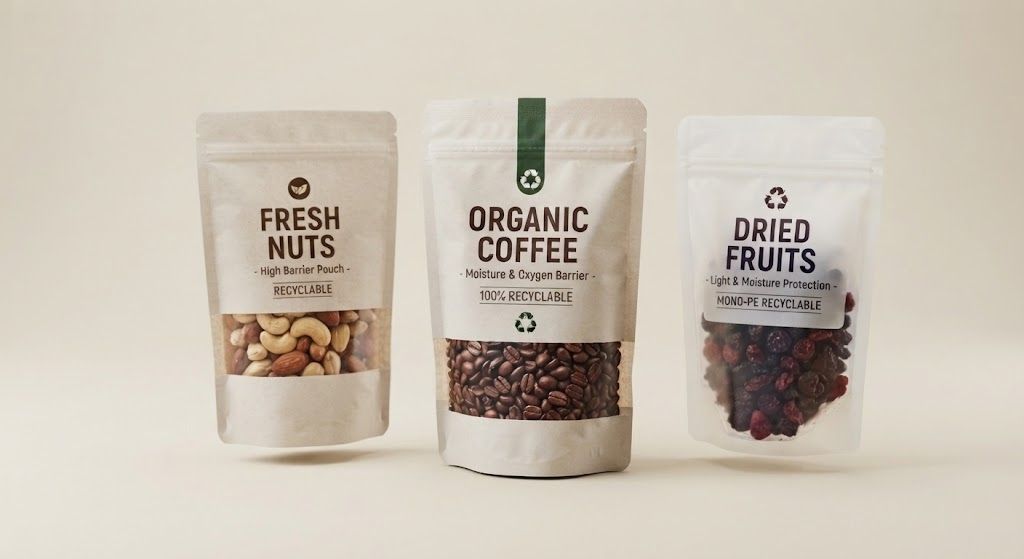
When businesses compare Recyclable Flexible Packaging with conventional flexible packaging, they can look beyond the basic packaging format and consider the overall material approach, design flexibility and recycling considerations. Recyclable structures can provide a strong alternative for suitable applications while helping businesses give greater attention to material compatibility and PPWR-focused packaging decisions.
The table below outlines the key differences businesses can consider when evaluating these two packaging approaches.
Packaging Factor | Recyclable Flexible Packaging | Conventional Flexible Packaging |
Material Approach | Can be developed around compatible polymer structures | May use combinations of different material families |
Recycling Focus | Designed with recycling considerations in mind | Depends on the specific packaging structure |
Material Consistency | Supports a more consistent material direction | Can involve more varied material constructions |
Pouch Applications | Suitable for different pouch formats and applications | Also available across different flexible formats |
Packaging Development | Encourages recycling to be considered during design | May require greater review of existing material structures |
PPWR Consideration | Supports a packaging strategy focused on recyclability | Requires assessment against applicable PPWR requirements |
Design Flexibility | Can be adapted to different product and pouch requirements | Offers flexibility depending on the selected structure |
Packaging Strategy | Provides a strong direction for improving suitable packaging structures | May require changes where existing structures do not fit new requirements |
Overall, Recyclable Flexible Packaging gives businesses a valuable opportunity to improve suitable packaging structures while maintaining the practical benefits of flexible formats. By selecting the right recyclable structure for each application, businesses can develop packaging that meets product requirements while placing greater focus on recycling. This makes Recyclable Flexible Packaging a positive and practical choice for businesses reviewing their packaging strategies under PPWR.
Material compatibility can play an important role in developing Recyclable Flexible Packaging. When the main layers belong to a compatible polymer family, manufacturers have a clearer material direction for the overall packaging structure.
This can help packaging teams evaluate each layer based on its specific purpose. Instead of using different materials simply because they have traditionally been combined, the development process can assess whether the required functions can be achieved within a more compatible structure. Such an approach supports more thoughtful packaging development. Businesses can consider material selection alongside sealing, barrier, strength and format requirements. This provides a practical way to explore recyclable alternatives without treating recyclability as the only factor that matters.
Flexible packaging is available in many pouch formats, giving businesses flexibility when selecting a suitable package. Recyclable structures can be adapted to different applications when the required material and performance conditions can be achieved.
Flat pouches can provide a compact flexible format, while stand-up pouches can offer a different structure for products that require a package that can stand upright. Spout pouches can also be considered for applications where controlled dispensing is useful.
The ability to use recyclable structures across different formats makes this approach practical for businesses with varied packaging requirements. Rather than limiting recyclable packaging to one pouch design, manufacturers can evaluate the most suitable structure and format for each application.
Replacing conventional flexible packaging does not necessarily mean changing every part of a packaging system. Businesses can begin by reviewing the material structure of an existing package and determining whether a suitable recyclable alternative can meet the same essential requirements.
The comparison should consider the product, packaging format, barrier needs, sealing requirements and production conditions. Once these factors are understood, a recyclable structure can be developed or selected to suit the specific application. This makes the replacement process a structured packaging decision rather than a simple material substitution. When the recyclable structure provides the required performance and meets the relevant regulatory conditions, it can become a strong alternative to conventional flexible packaging.
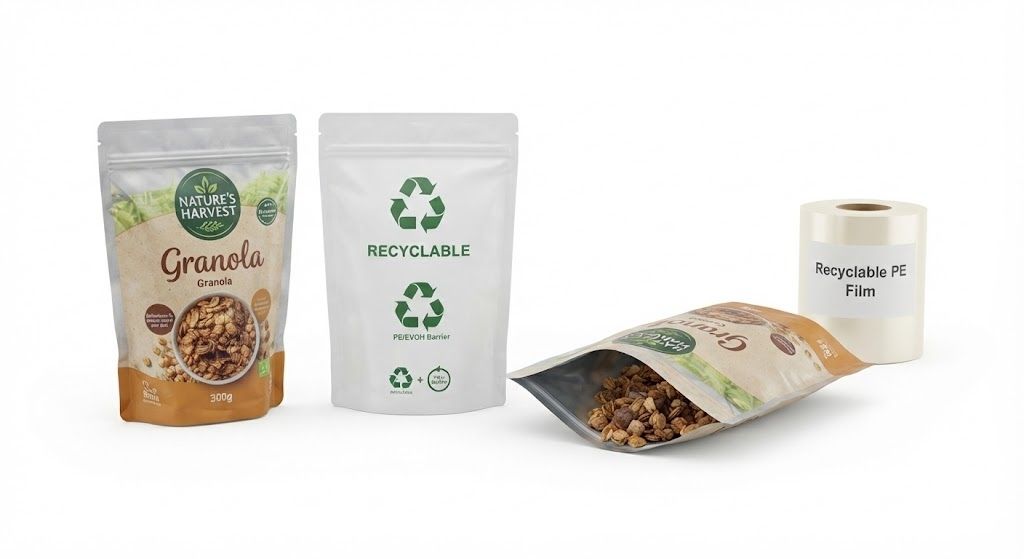
Packaging design plays a direct role in the recyclability of a package. The structure, materials and relevant components need to be considered together rather than evaluated separately. This creates a more complete approach to packaging development.
PPWR places greater emphasis on design for recycling and establishes a framework for assessing packaging recyclability. Detailed criteria are being developed through further EU measures, making it useful for businesses to consider recycling during the initial packaging design stage rather than waiting until the final stage of development.
Recyclable Flexible Packaging fits well within this approach because its material strategy can be considered from the beginning. Businesses can assess the complete package and identify opportunities to develop a structure that supports both practical performance and recycling objectives
Recyclable Flexible Packaging offers businesses a practical way to rethink flexible packaging through a recycling-focused material strategy. Compatible structures, useful pouch formats and application-specific performance requirements can all be considered within the same development process.
The value of this approach is that businesses do not have to choose between packaging functionality and recycling considerations. A well-designed recyclable structure can be developed around the needs of the product while giving greater attention to material compatibility and recyclability.
For businesses reviewing their flexible packaging under PPWR, Recyclable Flexible Packaging can be a valuable option to consider. With the right structure, suitable performance and complete regulatory assessment, it can provide a strong pathway for replacing selected conventional flexible packaging formats.
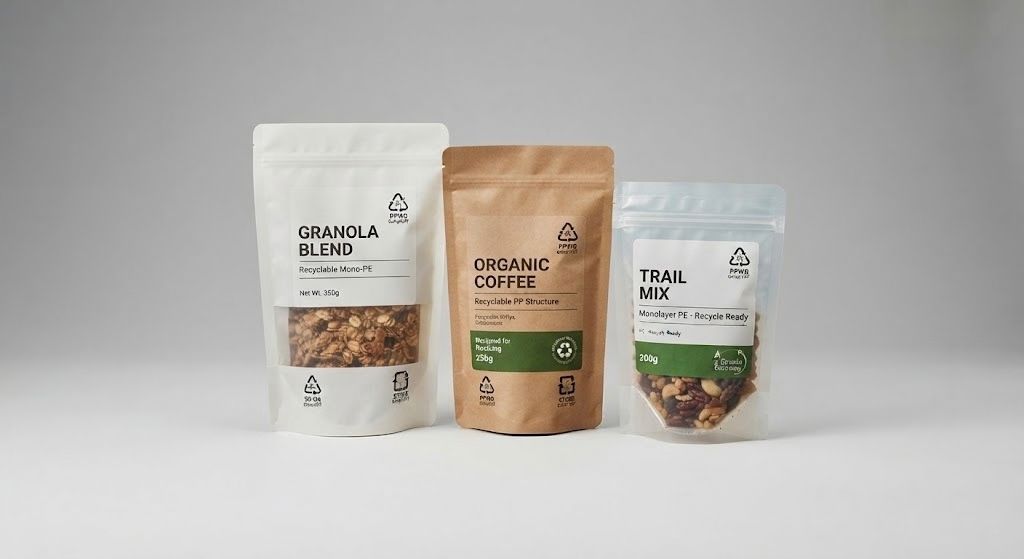
Recyclable Flexible Packaging can be a strong and practical alternative to conventional flexible packaging under PPWR when the complete packaging structure is designed and assessed according to the applicable requirements. With compatible material structures, flexible pouch formats and suitable functional performance, it can help businesses move toward a more recycling-focused packaging approach without giving up the practical benefits of flexible packaging. By carefully evaluating material selection, product requirements and PPWR requirements, businesses can choose recyclable packaging solutions that provide a valuable path for replacing suitable conventional packaging structures.
Longdapac is one of the leading recyclable pouch manufacturers in China. More and more customers are switch from conventional material to recyclable materials after the PPWR rules.
Answer: Yes, Recyclable Flexible Packaging can replace suitable conventional flexible packaging structures when the new packaging meets the required functional and regulatory conditions. The transition should be based on the complete packaging structure, including its material composition, product requirements, manufacturing needs and applicable PPWR requirements. A recyclable structure can provide a strong alternative when it delivers the necessary performance while supporting the recycling objectives of the packaging design. This allows businesses to reconsider selected conventional formats and choose a more recycling-focused solution without giving up the flexibility and practical benefits expected from flexible packaging.
Answer: Recyclable Flexible Packaging can be valuable because it combines the practical features of flexible packaging with a material strategy that gives greater attention to recycling. It can be developed in different pouch formats and adapted to the requirements of individual products. Businesses can also consider suitable structures for different packaging ranges rather than limiting recyclable packaging to one application. This flexibility gives packaging teams more opportunities to select recyclable solutions based on product needs, production requirements and market expectations. As a result, Recyclable Flexible Packaging can support businesses that want to improve their packaging approach while maintaining useful functionality.
Answer: No, a mono-material structure is not automatically compliant with PPWR simply because it uses one main polymer family. Mono-material design can be a valuable approach because it provides a more consistent material structure, but the complete package still needs to be assessed against the applicable requirements. Factors such as the overall packaging construction, relevant components, design requirements and applicable recycling conditions need to be considered. Therefore, businesses should view mono-material design as an important part of recyclable packaging development rather than as automatic confirmation of regulatory compliance.
Answer: Yes, Recyclable Flexible Packaging can be developed according to the performance requirements of different products. Depending on the application, packaging developers can consider factors such as moisture protection, oxygen protection, light protection, sealing requirements, pouch dimensions and product-specific handling needs. The appropriate structure will depend on the specific application, so recyclable packaging should be selected after understanding the actual requirements of the product. This approach allows businesses to explore recyclable alternatives while continuing to focus on the packaging performance needed during filling, handling, transportation and storage.
Answer: Businesses should approach the transition through careful evaluation rather than making a simple material change. They can first review their existing packaging structures and identify applications where a suitable recyclable alternative can provide the required performance. The selected structure can then be assessed through relevant packaging trials and production checks before wider implementation. Businesses should also review the applicable PPWR requirements and confirm that the complete packaging solution meets the conditions relevant to its intended market. This planned approach can help businesses make informed packaging decisions and use Recyclable Flexible Packaging as a practical alternative to suitable conventional flexible packaging structures.