
Packaging helps protect products during storage, transportation and distribution. Flexible packaging is widely used because it is lightweight, adaptable and suitable for products with different requirements. Its performance depends on several factors, including material strength, sealing quality and protection against external conditions. Barrier properties are particularly valuable because they help prevent moisture, oxygen and other substances from passing through the packaging material, helping maintain product quality throughout the intended storage period.
Recyclable Flexible Packaging is gaining attention as businesses look for packaging solutions that provide effective product protection while supporting recycling. The European Union’s Packaging and Packaging Waste Regulation (PPWR), Regulation (EU) 2025/40, sets requirements for packaging recyclability, waste prevention and other environmental goals. For flexible packaging manufacturers, this means considering barrier performance alongside material selection and recycling compatibility. Barrier solutions must be carefully designed to meet product protection requirements while also considering the factors that affect the recycling process.
In this blog, we will explain how barrier properties can support Recyclable Flexible Packaging under PPWR. We will also discuss moisture and oxygen protection, material selection, mono-material structures, barrier coatings, performance testing and relevant regulatory considerations.
Barrier properties describe how effectively a packaging material limits the passage of substances, such as water vapour, oxygen and certain gases that can affect product quality. In Recyclable Flexible Packaging, these properties help protect products from environmental exposure during storage and distribution. The level of protection required depends on the product’s sensitivity and the conditions it may experience during its intended storage period.
Recyclable pouches can achieve suitable barrier performance through carefully selected films, coatings, additives and layer structures. Each component serves a specific purpose, and its performance depends on the material used and how it is processed. A film may provide effective moisture resistance but need an additional solution to achieve the required oxygen barrier.
These differences help manufacturers select materials based on the product’s actual needs. Instead of choosing the highest possible barrier level for every application, they can determine the protection required and develop a packaging structure that meets those needs while considering material efficiency and recycling compatibility.
Moisture control is an important consideration when developing flexible packaging for products that are sensitive to changes in water content. Water vapour can enter or leave a package depending on the material properties and surrounding conditions. This movement may affect the product’s texture, weight, consistency and other characteristics.
Polyethylene (PE) and polypropylene (PP) films can provide effective moisture-barrier properties, although their performance depends on the film grade, thickness, structure and processing conditions. Manufacturers can assess the water vapour transmission rate of the selected material to determine whether it provides suitable protection for the intended application.
For Recyclable Flexible Packaging, moisture protection should be achieved through a structure that also considers recycling compatibility. Choosing a suitable film and avoiding unnecessary material complexity can help balance these requirements. The final design should be evaluated as a complete package rather than based on moisture resistance alone.
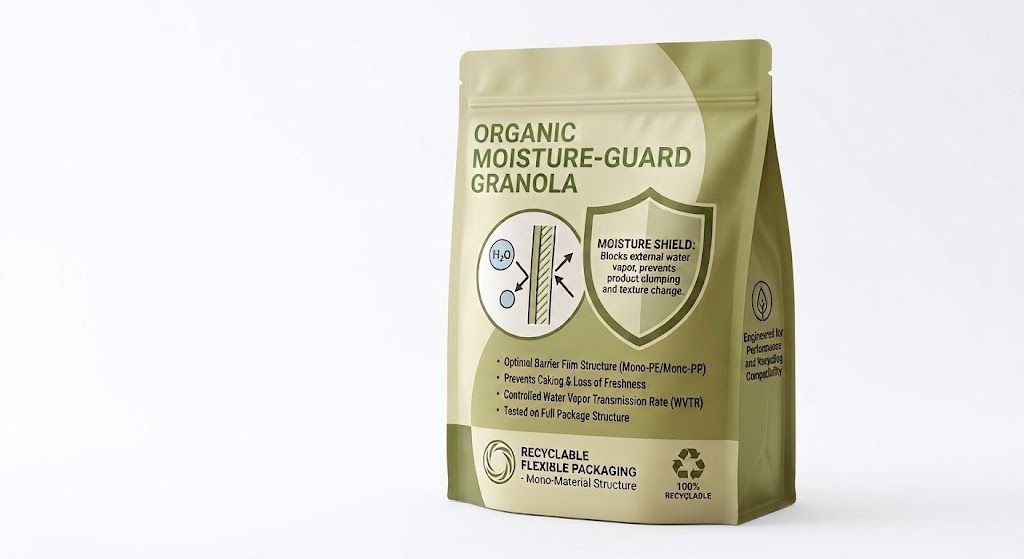
Oxygen can cause unwanted changes in products that are sensitive to oxidation. Depending on the product, exposure to oxygen may affect flavour, colour, aroma or nutritional quality. An effective oxygen barrier helps limit the amount of oxygen that passes through the packaging material, helping maintain product quality throughout the required storage period.
The oxygen barrier required depends on the product’s sensitivity, expected storage conditions and intended shelf life. Some products may receive sufficient oxygen protection from suitable polyolefin film structures, while others may need additional barrier layers or coatings. Manufacturers should choose materials based on the product’s specific requirements and assess the performance of the complete packaging structure.
Developing Recyclable Flexible Packaging with suitable oxygen protection requires careful material selection. Some traditional high-barrier structures combine different polymer families, which can make mechanical recycling more challenging. Alternative designs may use compatible materials and carefully selected barrier layers or coatings, provided the complete packaging structure meets the relevant recycling criteria.
Material selection directly affects packaging performance and its potential compatibility with recycling processes. Manufacturers should consider the protective function of each layer, the proportion of different materials and their behaviour during recycling. This approach helps identify structures that meet product requirements without adding unnecessary complexity.
PE-based and PP-based packaging are useful options for developing structures within a compatible polymer family. Depending on the application, these structures may incorporate additional functional layers or coatings to improve barrier performance. However, using a particular polymer family does not automatically make the complete package recyclable.
Key considerations include:
These considerations help manufacturers evaluate packaging thoroughly and select a design that balances technical performance with the applicable recycling requirements.
Mono-material packaging is mainly made from one polymer family, such as polyethylene (PE) or polypropylene (PP). It can contain multiple functional layers, but the compatibility of additional materials, coatings and other components must also be considered when evaluating the complete package for recycling.
For Recyclable Flexible Packaging, a mono-material design can help minimise differences between the main packaging layers. This can support compatibility with the relevant recycling process, provided the complete structure meets the applicable design criteria. The choice of polymer family should depend on the product’s performance requirements and the recycling stream for which the package is designed.
Achieving suitable barrier performance in a mono-material structure may require careful film engineering. Manufacturers can consider film orientation, layer distribution and appropriate coatings to achieve the desired balance. Each solution must be properly evaluated because its effects on barrier performance and recyclability depend on the materials used, their quantities and the final packaging structure.
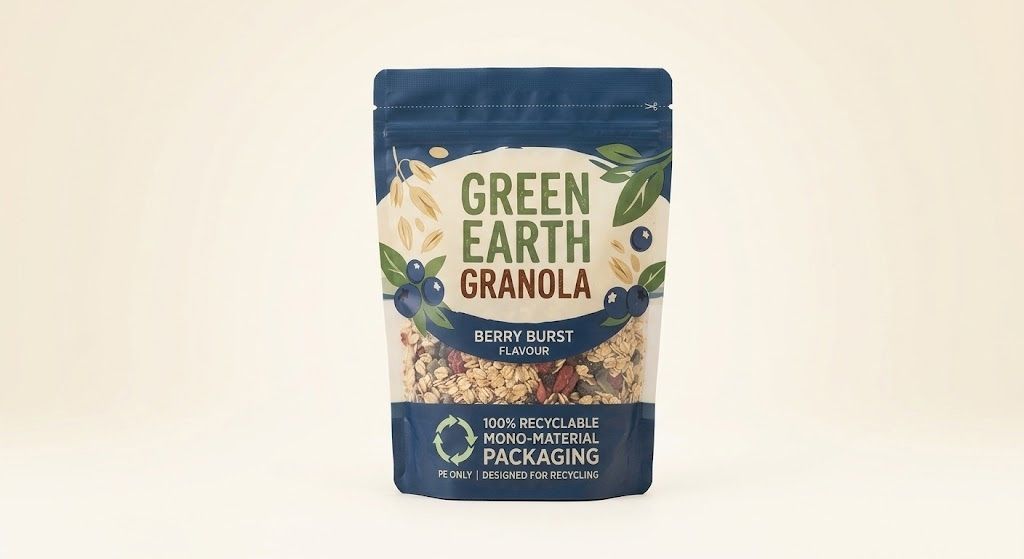
Additional barrier layers and coatings, such as ethylene vinyl alcohol (EVOH), aluminium oxide (AlOx) and silicon oxide (SiOx), can improve the protective performance of flexible packaging. Their compatibility with recycling depends on the complete packaging structure, the quantities used and the relevant recycling process. Some barrier materials may be compatible within specific limits, while others may affect the processing or quality of recycled materials. Manufacturers should evaluate each solution against appropriate design-for-recycling guidelines rather than assuming that every barrier layer or coating is suitable for recycling.
Different barrier solutions can have different effects on recycling. EVOH may affect the properties of recycled polyolefin materials when used in unsuitable quantities, while oxide coatings and metallised layers must be assessed according to their composition and structure. Their suitability should be evaluated against the relevant recycling criteria, considering the intended recycling stream and the requirements of the complete package.
Before making recyclability claims, manufacturers should assess the entire packaging structure, including barrier layers, coatings, adhesives and inks where relevant. Each additional component should serve a specific technical purpose, and its quantity and compatibility should be considered during material selection. This approach helps manufacturers balance product protection requirements with recycling compatibility and make more accurate claims about the recyclability of their packaging.
Testing helps confirm whether a packaging material provides the required level of product protection. Two useful measurements are the water vapour transmission rate (WVTR) and the oxygen transmission rate (OTR). WVTR measures how much water vapour passes through a material under specific test conditions, while OTR measures how much oxygen passes through it under specified conditions.
Test results should be evaluated based on the test method, temperature, humidity, pressure and material structure. Results obtained under different conditions may not be directly comparable. Manufacturers should use suitable testing methods and set acceptance limits based on the needs of the product being packaged.
When necessary, testing should also cover the complete package rather than focusing only on the film’s properties. Seals, folds, closures and other packaging features can affect product protection. Testing the finished package helps determine whether the selected barrier structure provides reliable protection during storage, transportation and use.
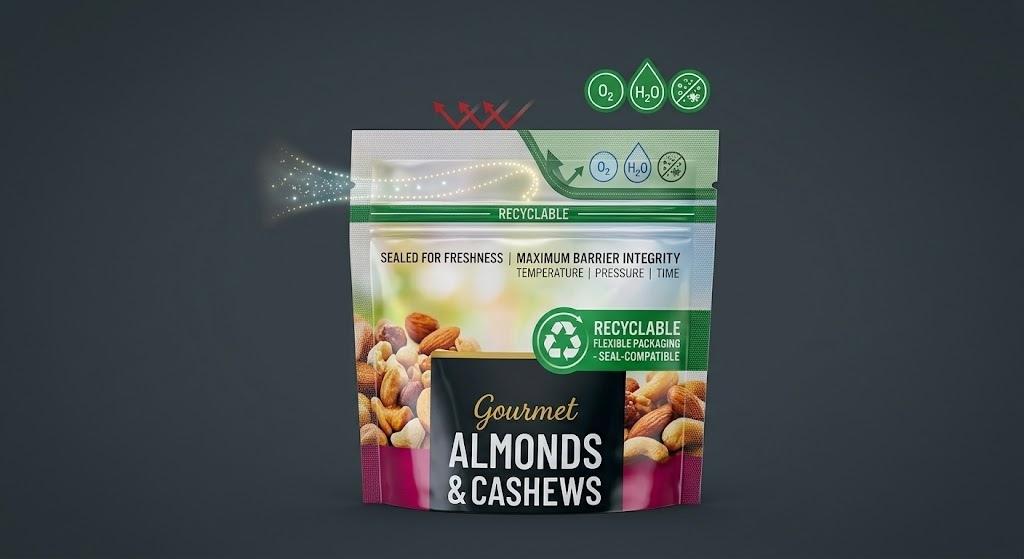
Seal integrity helps maintain the protective performance of flexible packaging. Even when a film provides suitable barrier properties, a weak seal can allow air or moisture to enter the package and affect product quality.
Seal performance depends on factors such as temperature, pressure, sealing time and the condition of the sealing area. Manufacturers should choose suitable sealing conditions and test the finished package to ensure that the seals remain reliable during handling and distribution. For Recyclable Flexible Packaging, the seal design should also be compatible with the selected material structure. Suitable sealant materials can help maintain package performance while supporting the intended recycling process.
Some products are sensitive to light, which can affect their colour, composition or quality. For these products, packaging may need to reduce the amount of light that reaches them.
Light protection depends on factors such as material composition, opacity, pigments and specialised coatings. The right solution depends on the product’s sensitivity and the types of light that need to be blocked.
When developing Recyclable Flexible Packaging, manufacturers should also consider how pigments, printing systems and coatings may affect recycling. The complete packaging structure should provide the required light protection while remaining compatible with the intended recycling process.
Flexible packaging may experience changes in temperature and humidity during storage, transportation and distribution. These conditions can affect material behaviour, seal performance and the effectiveness of certain barrier systems.
Manufacturers should assess the environmental conditions that the package is expected to encounter. Temperature changes can affect flexibility and sealing performance, while humidity may affect moisture-sensitive components. Appropriate testing helps determine whether the packaging structure remains suitable under the expected conditions.
Product compatibility should also be considered. Some products may interact with packaging materials over time and affect their performance. Evaluating these factors helps manufacturers select suitable packaging structures for the required storage period.
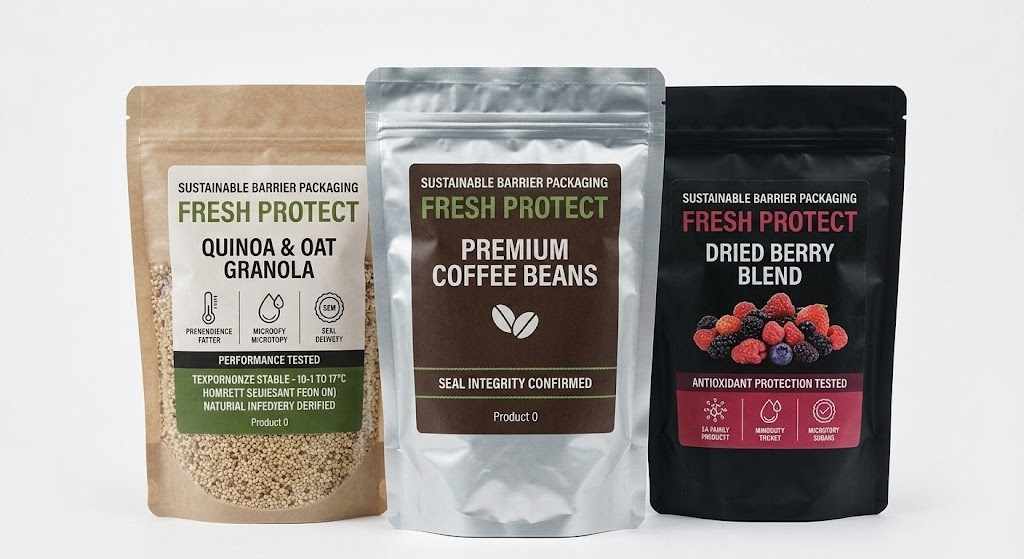
Recyclable Flexible Packaging can support product protection and recycling goals under PPWR when its barrier properties and material structure are carefully designed. Suitable protection against moisture, oxygen and light helps maintain product quality, while appropriate material selection, reliable seals and efficient packaging design contribute to overall performance. Manufacturers should choose barrier solutions based on product requirements and assess the complete packaging structure against the applicable recyclability criteria. Testing and validation help confirm technical performance, while regulatory assessments are needed to determine PPWR compliance. By balancing product protection, material efficiency and recyclability, businesses can develop packaging solutions that meet functional requirements and support responsible packaging design.
Longdapac is the leading recyclable pouches manufactuer from China. Actually the biggest problem for recyclable flexible packaging to replace the conventional flexible packaging is the barrier function. Since most of the products need to pack with barrier function; we have AL, Metalized coating, and other high barrier coating for conventional materials. But these are not easy for recyclable pouches. But current our technology improve a lot, so we can meet most of the barrier requirements for the packaging. That’s the main reason for our recyclable pouches to replace the conventional materials and meet the sustainable goal.
Answer: Barrier properties describe how effectively a packaging material limits the passage of substances such as moisture, oxygen and certain gases. These properties help protect products from environmental exposure that could affect their quality, freshness, texture, flavour or composition. The level of protection required depends on the type of product, its sensitivity and the expected storage period. Manufacturers can select suitable films, coatings and material structures to achieve the required performance. For Recyclable Flexible Packaging, barrier properties should be developed alongside material selection and recycling compatibility so the packaging can provide appropriate protection while meeting the relevant recyclability criteria.
Answer: Recyclable Flexible Packaging can help protect products from moisture and oxygen by using materials designed to control the movement of water vapour and oxygen through the package. Moisture protection can help maintain a product’s texture, consistency and other characteristics, while oxygen protection can reduce exposure that may contribute to oxidation and changes in quality. The level of protection required varies according to the product and its intended storage conditions. Manufacturers can assess material performance through water vapour transmission rate (WVTR) and oxygen transmission rate (OTR) testing. These measurements help determine whether a packaging structure meets the specified requirements. The complete package should also be evaluated to ensure that its seals and other features maintain the required protective performance.
Answer: Yes, mono-material structures can provide barrier performance when they are designed with suitable films, layers or compatible barrier solutions. PE/PE and PP/PP are types of structures based on the same principal polymer family.These constructions can contain multiple functional layers while maintaining a common polymer family as their main material basis. However, the barrier performance depends on the materials used, their thickness, the construction and the intended application. Some products may require additional barrier functionality to achieve the necessary protection. Manufacturers must assess the complete structure because a mono-material design does not automatically guarantee recyclability or PPWR compliance. The packaging should meet its technical requirements and be evaluated against the applicable design-for-recycling criteria.
Answer: Barrier coatings can improve the protective performance of flexible packaging by helping control the passage of moisture, oxygen or other substances. Their effect on recyclability depends on the coating’s composition, quantity, compatibility with the main packaging material and behaviour during recycling. Some solutions may be suitable for particular recycling pathways, while others may affect the processing or quality of recycled material. Manufacturers should therefore assess coatings as part of the complete packaging structure rather than considering their barrier performance alone. This assessment should include other components, such as adhesives, inks and additional functional layers where relevant. Appropriate testing and design-for-recycling evaluations help determine whether a coated structure can provide the required product protection while meeting the applicable recyclability criteria.
Answer: Manufacturers can support barrier performance and PPWR compliance by assessing product requirements, selecting suitable materials and evaluating the complete packaging structure. The process should begin by defining the protection needed against moisture, oxygen and light, where relevant. Manufacturers can then choose an appropriate material construction and test its performance using suitable methods, including WVTR and OTR measurements when applicable. Finished-package testing can also help verify seal integrity and overall protective performance. Separately, the complete package must be assessed against the applicable PPWR requirements, including the relevant recyclability criteria under Article 6. Meeting barrier specifications alone does not establish regulatory compliance, and using mono-material structures does not automatically guarantee it. A combination of technical testing, material assessment and regulatory evaluation helps manufacturers make informed decisions and support accurate packaging claims.