
Packaging plays an important role in protecting products, maintaining quality and ensuring the safe movement of goods through supply chains. Businesses use different packaging materials to meet product requirements, manage storage and prepare goods for transport. As packaging requirements change, companies are paying more attention to what happens to packaging after use. Recyclable Flexible Packaging provides a practical option for businesses looking to improve their packaging choices while continuing to meet product protection and handling requirements.
Recyclable Flexible Packaging allows businesses to review their existing packaging choices and explore alternatives that support recycling while meeting product protection and performance requirements. With the introduction of the Packaging and Packaging Waste Regulation (PPWR), companies placing packaging on the European Union market need to understand the relevant requirements, assess their packaging structures, and consider Recyclable Flexible Packaging as a competitive alternative to conventional packaging. By selecting suitable materials, evaluating technical performance, and working with experienced suppliers, businesses can prepare for these requirements and make informed packaging decisions.
In this blog, we will guide you through how Recyclable Flexible Packaging can help businesses switch from conventional packaging under the Packaging and Packaging Waste Regulation (PPWR). We will also explore material selection, mono-material structures, product protection, equipment compatibility, supplier collaboration, packaging trials and documentation to help businesses assess suitable alternatives and prepare for the applicable regulatory requirements.
The Packaging and Packaging Waste Regulation, formally known as Regulation (EU) 2025/40, establishes rules intended to reduce the environmental impact of packaging and packaging waste across the European Union. It addresses packaging throughout its life cycle, from material selection and design to collection and recycling. The regulation generally applies from 12 August 2026, although specific requirements follow their own implementation timelines.
For businesses, PPWR means that packaging decisions must consider more than immediate product needs. Companies may need to review the materials they use, the amount of packaging they supply and whether their packaging meets the applicable recyclability requirements. The specific obligations depend on the type of packaging, its intended use and the relevant provisions and implementation dates.
Recyclable Flexible Packaging can help businesses respond to these requirements by offering packaging structures developed with recycling in mind. However, labelling a package as recyclable does not automatically establish compliance. Businesses must assess the complete packaging structure against the applicable technical criteria and market requirements.
Before changing packaging, businesses need to understand the materials and structures currently used for their products. Conventional flexible packaging may combine several materials to provide strength, print quality, sealing performance and protection against moisture or oxygen. Although these combinations can perform well during use, some mixed-material structures can be difficult to recycle when their layers cannot be separated effectively.
A structure combining polyester (PET), aluminium foil and polyethylene (PE) can provide strong protection for products that require high barrier performance. However, combining different materials can make recycling more challenging than using a suitable structure made from compatible materials within the same polymer family. Reviewing existing packaging involves identifying its material layers, adhesives, inks, coatings, closures and other components. This information helps businesses determine whether Recyclable Flexible Packaging could provide a suitable alternative. It also helps them avoid changing the main film while overlooking other components that may affect the recyclability of the finished package.
Mono-material packaging uses one main polymer family instead of combining different materials that may be difficult to recycle together. Polyethylene (PE) and polypropylene (PP) are common choices for flexible packaging. A suitable PE-based structure can combine different PE films and compatible components to achieve the required performance.
This approach allows packaging developers to balance flexibility, sealing performance, strength and barrier properties while supporting recycling. Businesses do not necessarily need to switch to a single thin film, as packaging can contain multiple functional layers while remaining based on a compatible polymer family.
Recyclable Pouches made with a suitable mono-material structure can be a practical alternative to certain conventional mixed-material packages. However, the complete structure must be assessed according to its composition and intended recycling route. Coatings, barriers, adhesives, inks, and closures must also be considered, as the main polymer alone does not determine the recyclability of the finished package.
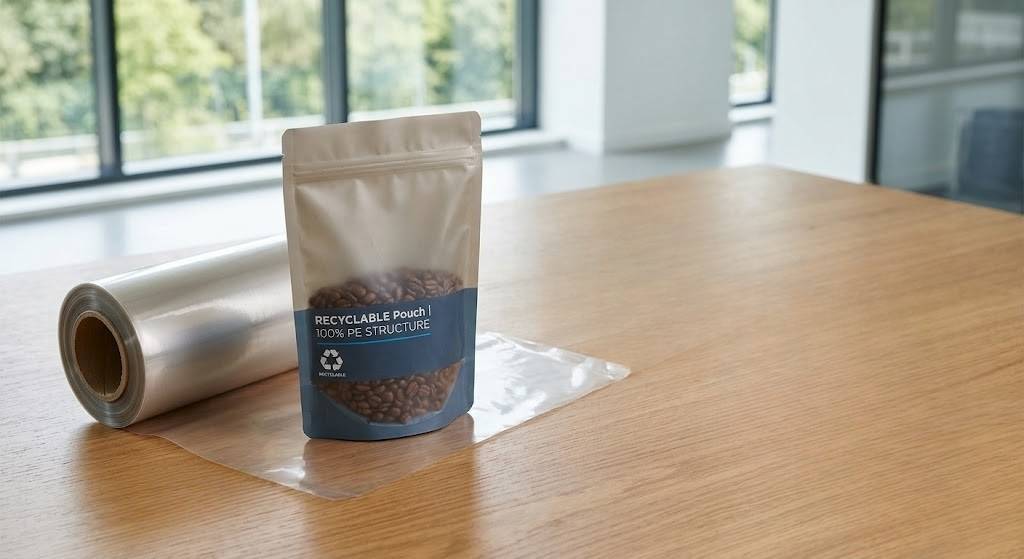
Product protection remains a key consideration when businesses change packaging materials. A new package must provide adequate protection against moisture, oxygen, light, punctures and other factors that could affect the product. The level of protection required depends on the product’s sensitivity, target shelf life, storage conditions and distribution requirements.
Modern flexible packaging structures can use functional layers and barrier technologies to meet specific product needs. Depending on the application, suitable options may include high-barrier PE films, metallised PE structures and coated films. Their performance depends on the materials used, film thickness, processing conditions and overall package structure.
Businesses should compare test results rather than assume that a recyclable alternative will automatically perform as well as the existing package. Relevant tests may include oxygen transmission rate, water vapour transmission rate, seal strength and package integrity. Choosing Recyclable Flexible Packaging based on these results helps businesses transition to alternative materials while maintaining product quality.
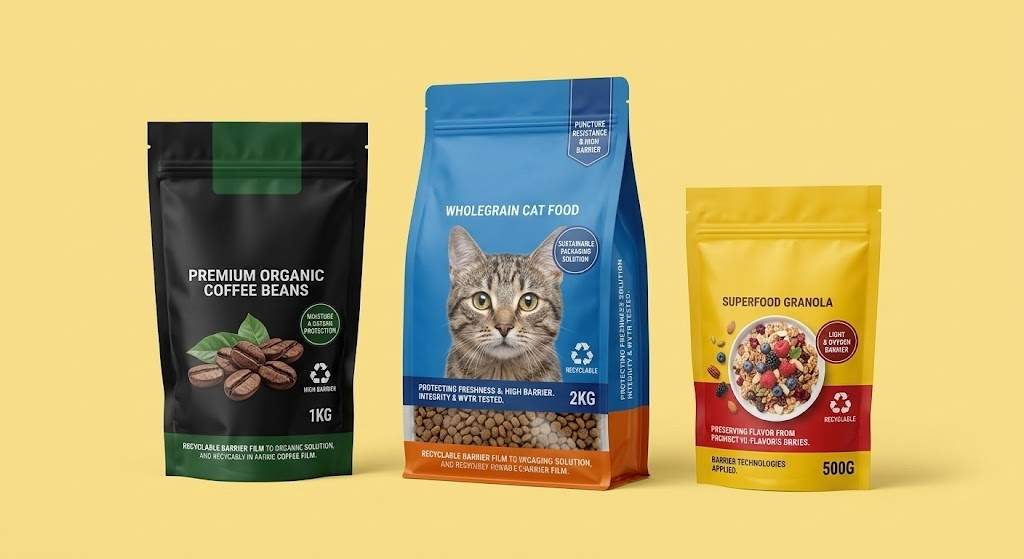
Packaging materials differ in their structure, performance and suitability for recycling. When businesses consider moving towards Recyclable Flexible Packaging under the Packaging and Packaging Waste Regulation (PPWR), comparing different packaging options helps them understand the key differences and identify the factors that matter for their products.
The following table highlights important areas businesses should consider when evaluating their packaging choices.
Packaging Features | Conventional Packaging | Recyclable Flexible Packaging |
Material Structure | May combine different materials to achieve specific packaging performance. | Can use compatible materials, such as PE-based structures, designed to support recycling. |
Product Protection | Can protect products against moisture, oxygen and external damage, depending on its structure. | Can be engineered to provide suitable barrier properties and product protection. |
Material Compatibility | Some material combinations can be difficult to process together through recycling systems. | Can be developed for compatibility with suitable recycling processes. |
Packaging Formats | Available in different formats to meet product and handling requirements. | Available in formats such as pouches, bags and flexible films for different applications. |
PPWR Requirements | Must be assessed against the requirements applicable to the packaging and its intended market. | Must also meet applicable PPWR requirements, including relevant recyclability criteria. |
Selection Process | Requires assessment of product needs, material performance and operating conditions. | Requires assessment of the complete structure, product performance and intended recycling route. |
This comparison shows that Recyclable Flexible Packaging can be a strong choice for businesses looking to move away from conventional packaging and adopt structures designed to support recycling. It can provide the flexibility and product protection required for different applications when the right materials are selected. However, businesses should assess the complete packaging structure, confirm its performance and check the applicable PPWR requirements before making a change. This approach helps them choose packaging that meets their product needs while supporting their recycling objectives.
Changing packaging materials can affect how products move through an existing production line. Film feeding, forming, filling, sealing and cutting all depend on the properties of the packaging material. A new film may behave differently from the current one, even when both are designed for the same type of package.
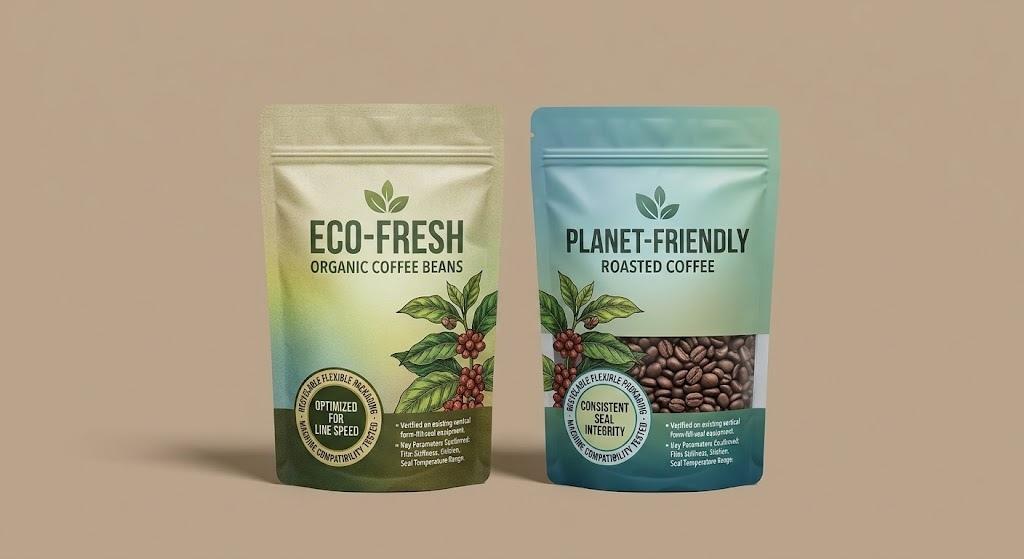
Businesses should work with their packaging suppliers to confirm whether the proposed material is compatible with their existing machinery. Key factors include film stiffness, friction, heat response and sealing temperature range. These properties can affect machine speed, seal consistency and the adjustments needed during production.
Recyclable Flexible Packaging can help businesses update their packaging while continuing to use suitable existing equipment. However, compatibility should be confirmed through machine trials rather than assumptions. Testing helps identify the most suitable operating conditions and any necessary adjustments before full-scale production begins.
Packaging suppliers can help businesses transition from existing packaging structures to more suitable recyclable alternatives. They can explain available materials, provide technical information and recommend structures that meet specific product requirements. Their experience can also help identify potential issues before a new package enters commercial production.
Clear communication is essential throughout the development process. Businesses should share details about product characteristics, filling conditions, expected shelf life, package dimensions and distribution requirements. Suppliers can use this information to recommend suitable film structures and identify areas that need further testing.
Working closely with suppliers also helps businesses understand the differences between proposed materials. Instead of choosing packaging based only on its recyclability claims, companies can request technical data, samples and supporting documents. This collaborative approach helps businesses evaluate Recyclable Flexible Packaging as a practical option for commercial use.
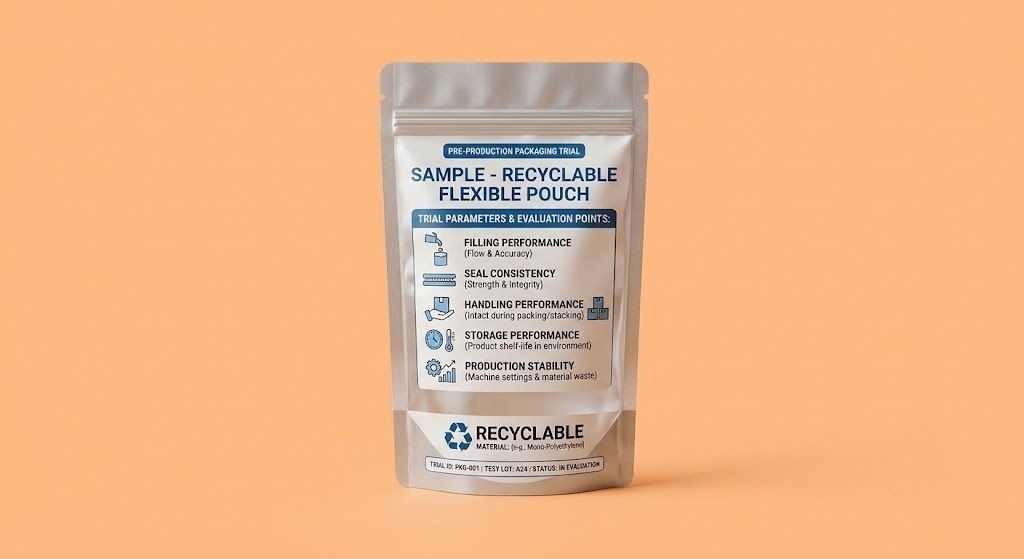
Packaging trials help businesses evaluate how a proposed structure performs under actual operating conditions. Laboratory results are useful, but they may not reveal every issue that can occur during filling, sealing, storage, or transport. Controlled trials help companies identify potential problems before committing to large production volumes.
Main Testing Areas:
Trial results should be documented and compared with the performance of the existing package. If problems arise, the business and supplier can make targeted adjustments and repeat the relevant tests.
A planned testing process helps companies reduce uncertainty before approving a new packaging structure. It also helps determine whether Recyclable Flexible Packaging is suitable for routine production and commercial use.
Packaging documentation helps businesses show how their chosen materials meet the requirements applicable to their products. Under PPWR, manufacturers and other economic operators have specific obligations based on their roles. Therefore, the necessary supporting evidence should be identified before approving a packaging change.
For applicable packaging, businesses may need technical documentation describing its structure, material composition and performance against relevant requirements. They should also determine who is responsible for preparing, reviewing and retaining these records. Suppliers can provide supporting information, but businesses should verify that it relates to the exact packaging structure being purchased.
Required Documentation:
The European Commission explains that PPWR introduces requirements for packaging recyclability and conformity documentation, with specific assessment methods and implementation timelines under the regulation.
Maintaining accurate records helps businesses respond to customer requests, internal reviews and regulatory checks. It also supports consistent purchasing decisions when Recyclable Flexible Packaging is used across multiple products or production sites.
Recyclable Flexible Packaging provides businesses with an effective option for moving away from conventional packaging while considering the requirements of the Packaging and Packaging Waste Regulation (PPWR). By selecting suitable mono-material structures, businesses can support recycling goals while maintaining the product protection, flexibility and performance required for different applications. Careful material selection and testing help ensure that the new packaging meets specific product and production needs.
A successful transition to Recyclable Flexible Packaging requires careful planning, reliable suppliers, accurate documentation and a clear understanding of the applicable PPWR requirements. Businesses should assess the complete packaging structure and verify that it meets the relevant criteria before making the switch. With the right approach, companies can adopt packaging solutions that support recycling, maintain product quality and help them prepare for changing packaging regulations.
Longdapac is the leading recyclable packaging supplier from China. Since there is government policy that recycalble will become a must in 2030, so the demand for it is getting higher and higher. Many of the companies want to get in this sustainable supply chain as early as possible.
Answer: Recyclable Flexible Packaging refers to flexible packaging made from materials designed to support recycling through suitable collection, sorting and recycling systems. It includes pouches, bags and flexible films made from materials such as polyethylene (PE) and polypropylene (PP). These materials can be developed into different packaging structures to provide flexibility, effective sealing, and protection against external factors, depending on product requirements. Recyclable Flexible Packaging also allows businesses to explore material options that support recycling while maintaining the functional properties needed for packaging and distribution. However, recyclability depends on the complete packaging structure, including films, coatings, adhesives, inks and closures, as well as the recycling systems available to process the package.
Answer: Recyclable Flexible Packaging helps businesses transition from conventional packaging materials to structures designed to support recycling while meeting product requirements. Under the Packaging and Packaging Waste Regulation (PPWR), businesses need to review their existing packaging choices and assess them against the applicable regulatory requirements. This process may involve exploring mono-material structures, evaluating product protection needs, consulting suppliers and testing alternative materials before full implementation. Businesses should also maintain the necessary technical documentation and follow the relevant implementation timelines. By taking these steps, companies can make informed decisions when switching to Recyclable Flexible Packaging and prepare for the changes introduced by PPWR.
Answer: Mono-material Recyclable Flexible Packaging can be a good choice because it is developed around one main polymer family, such as polyethylene or polypropylene, which can improve compatibility with suitable recycling processes. Unlike some structures that combine different types of materials, a well-designed mono-material structure can support recycling while providing the functional properties needed for packaging. Depending on the application, it can be designed to offer suitable flexibility, strength, sealing performance and product protection. This allows businesses to consider recycling requirements while meeting their products’ practical needs. However, using one main polymer family does not automatically guarantee recyclability or regulatory compliance. Businesses must assess the complete package, including coatings, adhesives, inks, and closures, against the relevant technical criteria and available recycling infrastructure.
Answer: Yes, Recyclable Flexible Packaging can help maintain product quality when its material structure is selected and tested according to the product’s specific needs. Depending on its construction, it can protect products against moisture, oxygen, contamination, and physical damage during storage, handling and transport. Suitable barrier films, functional coatings, and reliable seals can help preserve product quality and maintain the required shelf life. The right structure depends on factors such as product sensitivity, storage conditions, distribution methods and the level of protection needed. Businesses should evaluate technical properties such as oxygen transmission rate, water vapour transmission rate, seal strength, and package integrity before approving a new structure. These checks help confirm whether the proposed packaging meets product protection requirements while supporting the intended recycling route.
Answer: Before adopting Recyclable Flexible Packaging, businesses should review the complete material structure, product protection requirements, production equipment, costs and applicable PPWR obligations. They should consult packaging suppliers to identify suitable materials, request technical specifications and confirm that the proposed structure meets the needs of the intended application. Production trials can help evaluate filling performance, sealing quality, material handling and package integrity before full implementation. Businesses should also check the availability of suitable recycling systems and maintain the necessary technical records to meet their regulatory obligations. In addition, they should consider material availability, production efficiency and any machine adjustments needed for the new packaging. A thorough assessment helps businesses select a suitable structure, minimise avoidable production problems and make informed decisions about their packaging transition.