
Packaging innovation is evolving as manufacturers seek better ways to protect products while also considering material use and what happens to packaging after its useful life. Flexible packaging plays an important role in this development because its structures can be designed to provide product protection, reliable sealing, barrier performance and practical packaging formats. Recyclable flexible packaging adds another important aspect by considering recycling when developing packaging materials and structures.
Recyclable flexible packaging can support new approaches to packaging design as the Packaging and Packaging Waste Regulation (PPWR), Regulation (EU) 2025/40, provides a common framework for packaging placed on the EU market. The regulation entered into force on 11 February 2025 and applies from 12 August 2026. Its recyclability framework requires packaging to be designed for material recycling and to support separate collection, sorting and recycling at scale under the conditions set by the regulation.
In this blog, we will guide you through how Recyclable Flexible Packaging can affect packaging innovation under PPWR. We will also discuss how material selection, structural development, barrier performance, material efficiency and packaging components can influence new flexible packaging solutions.
PPWR gives packaging developers a broader set of considerations when creating new packaging solutions. Article 6 states that all packaging placed on the market must be recyclable. It connects recyclability with material recycling, the quality of secondary raw materials produced, separate collection, sorting and recycling at scale.
This can encourage manufacturers to look beyond the first use of a package. Product protection, filling, transportation and handling remain important, but developers can also consider how the packaging structure can move through an appropriate recycling pathway after it becomes waste.
For flexible packaging, this broader approach can create opportunities to rethink existing structures and develop new material solutions. Packaging innovation can therefore consider the complete material journey rather than focusing only on the package’s performance during its initial use.
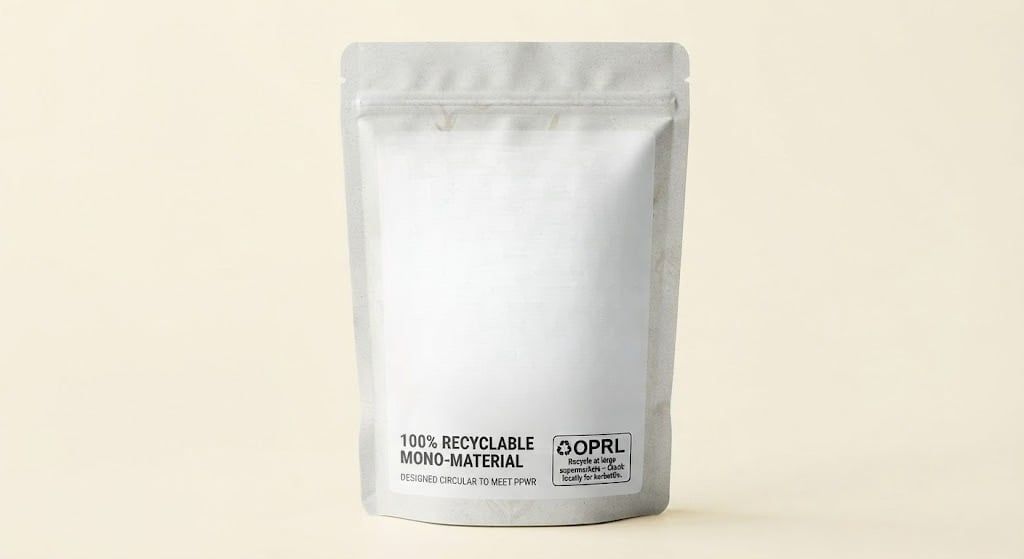
Material selection is an important part of flexible packaging development because different materials provide different functional properties. When recyclability is included in the design process, developers can consider the required packaging performance along with the intended recycling pathway.
Mono-material structures can be one approach to this development. A mono-material package can contain multiple layers while keeping all layers within the same polymer family, such as PE/PE or PP/PP. This allows different layers to perform specific functions while maintaining a more consistent polymer structure.
However, using a mono-material structure alone does not automatically mean that the packaging complies with PPWR. The regulation’s recyclability framework also considers whether the packaging is designed for material recycling and whether it can be separately collected, sorted and recycled at scale.
Barrier performance remains an important consideration when packaging needs protection against factors such as moisture, oxygen or light. Recyclability does not remove these functional requirements, so packaging innovation needs to consider how the required barrier properties can be achieved within the intended material structure.
This can encourage developers to explore suitable barrier technologies and structures. Depending on the application, options may include compatible barrier layers, coatings or other technical solutions that provide the required level of protection.
The barrier solution should be considered as part of the complete package rather than separately. PPWR evaluates recyclability at the packaging level, including whether the packaging is designed for material recycling and whether it can enter suitable collection, sorting and recycling systems.
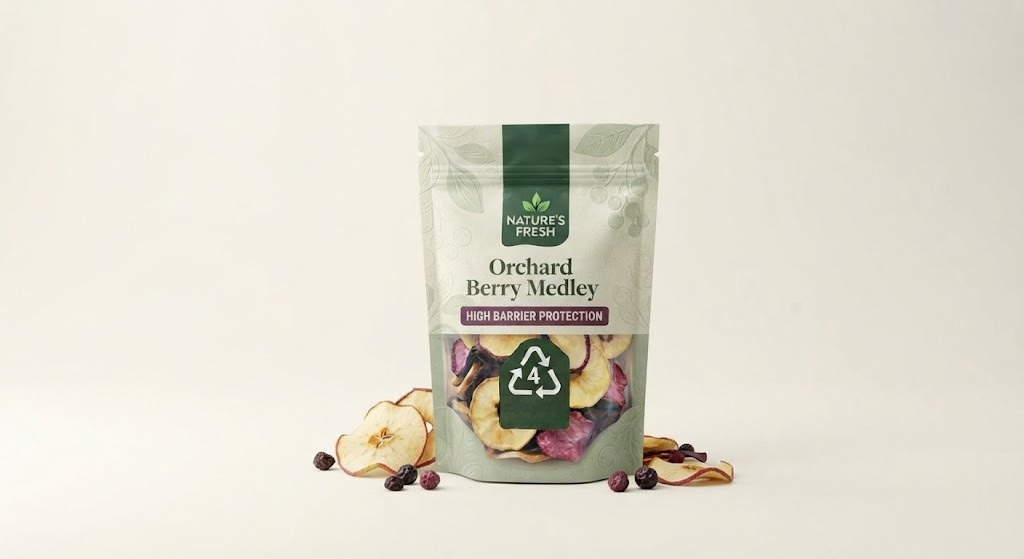
Recyclable flexible packaging can contain more than its main film structure. Depending on the format, it may include components such as closures, labels, adhesives or other functional elements. These components can also become relevant when the complete packaging unit is considered for recyclability.
PPWR specifically addresses packaging components. It states that components of a packaging unit must be compatible with established collection, sorting and recycling processes and must not hinder the recyclability of the main packaging body.
This can encourage developers to consider the complete package during innovation. Rather than developing the main film separately from its other components, packaging teams can assess how the different elements work together. This creates an opportunity for more integrated packaging design.
Recyclable flexible packaging can influence how packaging is developed from the beginning. Recycling considerations can be included during material selection and structural development instead of being considered only after the package has already been designed.
This can encourage development teams to review several requirements together. Product protection, sealing performance, mechanical properties, manufacturing needs and recycling considerations can all be assessed during the same development process.
Considering recycling early can also help teams identify which parts of a proposed structure need testing. This creates a more organised development approach in which recycling is treated as part of packaging design rather than as a separate consideration added near the end.
Flexible packaging can use several layers to provide the properties required for a specific application. Different layers can contribute to strength, sealing, barrier performance and other functions. Recyclable flexible packaging encourages developers to consider how these functions can be achieved within a structure that also takes recycling into account.
This can lead to more careful structural development. Instead of selecting materials based only on their individual performance, packaging teams can consider how the complete structure works together and how the materials relate to the intended recycling process. This approach can make structural engineering an important part of packaging innovation. Developers can explore different layer arrangements and compatible material combinations while maintaining the functional properties required by the packaged product.
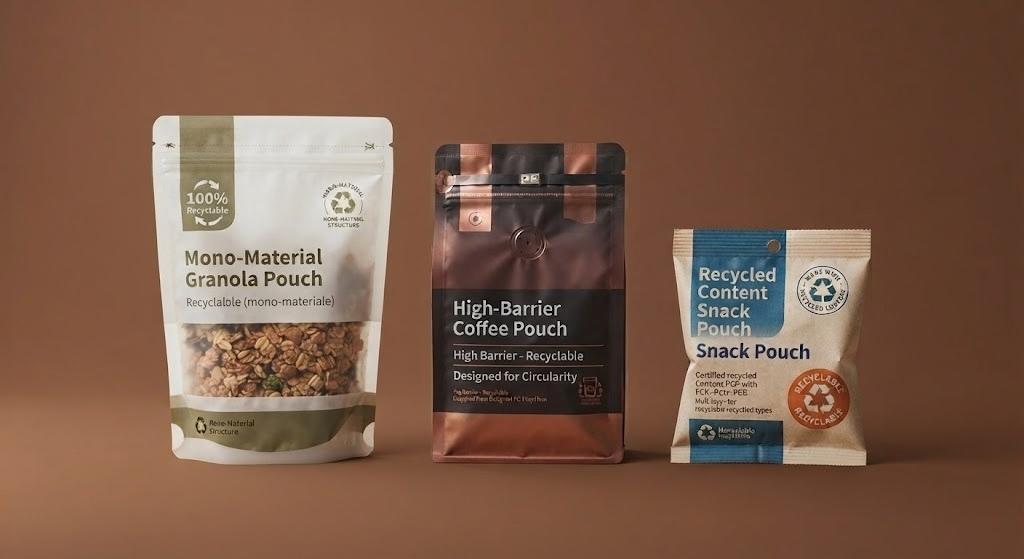
Packaging innovation is not limited to the material structure. Recyclable flexible packaging can also be developed in different configurations based on the requirements of the packaged product and the intended use of the package.
Pouches can be designed with different opening systems, filling arrangements, sealing configurations and functional features. These options allow manufacturers to develop packaging formats around specific product and handling requirements.
The opportunity is to connect format development with the wider material design. A new flexible format can be developed together with its film structure and functional components so that the complete package is considered throughout the innovation process.
Recycling considerations can encourage manufacturers to understand how packaging interacts with collection, sorting and recycling systems. Under PPWR, recyclability includes the ability of packaging to be separately collected, sorted into specific waste streams and recycled at scale according to the regulation’s applicable methodology.
This gives packaging developers another technical factor to consider when selecting a structure. Understanding the intended recycling pathway can help teams make more informed decisions about materials and packaging design. It can also encourage cooperation across different parts of the packaging value chain. Material suppliers, converters, packaging manufacturers and recycling stakeholders can contribute different areas of technical knowledge to the development process. This can help packaging teams understand both the package itself and the processes that handle it after use.
PPWR takes a phased approach to recyclability. From 2030, the relevant recyclability requirements are linked to design-for-recycling criteria. From 2035, the framework also includes recycled-at-scale considerations, subject to the application dates and conditions set out in Article 6. The regulation also provides a framework for certain innovative packaging that meets specific conditions and demonstrates significant improvements in packaging functions together with environmental benefits.
This phased approach can encourage manufacturers to consider future requirements during current packaging development. Recyclable flexible packaging can therefore become part of a longer-term approach to material and structural innovation.
Future-focused development can involve continued work on polymer structures, barrier solutions, package formats and compatible components. By considering these areas together, manufacturers can develop flexible packaging solutions that address current packaging needs while also considering the evolving recycling framework.
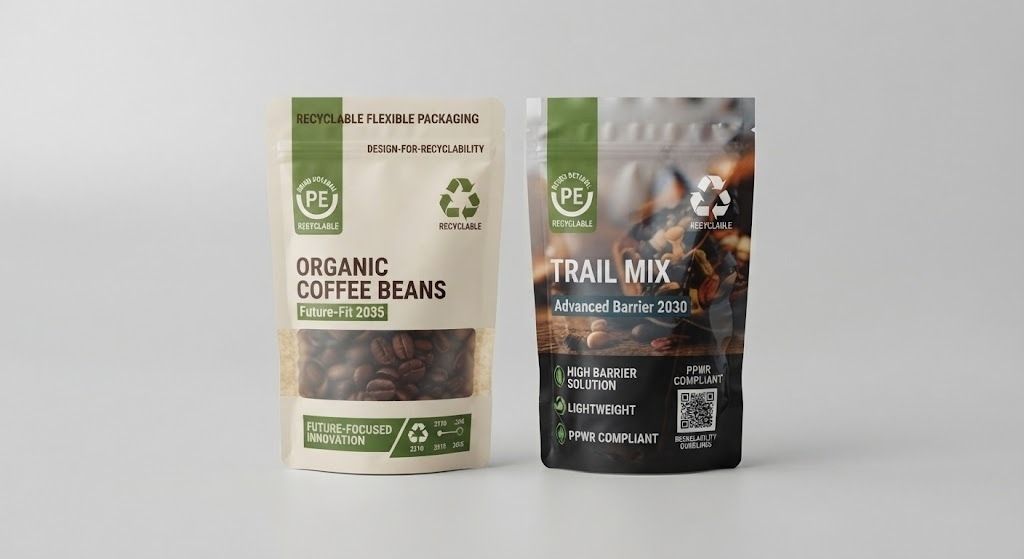
Recyclable flexible packaging can play an important role in packaging innovation under PPWR by encouraging a broader approach to packaging development. From material and structural choices to package functionality and production improvements, recyclability can be considered alongside the practical needs of the packaged product. This can encourage manufacturers to explore new solutions while maintaining the required packaging performance and supporting the development of recyclable packaging systems.
As packaging technologies continue to develop, recyclable flexible packaging can provide opportunities for ongoing improvement and innovation. Manufacturers can refine packaging solutions, adopt suitable technical developments and respond to changing industry expectations. With careful design and proper consideration of PPWR requirements, recyclable flexible packaging can contribute to practical and adaptable packaging solutions that are designed with their future recycling pathway in mind.
Longdapac is one of the leading recyclable flexible packaging manufacturers in China. The demand for recyclable packaging is increasing a lot since PPWR launch.
Answer: Recyclable Flexible Packaging refers to flexible packaging designed with a recycling pathway in mind while still providing the functions needed to protect and contain a product. Under the PPWR, all packaging placed on the EU market is required to be recyclable. The regulation defines recyclability through more than the material used in the packaging. The packaging must be designed for material recycling so that the resulting secondary raw materials are of sufficient quality to replace primary raw materials. Once the packaging becomes waste, it must also be suitable for separate collection, sorting and recycling at scale under the applicable requirements. This means that simply describing a pouch as recyclable or using a mono-material structure does not by itself establish PPWR compliance. The complete packaging design and its pathway through collection, sorting and recycling must be considered.
Answer: Recyclable Flexible Packaging can support packaging innovation by encouraging manufacturers to consider recyclability throughout the development process. Instead of focusing only on how packaging performs during filling, storage and use, developers can also consider how its materials and components fit into recycling processes. This can support improvements in film structures, barrier solutions, sealing methods, packaging formats and production processes. PPWR provides a regulatory framework that connects recyclability with material recycling, the quality of secondary raw materials, separate collection, sorting and recycling at scale. This broader framework can encourage manufacturers, converters, material suppliers and recyclers to work toward compatible solutions. The regulation does not require one specific packaging format or innovation method. Instead, it establishes recyclability conditions that packaging placed on the EU market must meet.
Answer: No. A mono-material structure can be an important design approach for Recyclable Flexible Packaging, but it does not automatically mean that the packaging meets every PPWR requirement. PPWR defines recyclability through the complete recycling pathway, including design for material recycling, the quality of secondary raw materials, separate collection, suitable sorting and recycling at scale. Therefore, packaging developers need to consider the complete packaging structure and its relevant components rather than relying only on the use of one polymer family in the main film. Other parts of the packaging can also affect recyclability depending on the design and application. Technical documentation and applicable design-for-recycling criteria are also important parts of the broader compliance framework. A mono-material PE or PP structure can support a recyclable packaging strategy, but its compliance must be assessed against the applicable PPWR requirements rather than assumed from the material structure alone.
Answer: The Packaging and Packaging Waste Regulation, Regulation (EU) 2025/40, entered into force in February 2025 and started applying across the EU on 12 August 2026. The regulation establishes common requirements for packaging and packaging waste placed on the EU market, with different measures applying at different times. The European Commission confirms that PPWR applies across the EU from 12 August 2026 and that its requirements are being introduced in phases. For recyclability, Article 6 states that all packaging placed on the market must be recyclable. However, detailed conditions and specific requirements have their own application dates. In particular, the design-for-material-recycling requirements under Article 6 have a later application point linked to 1 January 2030 or the applicable delegated acts, while the recycled-at-scale requirement has a later application point linked to 1 January 2035 or the applicable implementing acts. This phased approach is important because PPWR compliance cannot be linked to one single date for every requirement.
Answer: Recyclable Flexible Packaging should be developed with relevant PPWR requirements beyond recyclability in mind. Article 5 addresses substances of concern in packaging and sets a limit of 100 mg/kg for the combined concentration of lead, cadmium, mercury and hexavalent chromium, subject to the provisions and exemptions set out in the regulation. For food-contact packaging, PPWR also introduces PFAS restrictions from 12 August 2026. The specified limits include 25 ppb for any individual PFAS, 250 ppb for the sum of PFAS and 50 ppm for PFAS including polymeric PFAS, with the regulation defining how these limits are measured and applied. Packaging developers therefore need to consider the materials, components and intended application when assessing the relevant requirements. These provisions work alongside the recyclability requirements, meaning recyclable flexible packaging must also meet other applicable PPWR and EU legal requirements.