
Packaging plays an essential role in transporting and selling products, but the waste generated after use has become a growing environmental concern. Businesses are seeking packaging solutions that use materials efficiently and support effective waste management. Recyclable Flexible Packaging offers a valuable option because it combines practical design with the potential for material recycling when the packaging is designed for recyclability and suitable collection and processing systems are available.
Recyclable Flexible Packaging can help businesses respond to the European Union’s Packaging and Packaging Waste Regulation (PPWR), Regulation (EU) 2025/40. The regulation entered into force on 11 February 2025 and generally applies from 12 August 2026. It sets requirements to reduce packaging waste, improve recyclability and encourage more responsible material use. These requirements apply to packaging placed on the EU market, regardless of its material or origin. Recyclable Flexible Packaging can be a valuable option when its design meets the applicable requirements and supports a suitable recycling pathway.
In this article, we will explain how Recyclable Flexible Packaging can help reduce packaging waste under PPWR. We will explore material efficiency, mono-material structures, packaging weight, recycling compatibility, production planning and consumer sorting. We will also discuss practical design considerations to help businesses choose Recyclable Flexible Packaging while supporting their packaging waste reduction goals.
The Packaging and Packaging Waste Regulation establishes a common framework for packaging requirements across the European Union. One of its main objectives is to prevent unnecessary packaging waste and improve how packaging materials are managed. This encourages businesses to consider packaging throughout its life cycle rather than focusing only on its appearance or immediate use.
Recyclable Flexible Packaging supports this approach when its design allows materials to be recovered and reused through suitable recycling systems. Instead of viewing packaging as a product that serves a purpose only before disposal, businesses can consider how its materials may be used in future production. This approach promotes responsible resource use and can help reduce material waste after use.
The regulation also addresses packaging prevention, reuse and recycling as part of the wider waste hierarchy. Recyclable Flexible Packaging is therefore a valuable option for businesses seeking to improve their packaging design. Its benefits depend on the complete packaging design, the applicable regulatory requirements and the recycling systems available for the materials used.
Recyclable pouches can be made from films and other flexible structures that bend or change shape. Common formats include pouches, sachets and flexible bags. These formats provide practical packaging functions without requiring the rigid walls used in many other packaging types.
This design offers opportunities to use materials efficiently. Businesses can assess the dimensions, film thickness and structure needed for a particular application and identify ways to avoid unnecessary material. The right design depends on the product, filling process, required strength and other performance needs. Reducing material use should never compromise the package’s suitability for its intended purpose.
Recyclable Flexible Packaging combines material efficiency with recycling considerations. A suitable design can use the necessary amount of material while supporting a defined recycling pathway. This makes it a valuable choice for businesses seeking to improve packaging performance and manage waste more responsibly.
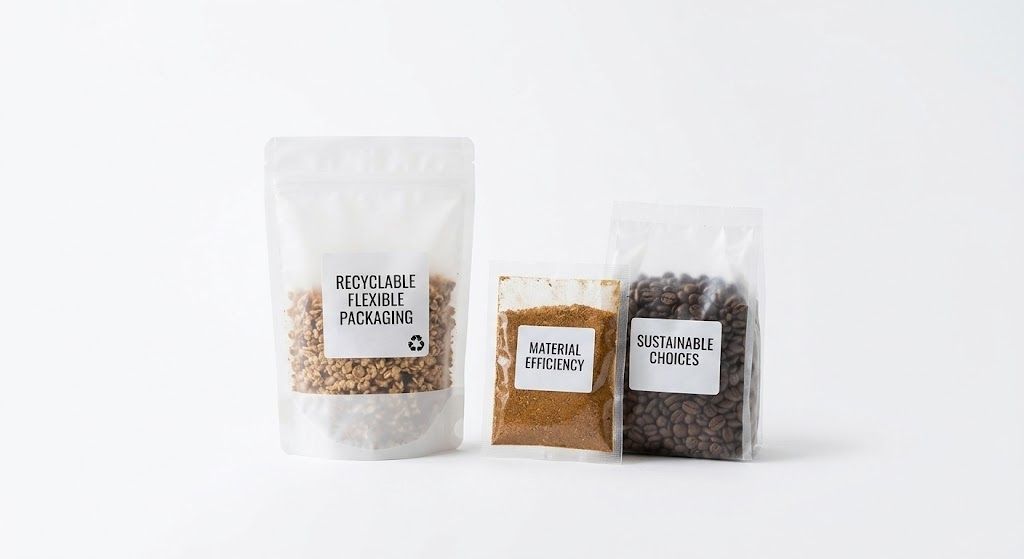
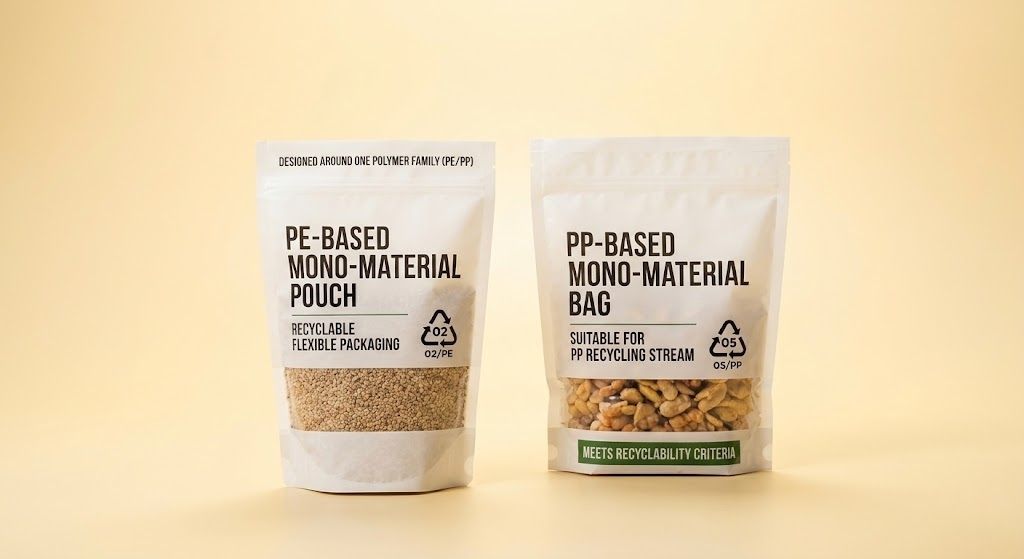
Mono-material Recyclable Flexible Packaging is designed primarily around one polymer family, such as polyethylene (PE) or polypropylene (PP). Some structures may contain multiple layers or additional components, so their complete composition must be assessed rather than judged by the main polymer alone.
This approach can help designers develop packaging that is compatible with a specific recycling process. For instance, a suitable PE-based structure can be designed for a PE recycling stream when its layers, inks, adhesives and other components meet the relevant design requirements. A PP-based structure may also be suitable when the available recycling system can process it.
For businesses, mono-material design provides a useful starting point when developing Recyclable Flexible Packaging. It can reduce material-mixing challenges compared with certain structures made from different polymer families. However, using one polymer family does not automatically make packaging compliant with PPWR. The complete structure must meet the applicable recyclability criteria and be compatible with the relevant collection, sorting and recycling systems.
Packaging design is only one part of waste reduction. After use, packaging needs to enter a suitable collection and sorting system for its materials to be recovered. If consumers place Recyclable Flexible Packaging in the wrong waste stream, the chances of recovering those materials may decrease.
Businesses can help by providing clear and accurate disposal information in line with applicable labelling rules. Instructions should reflect the package’s material composition and the collection arrangements available in its market. Recycling claims should not suggest that every local authority accepts the package when collection options vary by location.
PPWR includes provisions for harmonised packaging labels to help consumers identify packaging materials and sort waste correctly. Recyclable Flexible Packaging can support this approach when its design, claims and disposal guidance accurately reflect its recycling pathway. Recyclable Flexible Packaging can therefore support two complementary goals: making packaging suitable for recovery after use and creating opportunities to use recovered materials in new products. Businesses should assess these goals separately. Recyclability refers to a package’s ability to be processed through an appropriate recycling system, while recycled content refers to the amount of recovered material used to manufacture it.
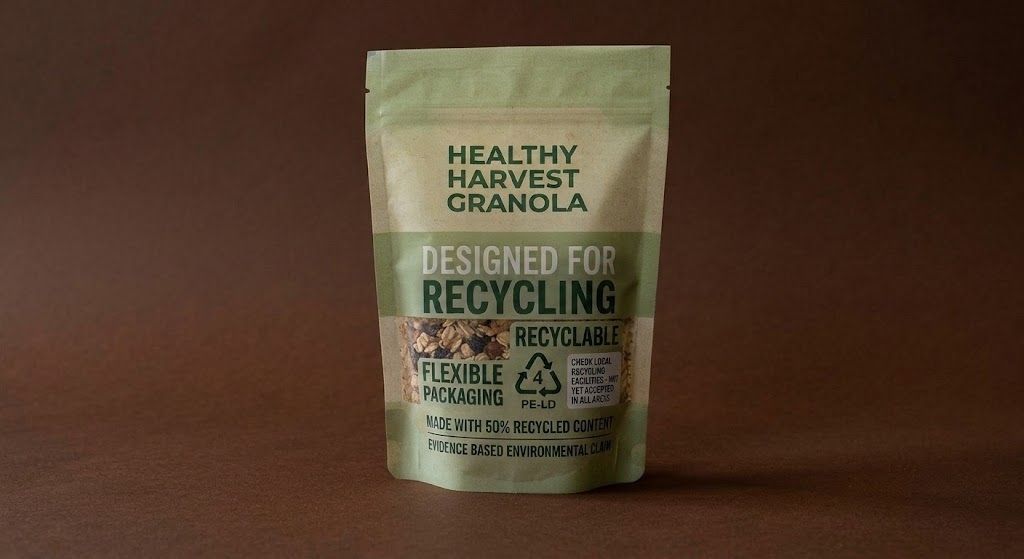
Clear and accurate environmental communication helps businesses explain the value of Recyclable Flexible Packaging without misleading customers. Claims should reflect the actual characteristics of the finished package and be supported by reliable evidence. Broad statements about environmental benefits should be avoided when they cannot be substantiated.
For instance, businesses should distinguish between packaging designed to be recyclable and packaging that is actually collected and recycled in a particular market. These outcomes are related but not identical. Collection access, sorting practices, recycling capacity and local arrangements can influence what happens after packaging is discarded.
Companies should also ensure that their marketing materials, product descriptions and technical documents use consistent terminology. Claims about recyclability, recycled content or environmental performance should be checked against the relevant legal requirements. This approach helps businesses communicate the benefits of Recyclable Flexible Packaging clearly, maintain customer confidence and support responsible decision-making.
Packaging minimisation is a key part of PPWR. From 1 January 2030, Article 10 requires manufacturers and importers to ensure that packaging weight and volume are reduced to the minimum necessary to maintain functionality, taking into account the packaging’s shape and material.
Recyclable Flexible Packaging can support this objective through careful design. Businesses can review dimensions, film thickness and overall structure to determine whether each component serves a clear purpose. Removing unnecessary material can reduce the resources required to manufacture packaging and may also reduce the amount of packaging waste generated after use. However, minimisation requires a balanced approach. Packaging must still meet the needs of its intended application, including handling, filling and use. The best design is not necessarily the thinnest one but the one that avoids unnecessary material while maintaining the required functionality. This makes thoughtful material selection a valuable part of packaging waste prevention.
PPWR establishes requirements to improve packaging recyclability across the European Union. Article 6 focuses on designing packaging for recycling and developing packaging that can be recycled at scale. The regulation links recyclability to the ability to collect, sort and recycle packaging through suitable systems.
For businesses choosing Recyclable Flexible Packaging, this means considering more than the material name or a recycling symbol. The complete packaging structure, including its components and composition, must be assessed against the applicable criteria. For instance, packaging made mainly from polyethylene still needs a suitable design and a viable recycling pathway to support its recyclability claims.
The regulation also provides for detailed criteria to be developed through further EU measures. Businesses should therefore follow the applicable legislation and supporting technical requirements when evaluating packaging options. Choosing Recyclable Flexible Packaging designed with these requirements in mind can help companies prepare for regulatory obligations and make informed packaging decisions.

Recyclable Flexible Packaging offers businesses a valuable option for reducing packaging waste under PPWR while promoting efficient material use and responsible packaging design. By selecting suitable mono-material structures, avoiding unnecessary packaging materials and ensuring compatibility with appropriate recycling systems, companies can make better packaging choices and support responsible resource management. Careful material selection, reliable supplier guidance and compliance with applicable PPWR requirements are essential to achieving these benefits. By combining practical performance, material efficiency and recyclability, Recyclable Flexible Packaging is a valuable choice for businesses seeking to reduce packaging waste and meet evolving packaging requirements in European markets.
Longdapac is one of the leading 100% recyclable mono-material PE pouches manufacturer in China. We understand that recyclable means less consumption of the raw materials, and it also means reduce waste.
Answer: Recyclable Flexible Packaging can help reduce packaging waste under PPWR by combining efficient material use with designs intended to support recycling through suitable systems. Businesses can select appropriate materials, review packaging dimensions and remove unnecessary components while maintaining the performance required for the intended product. These measures can reduce the amount of packaging material used and improve the potential for material recovery after use. Recyclable Flexible Packaging can also support responsible resource management when its materials are suitable for collection, sorting and processing through an appropriate recycling system. However, recyclability depends on the complete packaging structure and the recycling options available in the target market. Businesses should therefore assess their packaging against the applicable PPWR requirements rather than relying solely on general recycling claims. By combining material efficiency, suitable design and responsible packaging choices, companies can make meaningful progress towards their packaging waste reduction goals.
Answer: Mono-material Recyclable Flexible Packaging is designed primarily around one polymer family, such as polyethylene (PE) or polypropylene (PP). This approach can improve compatibility with suitable recycling processes by reducing some of the challenges associated with packaging made from different polymer families. It also allows designers to consider material selection, layer construction and other components as parts of a coordinated structure. Businesses can explore suitable PE-based or PP-based solutions according to their products, technical requirements and available recycling pathways. However, a mono-material structure does not automatically guarantee that the complete package is recyclable or compliant with PPWR. Inks, adhesives, closures and other components can also affect recycling compatibility. Companies should therefore request relevant technical information and assess the finished packaging rather than focusing only on its main polymer. When properly designed and evaluated, mono-material Recyclable Flexible Packaging can be a valuable option for businesses seeking to improve packaging recyclability and use materials more efficiently.
Answer: Businesses selecting Recyclable Flexible Packaging for the European Union market should consider the requirements of the Packaging and Packaging Waste Regulation, Regulation (EU) 2025/40. These include provisions on packaging minimisation, recyclability, recycled plastic content for applicable plastic packaging categories, labelling and restrictions on certain substances. Article 6 establishes the framework for packaging designed for recycling and recyclability at scale, while Article 10 addresses the reduction of packaging weight and volume. Other requirements may apply depending on the packaging material, application and intended use. Businesses should also distinguish between requirements that apply from specific dates and those that depend on further EU measures. Choosing packaging labelled as recyclable does not automatically establish compliance with every applicable requirement. Companies should review the current legal provisions, obtain appropriate technical documentation and work with knowledgeable suppliers to assess the complete packaging structure. This approach can help businesses make informed decisions and select Recyclable Flexible Packaging that supports their regulatory responsibilities and waste reduction goals.
Answer: Recyclable Flexible Packaging can help businesses assess the amount of material needed for each package while maintaining the performance required for its intended application. Designers can review film thickness, package dimensions, layer construction and additional components to identify opportunities to remove unnecessary material. The packaging must still provide adequate strength, sealing performance and suitability for filling and distribution. Businesses should avoid reducing material solely to achieve a lower packaging weight if this could result in damaged packages, production problems or increased product waste. Instead, they should compare alternative designs and conduct appropriate technical assessments to ensure that any changes maintain the required performance. When a suitable material reduction is achieved across large production volumes, it can lower the total quantity of packaging material purchased and reduce avoidable packaging waste. However, the results depend on the specific product and packaging format. By combining careful design with recyclability assessments, businesses can choose Recyclable Flexible Packaging that improves material efficiency without compromising essential functional requirements.
Answer: Businesses can support their PPWR compliance goals by including Recyclable Flexible Packaging in a structured packaging assessment and purchasing process. The first step is to review existing packaging materials, structures, weights and intended applications to identify opportunities for improvement. Companies can then consult packaging suppliers to compare suitable alternatives and obtain information about material composition, recycling compatibility and relevant technical assessments. They should also check whether the proposed packaging meets the requirements applicable to its category and target market, including relevant implementation dates. Environmental claims should be supported by reliable evidence, and recyclability should not be confused with recycled content or a guarantee that the package will be recycled in every location. After introducing a new design, businesses can monitor indicators such as packaging weight per unit, material waste during manufacturing and the proportion of packaging that meets verified design criteria. Regular reviews can help identify further improvements as regulations, technologies and recycling systems evolve. Through careful planning, technical verification and cooperation with suppliers, businesses can use Recyclable Flexible Packaging to support responsible material management and meet their ongoing regulatory obligations.