
Packaging is used across many industries in different shapes, sizes and formats to meet various product requirements. However, packaging design involves more than appearance, as material selection and overall structure also affect product protection and recyclability. Under the Packaging and Packaging Waste Regulation (PPWR), businesses need to consider recyclability when making packaging decisions. Mono-material polyethylene (PE) and polypropylene (PP) structures can support this goal when the complete packaging design meets the relevant recyclability requirements. By evaluating material combinations, barrier properties, packaging formats and product needs, businesses can make informed packaging design choices.
The Packaging and Packaging Waste Regulation (PPWR) encourages businesses to consider recyclability when designing packaging for the European Union market. Effective packaging design requires careful attention to material selection, structural performance, product protection and recyclability. These factors help businesses develop packaging solutions that meet product requirements while addressing relevant regulatory obligations. Recyclable Flexible Packaging provides a valuable option for businesses seeking to improve packaging design through suitable materials and well-planned structures.
In this article, we will explain how Recyclable Flexible Packaging can support better packaging design choices under PPWR by exploring suitable materials, mono-material structures, barrier performance and flexible packaging formats. We will also cover how businesses can balance product protection, manufacturing requirements, packaging functionality and recyclability to develop practical packaging solutions that meet product needs and support applicable regulatory requirements.
Material selection is one of the first decisions in packaging design. The chosen material affects the packaging structure, manufacturing process, product protection and recycling potential. Under the Packaging and Packaging Waste Regulation (PPWR), businesses need to consider these factors together to develop packaging that meets functional requirements while supporting relevant recycling requirements.
Recyclable Flexible pouches supports informed material choices through mono-material structures made primarily from one polymer family. Polyethylene (PE) and polypropylene (PP) are two options businesses can consider based on their product requirements. PE-based structures can suit many flexible packaging applications, while PP-based structures can meet the needs of products requiring different material properties.
Selecting a suitable material from the beginning also helps businesses reduce unnecessary complexity in packaging design. Rather than selecting different materials for individual layers without assessing the complete structure, designers can evaluate how each component works with the others. This approach supports practical decisions about packaging performance, material use and recyclability.
Mono-material packaging uses materials from the same main polymer family to create a structure designed with recycling in mind. For instance, a PE/PE structure combines polyethylene-based layers, while a PP/PP structure uses polypropylene-based layers. Each layer can serve a different purpose while remaining within the same polymer family.
This design approach is valuable for flexible packaging because each layer can provide a specific function, such as sealing, strength or product protection. The goal is to develop a functional structure without adding unnecessary material combinations that may complicate recycling. The suitability of the finished packaging depends on its complete composition and the relevant recycling criteria.
Mono-material design does not mean every layer must have exactly the same formulation or thickness. Additives, coatings, adhesives, inks and other components may also affect the final assessment. Businesses should therefore evaluate the complete packaging structure rather than assume that using PE or PP automatically ensures compliance with PPWR. The regulation considers whether packaging can be collected, sorted and recycled under the applicable conditions.
Every product has its own packaging requirements. Some products need protection against moisture, while others require greater resistance to oxygen, light or external handling. Packaging designers must understand these needs before selecting a suitable material structure.
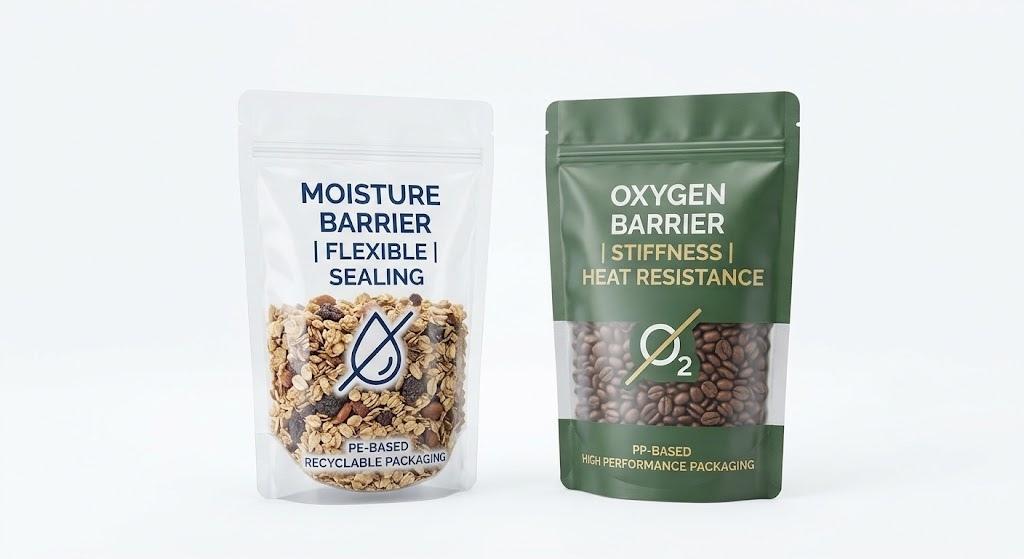
PE-based Recyclable Flexible Packaging can be developed for applications where flexibility, sealing performance and moisture protection are valuable. PP-based structures may suit products that require different combinations of stiffness, heat resistance or other performance characteristics. The final choice depends on the product, filling process, storage conditions and distribution requirements.
A practical design process begins by identifying the product’s essential protection needs. Designers can then select a suitable polymer family and determine which functional layers or treatments are necessary. This approach helps businesses develop packaging that supports product quality without adding features that offer little practical value.
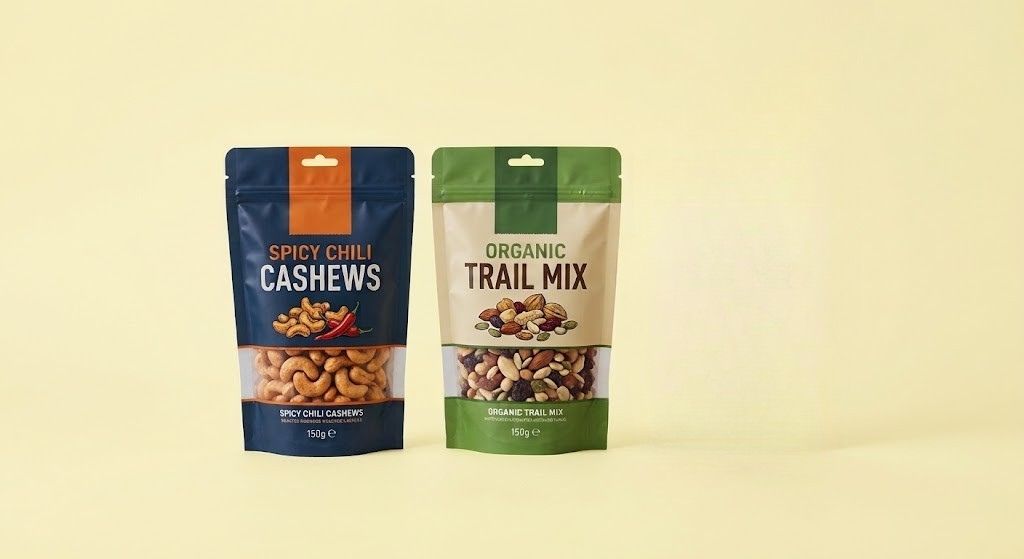
Clear packaging information helps consumers identify products, read instructions and understand relevant details. Designers should consider text size, contrast, placement and layout to make printed information easy to read and understand.
Recyclable Flexible Packaging offers different options for arranging product information according to the available surface area and package format. Businesses can select a suitable layout that presents product details clearly while ensuring that printing inks and other components are compatible with the intended recycling process. Environmental claims and recycling instructions also require careful attention. Businesses should ensure that all information is accurate and suitable for the intended market. Clear communication helps consumers understand the packaging and avoids misleading claims about its environmental performance.
Barrier performance is an essential part of flexible packaging design. Moisture, oxygen and light can affect the quality of certain products, so packaging must provide protection suited to each product’s sensitivity. The required level of protection depends on the contents and their expected storage conditions.
Mono-material PE and PP structures can be developed with suitable barrier technologies, including selected coatings and other compatible design features. The right solution depends on the required level of protection and whether the complete structure remains suitable for the intended recycling stream. Materials and coatings should be selected based on their overall performance rather than improvements in a single property.
Designers should assess barrier performance through appropriate technical testing. They should also consider how barrier components, printing and adhesives affect the overall recyclability of the packaging. This balanced approach helps businesses select Recyclable Flexible Packaging that meets product protection requirements while supporting relevant design-for-recycling criteria.
Packaging design must also consider the equipment used during production. The selected material should work well with the filling and sealing processes to ensure consistent manufacturing. Factors such as film thickness, sealing temperature, machine speed and seal strength can affect the final result.
Designers should work with packaging manufacturers to identify suitable processing conditions. Testing helps determine whether the film forms reliable seals, maintains its shape during filling and performs consistently at the required production speed. These checks help prevent avoidable production issues and maintain consistent packaging quality.
A well-planned design considers manufacturing performance before large-scale production begins. By confirming material specifications and sealing requirements early, businesses can make better decisions about the final packaging structure. This approach also helps ensure that the selected Recyclable Flexible Packaging meets practical production requirements while maintaining the intended material composition.
A clear design specification helps businesses communicate packaging requirements to material suppliers, converters and product manufacturers. It records the decisions behind the selected structure and defines the performance expected from the finished package.
These include:
Keeping these details organised helps teams compare material options and confirm that production samples match the approved design. It also improves communication when a supplier proposes changes to the material structure or manufacturing process.
Under PPWR, businesses should ensure that their technical documentation reflects the applicable requirements and the evidence used to assess compliance. Choosing mono-material Recyclable Flexible Packaging can support the design process, but the finished packaging must still be evaluated against the relevant requirements.
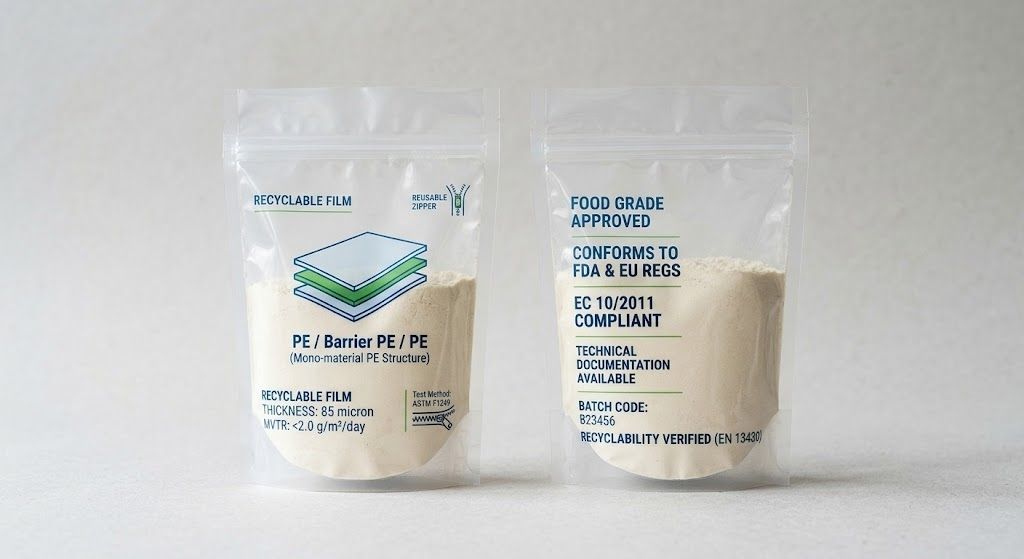
Packaging minimisation is another important design consideration under PPWR. Article 10 focuses on reducing packaging weight and volume while maintaining the performance needed for its intended purpose. Packaging should not simply be made as thin or small as possible because it must still protect the product and perform its required functions.
Flexible packaging allows designers to review the amount of material used in each package. They can assess film thickness, package dimensions and unused space to identify opportunities for improvement without affecting essential performance. Any proposed material reduction should be supported by suitable testing.
This approach helps businesses find a practical balance between material use and packaging functionality. A well-optimised design can reduce unnecessary packaging while maintaining the strength, sealing performance and product protection required. The final specifications should be based on technical assessments rather than assumptions about material savings.
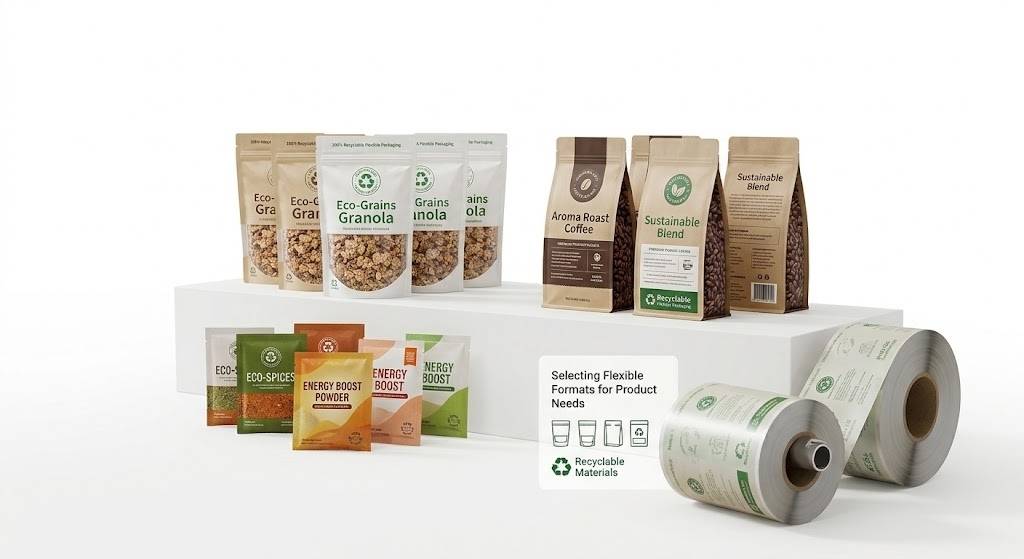
Recyclable Flexible Packaging is available in several formats to meet different product and handling requirements. Stand-up pouches, flat-bottom pouches, flat sachets and rollstock films offer businesses a range of options. Each format provides specific benefits depending on the product, filling method and intended use.
A stand-up pouch can provide shelf stability, while rollstock film can suit automated packaging operations. A flat-bottom pouch offers a structured base and useful space for product information. These formats allow designers to consider functionality and presentation when selecting a suitable material structure.
The main goal is to choose a packaging format that suits the product’s needs. It should provide enough space, a suitable closure, good stability and ease of use without adding unnecessary features. This helps businesses choose packaging that works well for their operations and presents products effectively.
Recyclable Flexible Packaging can help businesses make informed packaging design choices under the Packaging and Packaging Waste Regulation (PPWR). By selecting suitable mono-material PE or PP structures, balancing product protection with recyclability and reviewing packaging components, businesses can develop practical solutions that meet their product requirements. Technical testing and clear documentation also help assess packaging performance and relevant regulatory obligations. Although mono-material structures can support design for recycling, the complete packaging must still be assessed against the applicable PPWR requirements.
A well-planned design process helps businesses select suitable materials, maintain packaging quality and avoid unnecessary design changes. By considering product needs, barrier performance, manufacturing requirements and recycling suitability from the beginning, businesses can develop Recyclable Flexible Packaging that balances functionality with material efficiency and supports informed decisions about regulatory requirements.
Longdapac is one of the leading recyclable pouches manufacturer in China. Since PPWR, more and more customers are coming to us for recyclable pouches, this will definitely help them to meet government policy in the early stage and move to sustainability as early as possible.
Answer: Recyclable Flexible Packaging can support packaging design under PPWR by helping businesses consider material selection, packaging structure, product protection and recycling suitability together. Rather than focusing only on appearance, size or manufacturing convenience, designers can assess how the complete package performs during its intended use. Mono-material structures based on polyethylene (PE) or polypropylene (PP) can be considered when they meet the product’s technical requirements and relevant design-for-recycling criteria. Businesses should also assess barrier layers, adhesives, printing inks, coatings and closures because these components can affect the recyclability of the finished package. By reviewing these factors during the design stage, businesses can make informed material choices and develop packaging that meets their functional needs while addressing applicable PPWR requirements.
Answer: Mono-material PE and PP structures are considered because they use materials from the same main polymer family, which can support compatibility with the intended recycling stream. A PE-based structure can combine different polyethylene layers to provide sealing, strength and other required properties, while a PP-based structure can be designed to meet specific performance requirements. This approach allows designers to achieve different packaging functions without automatically combining unrelated polymers. However, the complete packaging structure must still be evaluated because additives, adhesives, coatings, printing inks and other components can affect its recyclability. Businesses should also consider the collection, sorting and recycling systems available for the packaging. Therefore, selecting PE or PP is a starting point for informed packaging design, not proof of automatic compliance with PPWR.
Answer: Businesses can balance product protection and recyclability by first identifying the conditions that may affect product quality. These may include exposure to moisture, oxygen, light or external handling during storage and distribution. Once the protection requirements are clear, designers can assess suitable PE or PP structures and determine whether additional barrier technologies are needed. The selected materials should provide the required performance without adding components that could unnecessarily complicate recycling. Laboratory testing and packaging trials can help verify barrier properties, seal strength and overall performance under relevant conditions. Businesses should also assess the complete packaging structure against appropriate recyclability criteria. This approach helps ensure that packaging protects the product effectively while supporting recycling objectives and applicable regulatory requirements.
Answer: No, using a mono-material structure does not automatically establish compliance with PPWR. Although PE-based and PP-based structures can support design for recycling, the finished packaging must still meet the requirements applicable to its category and intended use. Businesses need to assess the complete structure, including its layers, coatings, adhesives, printing inks and other components. They should also consider relevant requirements for packaging minimisation, material composition, technical documentation and recyclability. The necessary evidence will depend on the applicable provisions, implementation arrangements and technical criteria. Businesses should work with packaging suppliers and qualified technical specialists to evaluate the design and maintain appropriate supporting documentation. This approach ensures that packaging decisions are based on verified performance and regulatory requirements rather than solely on the polymer family used in the main film structure.
Answer: Before approving Recyclable Flexible Packaging for production, businesses should confirm that the proposed design meets the product’s functional needs and applicable regulatory requirements. They should review the polymer family, layer structure, film thickness, package dimensions and required barrier properties. Sealing performance and compatibility with filling equipment should also be checked to ensure consistent manufacturing. Printing inks, adhesives, coatings, labels and closures require attention because they are part of the complete packaging design. Technical testing should verify essential performance characteristics, while recyclability assessments should follow the relevant criteria for the intended packaging category. Businesses should then prepare a clear specification documenting approved materials, test results and other supporting information. Reviewing these details before commercial production helps suppliers and internal teams follow the same requirements and provides a reliable basis for assessing packaging suitability under PPWR.