
Packaging is entering a new stage as the European Union introduces stricter rules for packaging design, recyclability, material use and waste management. The Packaging and Packaging Waste Regulation (PPWR), officially known as Regulation (EU) 2025/40, establishes a common framework for packaging placed on the EU market. It applies to packaging regardless of its material or type and covers different stages of its life cycle. The regulation entered into force on 11 February 2025 and will generally apply from 12 August 2026.
Flexible packaging is an important part of this change because its structure can affect how easily it can be collected, sorted and recycled. Mono-material flexible packaging can provide a simpler material structure by using one main polymer family, such as PE or PP, throughout its film structure. However, PPWR does not mean that every mono-material package is automatically compliant. The complete packaging design, including its components, substances and recyclability performance, must be considered according to the applicable requirements.
In this blog, we will explain how PPWR can influence the future development of mono-material flexible packaging. We will discuss why recyclability is becoming more important, how design for recycling can influence packaging structures and why packaging components matter. We will also cover the specific PPWR requirements for PFAS and heavy metals, along with other requirements that can shape future packaging decisions.
PPWR is an EU regulation, so its legal scope is linked to packaging placed on the Union market. Article 2 states that the regulation applies to all packaging placed on the EU market and to all packaging waste, regardless of the type of packaging or material used. This means flexible packaging supplied to the EU market needs to be considered within the PPWR framework.
This point is important because PPWR should not be presented as a worldwide packaging law. A company outside the EU may still need to consider PPWR when its packaging is placed on the EU market, but the regulation itself is an EU legal framework. Therefore, businesses involved in flexible packaging for European markets need to understand the specific requirements that apply to their packaging.
For recyclable flexible packaging, this creates a clear need to consider regulatory requirements during product development. The goal is not simply to select one polymer family but to develop packaging that can meet the applicable sustainability, safety and recyclability requirements.
PPWR takes a life-cycle approach to packaging. The regulation aims to reduce the environmental impact of packaging and packaging waste while supporting a circular economy. It also promotes the use of recycled content, stronger recycling systems and less complex packaging structures.
These objectives can influence flexible packaging because some packaging structures contain different materials and components that need to work together during production and use but may behave differently during recycling. As regulations place greater focus on recyclability, packaging manufacturers have a stronger reason to consider what happens to packaging after it is used.
Mono-material flexible packaging can become more relevant in this environment because its structure can be designed around one main polymer family. However, it should be viewed as a potential design approach rather than a direct PPWR requirement.
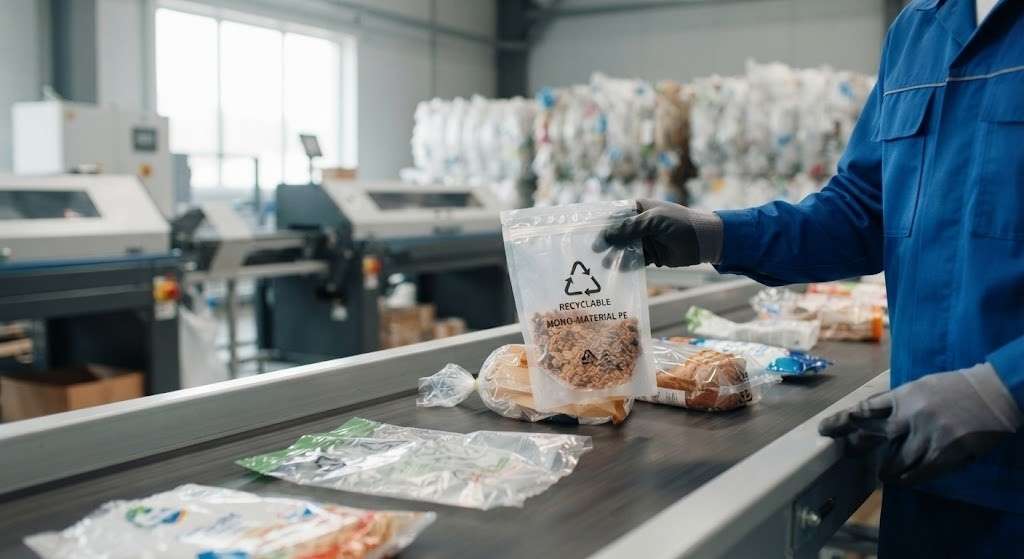
One of the most important aspects of PPWR is its approach to recyclable packaging. Article 6 establishes that packaging placed on the EU market must be recyclable. Packaging is considered recyclable when it is designed for material recycling and can produce secondary raw materials of sufficient quality for further use. The regulation also links recyclability with separate collection, sorting into specific waste streams and recycling at scale.
This changes how recyclability needs to be assessed. A package should not simply be described as recyclable because its material can technically be processed. Its design must work with relevant collection and sorting systems and support recycling processes that can produce suitable secondary raw materials.
For mono-material flexible packaging, this can encourage manufacturers to focus more closely on material compatibility. The main film structure, components and other elements need to be considered together when assessing whether the complete package can meet the applicable recyclability requirements.
A common misunderstanding is that using a mono-material structure automatically makes flexible packaging compliant with PPWR. This is not correct.
PPWR does not require flexible packaging to be mono-material. Instead, it establishes requirements for packaging recyclability and sustainability. A mono-material structure may support these objectives, but the complete packaging must still meet all applicable requirements.
The regulation also makes clear that packaging components are relevant to recyclability. Therefore, the assessment goes beyond checking the polymer used in the main film. Companies developing mono-material flexible packaging need to consider the complete packaging unit and how its different components perform during collection, sorting and recycling processes.
PFAS is another important PPWR requirement for flexible packaging used in food-contact applications. Article 5 restricts PFAS in food-contact packaging. From 12 August 2026, food-contact packaging cannot be placed on the EU market when PFAS concentrations reach or exceed the limits specified by the regulation, subject to the conditions set out in Article 5.
The regulation specifies three relevant concentration limits:
This is important for mono-material flexible packaging because material simplification and chemical compliance are separate considerations. A package can have a mono-material film structure while still requiring careful assessment of substances used in its materials and components.
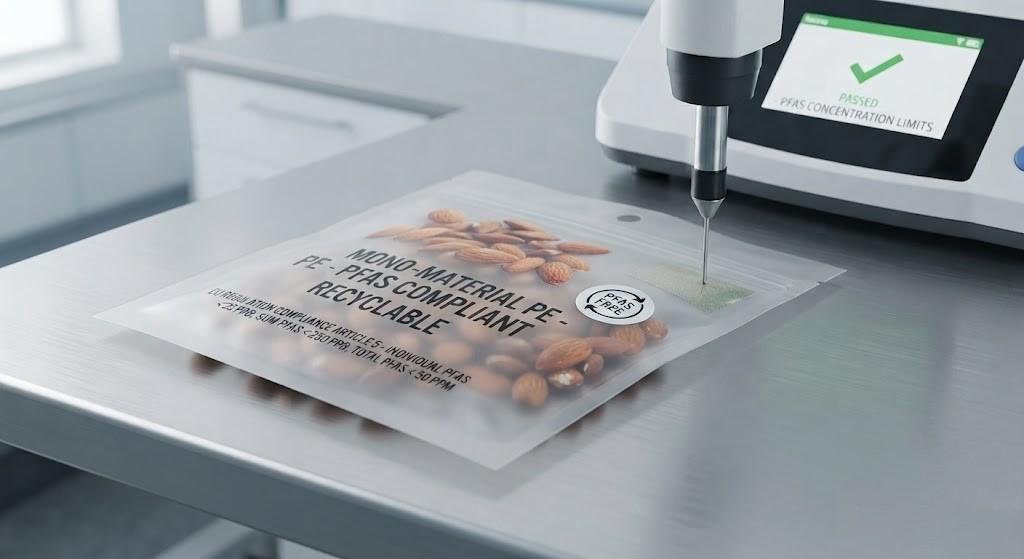
The main film is only one part of a flexible package. Packaging may also include closures, labels, adhesives, inks, coatings and other components. PPWR’s recyclability framework considers these components because they can affect collection, sorting and recycling.
The regulation’s design-for-recycling approach includes factors such as component separability, sorting efficiency and recycling efficiency. Components should not hinder the recyclability of the main packaging structure.
This means future mono-material flexible packaging development will need to consider more than just the main polymer. A well-designed mono-material film may still require careful selection of other components to ensure that the complete package can achieve the applicable recyclability performance.
PPWR also sets restrictions on lead, cadmium, mercury and hexavalent chromium in packaging and packaging components. The combined concentration of these four heavy metals must not exceed 100 mg/kg, subject to the provisions and exemptions set out in the regulation.
This requirement shows that future packaging compliance will involve more than recyclability. Manufacturers also need to consider substances present in packaging materials and components as part of their overall compliance process.
For mono-material flexible packaging, this means the main polymer should not be the only focus. Other materials and components used to produce the final package also need to be assessed when the relevant requirements apply.
PPWR also requires packaging to avoid unnecessary weight and volume. Packaging should use only the amount of material needed to perform its intended function while meeting relevant performance and safety requirements.
This can support further development of flexible packaging because manufacturers can work toward lighter structures without compromising essential performance. Future mono-material designs may therefore focus on achieving the right balance between material efficiency, product protection and applicable regulatory requirements.

PPWR can encourage companies to consider compliance earlier in the packaging development process. Instead of selecting a structure first and checking recyclability later, manufacturers can assess material selection, components, chemical requirements and recycling considerations from the initial design stage.
For mono-material flexible packaging, this can lead to a more complete development process that includes material selection, performance testing and recyclability assessment. Companies supplying the EU market will also need to pay attention to the technical documentation and conformity requirements under PPWR. The regulation requires economic operators to demonstrate compliance with applicable requirements through technical documentation.
As a result, the future of mono-material flexible packaging will not depend only on whether a package uses PE, PP or another polymer family. Its success will depend on how effectively the complete packaging design meets applicable EU requirements while maintaining the performance required for its intended use.
PPWR places a stronger focus on design for recycling. The regulation provides for recyclability performance grades and detailed criteria for assessing whether packaging can be effectively recycled. These criteria consider factors such as the ability to collect and sort packaging, the efficiency of recycling processes and the quality of the secondary raw materials produced.
This approach can influence how flexible packaging is developed in the future. Instead of selecting materials based only on their performance during filling, storage and transport, manufacturers will increasingly need to consider how packaging behaves after it becomes waste.
For mono-material flexible packaging, this can encourage closer coordination between film design and recycling requirements. The packaging structure needs to provide the required product protection while also supporting the relevant recycling pathway.
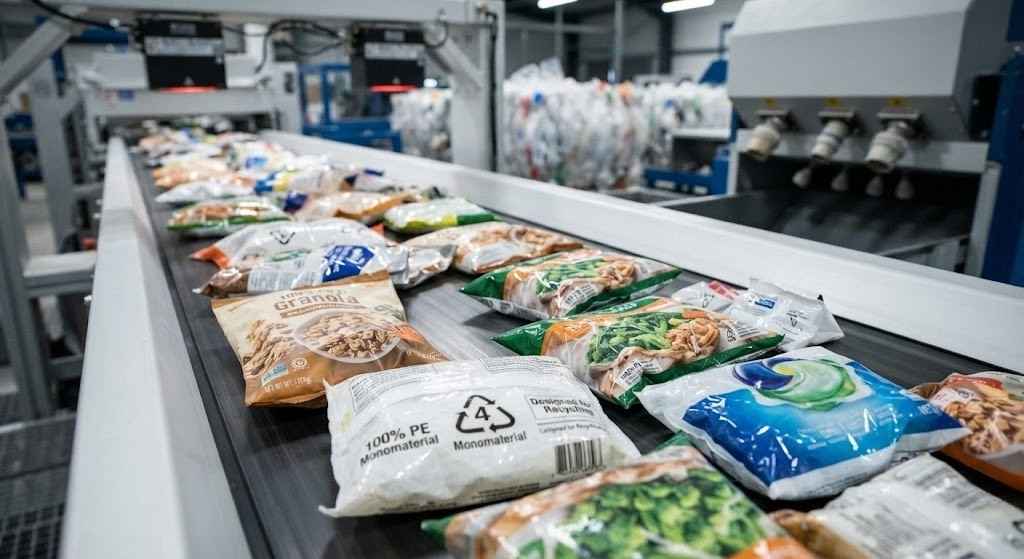
PPWR can have a major influence on the future of mono-material flexible packaging in the European Union. Its focus on recyclability, material efficiency, recycled content and responsible packaging design can encourage manufacturers to develop simpler and more suitable packaging structures. Mono-material flexible packaging can support this direction, but using one main polymer family alone does not guarantee PPWR compliance. The complete packaging design must still meet the applicable requirements.
For companies developing flexible packaging for the EU market, the future will depend on combining strong packaging performance with effective regulatory planning. Manufacturers will need to consider recyclability, material use, recycled content and other applicable requirements throughout the design process. By addressing these areas early, businesses can develop mono-material flexible packaging that is better prepared to meet the changing requirements of the European packaging market.
Longdapac is one of the leading recyclable flexible packaging supplier in China. Basically there are 2 parts for PPWR: packaging safety and packaging sustainability. 100% recyclable mono-material flexible packaging is the Green packaging, it is sustainable and the future packaging goals. PPWR will sure push the development of it.
Answer: No, PPWR does not require all flexible packaging to use mono-material structures. The regulation sets requirements for areas such as recyclability, packaging design, material efficiency, recycled content and substances of concern rather than requiring a specific packaging structure. Mono-material flexible packaging can be a useful approach for manufacturers seeking to develop packaging that works with suitable recycling systems, but it does not automatically guarantee compliance. The complete packaging must be assessed against the applicable requirements, including its material structure, components and recyclability performance. Therefore, companies should consider mono-material packaging as a potential design solution rather than a mandatory PPWR requirement or automatic proof of compliance.
Answer: No, using a mono-material structure does not automatically make flexible packaging compliant with PPWR. Although a mono-material structure can help reduce material complexity, PPWR considers the complete packaging and its ability to meet the applicable requirements. The assessment can include the packaging body, its components and factors related to collection, sorting and recycling. Other requirements may also apply depending on the packaging and its intended use, including rules concerning substances and recycled content. Therefore, a manufacturer cannot simply select a PE-based or PP-based structure and describe the final package as PPWR compliant without completing the appropriate assessment and meeting the relevant requirements.
Answer: PPWR can encourage flexible packaging manufacturers to consider recyclability and other regulatory requirements earlier in the design process. Instead of developing packaging mainly around production and product protection, companies may need to consider how the complete package will perform throughout its use and end-of-life stages. This can influence decisions about the main film structure, packaging components, material efficiency, recycled content and compatibility with applicable collection, sorting and recycling systems. For mono-material flexible packaging, this can create a stronger focus on developing structures that provide the required functional performance while also meeting relevant recyclability criteria. As the regulatory framework develops, manufacturers may also need additional testing, technical assessment and documentation to support their packaging decisions for the EU market.
Answer: PPWR introduces specific PFAS restrictions for food-contact packaging placed on the EU market. From 12 August 2026, food-contact packaging cannot be placed on the market when PFAS concentrations reach or exceed the limits specified in Article 5, subject to the conditions and calculation methods set out in the regulation. The limits include 25 parts per billion (ppb) for any individual PFAS under the specified targeted PFAS analysis, 250 ppb for the sum of PFAS under that analysis and 50 parts per million (ppm) for PFAS, including polymeric PFAS, under the relevant conditions. These requirements are important for applicable flexible packaging because manufacturers need to consider chemical compliance as part of the overall packaging design. A mono-material structure does not remove the need to assess PFAS requirements where they apply.
Answer: Companies developing mono-material flexible packaging for the EU market should look beyond the main polymer and assess the complete packaging against the applicable PPWR requirements. This can include recyclability performance, design-for-recycling considerations, material efficiency, recycled-content requirements, packaging components and restrictions on substances such as PFAS and heavy metals where applicable. Companies should also consider whether the packaging can work with relevant collection, sorting and recycling systems rather than relying only on the material type when making recyclability claims. Early assessment can help manufacturers identify potential design challenges before production and make informed decisions about materials, components and packaging formats. A complete and evidence-based approach can therefore help businesses prepare mono-material flexible packaging for the changing requirements of the EU market.