
Packaging is moving toward a more circular model where materials are expected to stay useful for longer and packaging waste needs to be managed more effectively. Flexible packaging plays an important role in this transition because it can provide strong product protection while using relatively efficient material structures. However, some conventional flexible packaging formats contain combinations of different materials, coatings or components that can make recycling more difficult. As European packaging policies place greater emphasis on recyclability, packaging manufacturers are facing increasing pressure to develop solutions that provide reliable performance during use while also fitting more effectively into existing recycling systems.
The Packaging and Packaging Waste Regulation (PPWR), Regulation (EU) 2025/40, establishes a common regulatory framework for packaging placed on the EU market. The regulation entered into force on 11 February 2025 and generally applies from 12 August 2026. Instead of requiring one specific flexible packaging structure, PPWR sets requirements that can influence how packaging is designed, assessed, collected, sorted and recycled. These requirements may encourage companies to invest in new materials, packaging structures and recycling technologies that can improve the practical recyclability of flexible packaging.
In this blog, we will explain how PPWR could influence the development of recyclable flexible packaging technologies. We will also explore the regulation’s recyclability requirements, design for recycling, mono-material structures, collection and sorting processes and chemical requirements while examining how these requirements could create opportunities for innovation in flexible films, packaging components and recycling technologies.
One of the key ways PPWR could influence the development of recyclable flexible packaging technologies is through its focus on packaging recyclability. Article 6(1) establishes that all packaging placed on the EU market must be recyclable. This general requirement applies from 12 August 2026. Article 6(2) further defines when packaging is considered recyclable by setting conditions related to design for material recycling and the ability of packaging waste to be separately collected, sorted and recycled at scale.
Under Article 6(2)(a), packaging must be designed for material recycling so that, when it becomes packaging waste, it can be recycled and the resulting secondary raw materials can be of sufficient quality to substitute primary raw materials. This detailed design-for-recycling requirement applies from 1 January 2030 or 24 months after the date of entry into force of the relevant delegated acts, whichever is later. Article 6(2)(b) also requires packaging to be capable of separate collection, sorting into specific waste streams without affecting the recyclability of other waste streams and recycling at scale. The relevant requirements concerning collection, sorting and recycling at scale apply according to the specific timelines established in the regulation, including the 1 January 2035 dates and the applicable periods following the relevant implementing acts.
For flexible packaging manufacturers, these requirements could encourage greater research into structures that work effectively within practical recycling systems. Developers may need to evaluate film materials, layers, components and other packaging features at an earlier stage of development. This could encourage investment in recyclable structures that consider the complete recycling pathway, from packaging design and material selection to collection, sorting and recycling. As a result, future flexible packaging development may place greater emphasis on both product performance during use and compatibility with recycling systems after disposal.
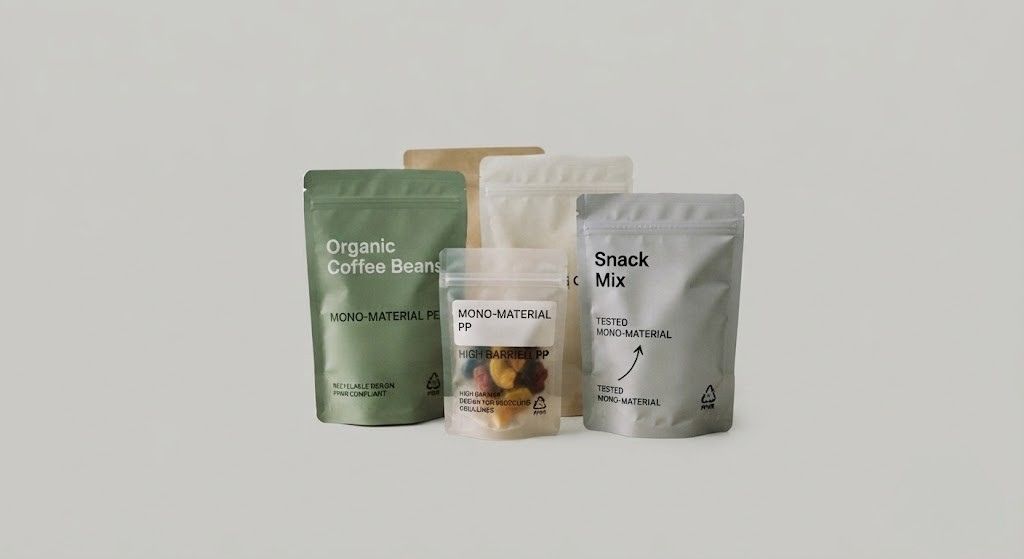
Mono-material flexible packaging is one technology direction that could receive greater attention as recyclability requirements become more important. A mono-material structure generally uses the same main polymer family throughout its structure, such as PE-based or PP-based materials. This can reduce material complexity compared with some conventional flexible packaging structures that combine different polymer families. However, mono-material does not automatically mean PPWR compliant. PPWR assesses recyclability based on the applicable requirements for the complete packaging. A package must meet the relevant design for recycling requirements and, where applicable, the requirements related to collection, sorting and recycling at scale.
This distinction is important because it helps avoid a common misunderstanding. The future development of recyclable flexible packaging is not simply about converting every structure to a mono-material format. Instead, manufacturers need to develop complete packaging systems that provide the required functionality while also meeting the applicable recyclability requirements.
PPWR requires the European Commission to establish design for recycling criteria through delegated acts. These criteria are intended to assess packaging based on factors such as its ability to be separated into material streams, sorted and recycled while producing secondary raw materials of sufficient quality. The regulation also requires consideration of available collection and sorting systems as well as relevant recycling technologies.
This requirement could have a significant impact on flexible packaging development. Manufacturers may increasingly need to consider recyclability when selecting the materials and components used in a package. Instead of developing a film and considering recycling at a later stage, companies can integrate recyclability into the design process from the beginning. This approach can help ensure that packaging performance and recycling requirements are considered together.
These changes could support innovation in areas such as compatible film combinations, sealant layers, printing systems, coatings and adhesives. The aim is not simply to reduce the number of materials used in packaging but to develop structures that can deliver the required performance while remaining suitable for the relevant recycling pathway.
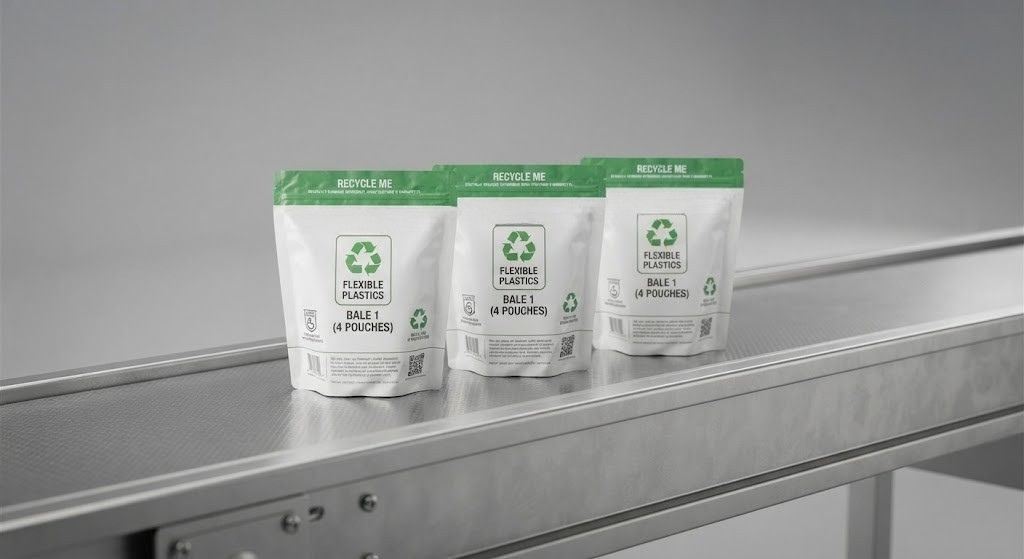
Recyclability depends on more than the packaging material itself. Article 6 connects recyclability with the ability of packaging waste to be collected separately, sorted into specific waste streams and recycled at scale. This means packaging development needs to consider the entire process that takes place after the package becomes waste.
For flexible packaging, this could create greater demand for improved sorting solutions. Lightweight films and flexible formats can present different challenges compared with heavier packaging formats. Better identification and separation systems can help suitable flexible packaging reach the correct recycling stream and improve the efficiency of downstream recycling processes.
This connection can also encourage stronger cooperation between packaging producers and recycling companies. Packaging developers can gain a better understanding of how their materials perform during sorting and recycling, while recyclers can provide valuable information to support future packaging designs. Such cooperation could help move recyclable flexible packaging from theoretical recyclability toward practical and effective recycling.
PPWR also includes requirements concerning certain substances used in packaging. Article 5 states that the combined concentration of lead, cadmium, mercury and hexavalent chromium resulting from substances present in packaging or packaging components must not exceed 100 mg/kg.
The regulation also introduces restrictions on PFAS in food-contact packaging. From 12 August 2026, food-contact packaging cannot be placed on the EU market when PFAS concentrations reach or exceed the limits specified in Article 5. These limits include 25 ppb for any individual PFAS, 250 ppb for the sum of PFAS under the specified analytical method and 50 ppm for PFAS including polymeric PFAS, subject to the conditions set out in the regulation.
These requirements could influence the development of flexible packaging materials, coatings and other components. Manufacturers may need to evaluate formulations more carefully and develop suitable alternatives that provide the required technical functions while also meeting the applicable regulatory requirements.
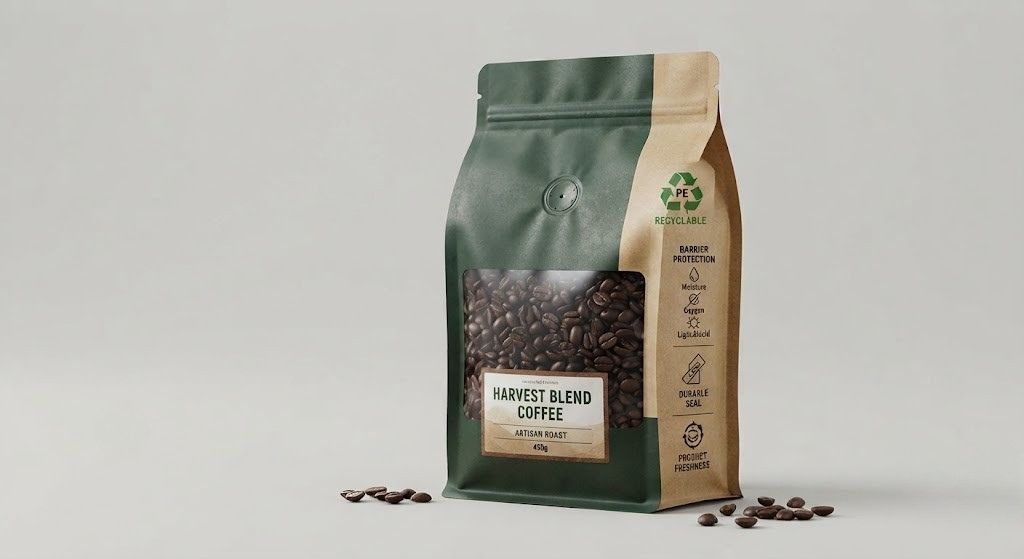
Flexible packaging performs several important technical functions. Depending on the product, packaging may need to provide mechanical strength, reliable sealing, moisture protection, oxygen protection, light protection or resistance to handling during distribution. Improving recyclability therefore cannot mean removing essential functions without considering the impact on the packaged product.
PPWR could encourage technology developers to find better ways to balance these technical requirements. Instead of choosing between product protection and recyclability, manufacturers can focus on developing packaging structures that provide both. This can support research into improved films, compatible layers and alternative barrier technologies that maintain the necessary packaging performance. This balance is particularly important because packaging must remain suitable for its intended purpose. A recyclable structure that does not provide adequate protection could create other problems, such as reduced product quality or increased product waste. Therefore, future recyclable flexible packaging technologies need to combine recycling performance with functional performance.
Flexible packaging often contains more than a primary film. Depending on the format, it may also include closures, spouts, labels, valves or other functional components. PPWR’s approach to packaging information and recyclability can encourage manufacturers to consider these elements as part of the complete packaging system rather than developing the main film separately from its additional components.
This could encourage the development of components that work more effectively with the overall packaging structure. Instead of selecting a closure, label or other component based only on its individual performance, manufacturers may increasingly consider how each element interacts with the complete package. This can create opportunities for new component designs that are better suited to the intended packaging system and its recycling requirements.
A complete-system approach can also make future packaging development more coordinated. Material suppliers, converters and component manufacturers can work together earlier in the development process to establish compatible specifications. This can help reduce design conflicts and support packaging formats in which the film and additional components are developed around the same technical and recycling objectives.
The combined effect of PPWR’s recyclability, recycled-content and substance requirements could encourage companies to evaluate flexible packaging more broadly. Instead of focusing only on the materials used during production, developers may increasingly consider the complete journey of a package, from design and manufacturing through use, collection, sorting and recycling.
This approach could encourage innovation across different parts of the flexible packaging system. Material suppliers can develop improved polymers and barrier solutions, while converters can create more compatible structures and components. Recycling companies can also improve processing technologies and the quality of recovered materials, supporting better outcomes throughout the recycling process.
PPWR therefore does not promote one universal recyclable flexible packaging technology. Instead, it creates a framework that can increase the importance of packaging solutions capable of meeting defined regulatory and recycling requirements. As a result, design for recycling, practical recyclability and material recovery could become increasingly important factors in the development of next-generation flexible packaging.
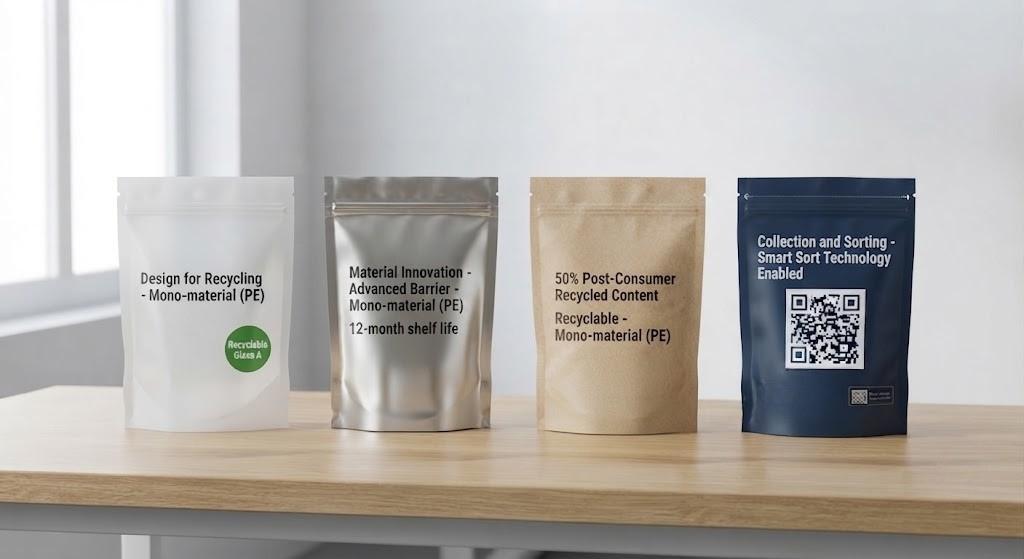
PPWR could play an important role in shaping the future development of recyclable flexible packaging technologies by creating stronger regulatory and commercial reasons to improve packaging design. Its requirements can encourage manufacturers to explore more efficient structures, compatible components, better identification systems, improved documentation and other solutions that support responsible packaging development. The regulation does not require one specific technology or automatically make every mono-material structure compliant. Instead, it establishes requirements that packaging placed on the EU market must meet. For flexible packaging manufacturers, this creates an opportunity to develop solutions that combine effective product protection, efficient material use and practical recyclability while responding to the changing requirements of the European packaging market.
Longdapac is one of the leading 100% recyclable mono-material flexible packaging manufacturer from China. Since the regulation of PPWR, the demand for recyclable flexible packaging is increasing rapidly. This will improve that the PPWR rules do help to push the development of recyclable packaging.
Answer: PPWR could influence the development of recyclable flexible packaging by establishing regulatory requirements that encourage manufacturers to improve packaging design and consider recyclability throughout the development process. These requirements can increase attention to packaging construction, material selection, component compatibility, collection, sorting and recycling. As companies work to meet the applicable requirements, they may invest in new film structures, improved packaging components, more efficient production methods and technologies that can support better recycling outcomes. PPWR does not require one specific recyclable flexible packaging technology, but its requirements can create stronger demand for packaging solutions designed to meet the relevant recyclability and packaging requirements.
Answer: No, PPWR does not require all flexible packaging to be made from mono-material structures. Mono-material packaging can be one approach to developing recyclable flexible packaging because using the same main polymer family can reduce material complexity in certain structures. However, a mono-material structure alone does not establish compliance with PPWR. The complete packaging must meet all applicable requirements, including the relevant recyclability criteria and other provisions. Therefore, manufacturers should evaluate the entire packaging structure rather than assuming that a mono-material label automatically means the packaging meets all PPWR requirements.
Answer: Yes, PPWR could encourage innovation across several areas of flexible packaging development rather than focusing only on the main film structure. Companies may explore improved packaging components, more efficient material use, digital identification, technical documentation and other technologies that can support compliance and better packaging management. This broader approach can encourage manufacturers to consider the complete packaging system during development and coordinate different components more effectively. As a result, future innovation may involve a combination of material engineering, packaging design, production technology and supporting systems rather than relying on a single change to the film structure.
Answer: Technical documentation is important because manufacturers need to demonstrate that their packaging meets the applicable requirements before placing it on the EU market. PPWR requires manufacturers to carry out the relevant conformity assessment and prepare technical documentation in accordance with the regulation. This may require reliable information about the packaging, its materials and relevant performance characteristics. Strong technical documentation can support compliance assessments and provide evidence for applicable packaging claims. It also encourages a more structured approach to packaging development in which important characteristics are supported by appropriate technical information rather than relying only on general statements about recyclability or sustainability.
Answer: No, recyclable flexible packaging should not automatically be described as PPWR-compliant simply because it is marketed as recyclable. PPWR establishes specific requirements for packaging, and compliance depends on the requirements that apply to the particular packaging, its design and intended use. A packaging structure may have features that support recyclability while still requiring assessment against other relevant provisions of the regulation. Therefore, manufacturers should clearly distinguish between a general claim that flexible packaging is recyclable and a verified statement that the packaging complies with the applicable PPWR requirements.