
Flexible packaging has become an important format in modern industries. It is commonly used for food, personal care, medical products and industrial applications because it is lightweight, cost-effective, and easy to handle. Traditional flexible packaging often consists of multiple laminated films, which makes recycling challenging. As sustainability gains importance, businesses are increasingly focusing on recyclable flexible packaging solutions.
Recyclable flexible packaging is designed to minimize environmental impact while ensuring reliable product protection. It uses mono-material structures instead of combining materials that are difficult to separate, making recycling simpler. This approach supports sustainability objectives without compromising functionality, quality, or safety.
In this blog, we will explain how recyclable flexible packaging works and how it compares with conventional laminated packaging. We will also discuss why mono-material design is important, how modern technology improves barrier performance, cost trends, sustainability benefits and why recyclable flexible packaging is becoming the future of the industry.
Flexible packaging is made from materials that can easily change shape. It includes pouches, films, wraps and sachets used across many industries. This packaging format provides excellent convenience, lowers transportation costs, and allows efficient storage because it is lightweight and space-saving.
Traditionally, flexible packaging is created by laminating multiple types of films together. These films are chosen to combine different properties such as strength, sealability and barrier protection. While this method enhances performance, it creates recycling challenges because the materials are different and permanently bonded.
As environmental awareness increases, industries are reevaluating this approach. Companies are seeking packaging solutions that maintain performance while reducing environmental impact. This shift has led to a growing demand for recyclable flexible packaging.
Conventional flexible packaging is typically created by combining multiple film materials into a single laminated structure. Each material is chosen for a specific function, but when layered together, the resulting structure is difficult to recycle effectively.
The main challenge is material incompatibility. When different polymers are laminated, they cannot be easily separated during recycling. Because the layers are permanently bonded, recycling facilities cannot process them into clean, reusable material. As a result, this packaging often ends up in landfills or incineration.
This limitation has become a significant environmental concern. Brands and regulators now recognize that traditional laminated structures do not align with long-term sustainability goals. A new approach is needed to address this issue.
Recyclable flexible packaging is designed with sustainability in mind. Instead of combining different film types, it uses mono-material structures to ensure compatibility during recycling.
Key characteristics include:
This design approach allows the packaging to be processed more efficiently after use. By maintaining material consistency, recycling facilities can recover and reuse the polymer, making recyclable flexible packaging a more responsible option compared to conventional laminated packaging.
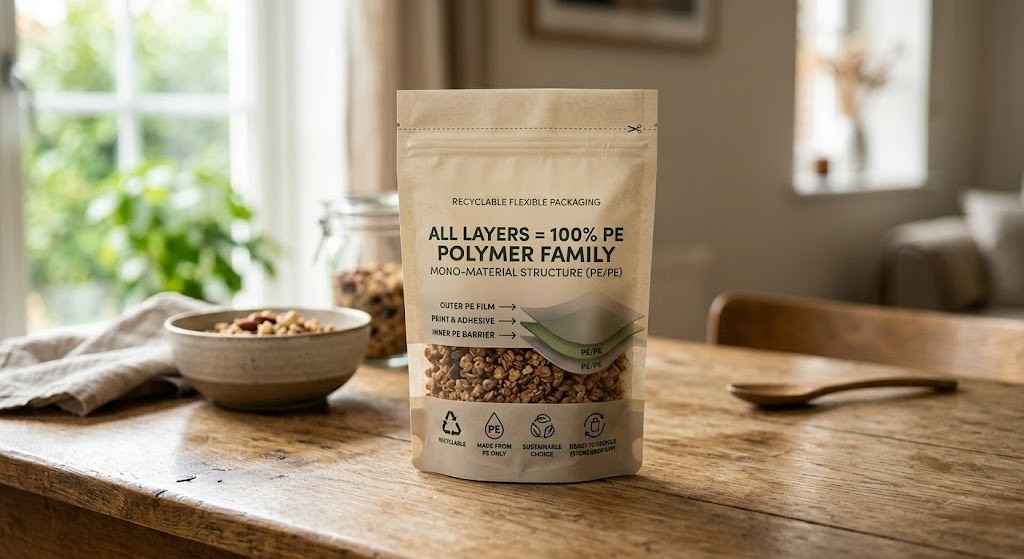
Mono-material PE plays a central role in recyclable flexible packaging, representing over 90 percent of recyclable flexible structures in the market. Polyethylene provides flexibility, moisture resistance and reliable sealing, making it suitable for a wide range of applications.
Multiple layers of polyethylene can be combined to enhance performance without affecting recyclability. Different grades of PE offer strength, clarity and improved barrier properties while remaining within the same material family. This enables manufacturers to create high-performance structures that are compatible with recycling systems.
In addition, polyethylene recycling streams are well-established in many regions, giving mono-material PE packaging strong practical advantages. It works effectively with existing infrastructure and supports circular economy goals.
Technology is continually enhancing the performance of mono-material flexible packaging. Advances in material science are narrowing the gap between traditional laminated structures and recyclable solutions.
Recent developments include:
These innovations enable mono-material packaging to meet demanding industrial requirements. They show that sustainability does not require compromising functionality.
Mono-material PP accounts for a smaller share of recyclable flexible packaging, representing about 10 percent of the market. Polypropylene provides higher heat resistance and greater stiffness than polyethylene, making it suitable for specific applications.
PP-based recyclable structures are used in products that require higher temperature tolerance or improved clarity. Similar to PE structures, PP packaging can include multiple layers of the same polymer while maintaining recyclability.
In addition, although PE dominates the market, PP is gradually gaining ground as technology advances. Mono-material PE and PP form the core of recyclable flexible packaging systems.
Recyclable flexible packaging was once more expensive than conventional laminated packaging. Higher costs were driven by new materials, research investment and lower production volumes, which caused hesitation among manufacturers.
However, the situation is changing quickly. Increased production volumes and material innovations have improved efficiency. As a result, the cost difference between recyclable and conventional flexible packaging is shrinking and in many cases, it is now minimal.
As sustainability regulations and consumer expectations continue to grow, this small cost difference becomes less significant. Businesses increasingly view recyclable packaging as a long-term strategic investment rather than an additional expense.
Barrier performance is essential in flexible packaging because it protects products from moisture, oxygen and external contamination. Conventional laminated structures often provided strong barrier protection by combining different materials.
Initially, recyclable mono-material structures offered lower barrier performance compared to multi-material laminates. This was a major concern for industries that require high protection levels.
In addition, advances in material engineering and coating technologies have improved mono-material barrier properties. Modern recyclable flexible packaging can now meet up to 99 percent of common barrier requirements. This progress demonstrates that sustainability and high performance can go hand in hand.
Biodegradable packaging is often seen as another sustainable option. It is designed to break down under specific environmental conditions, but it has certain limitations.
Biodegradable materials generally have higher production costs and may provide lower mechanical strength and weaker barrier protection compared to advanced recyclable flexible packaging.
Recyclable flexible packaging offers a more balanced solution. It delivers strong product protection, improved barrier performance and reduced cost differences, making it a practical choice for large-scale industrial applications.
The packaging industry is experiencing a significant transformation. Increasing regulations, growing consumer awareness and brand responsibility are driving companies to adopt recyclable solutions. Flexible packaging manufacturers are now focusing heavily on mono-material technology.
Retailers and global brands are setting sustainability goals that require recyclable packaging. This focus promotes innovation and strengthens alignment across the supply chain.
With improved performance and stable costs, recyclable flexible packaging is no longer experimental. It emerges as a standard strategy for companies aiming for long-term growth and environmental responsibility.
Shifting from conventional laminated packaging to mono-material structures requires changes in production processes. Production lines must be optimized to maintain strength and sealing without combining different polymers.
Manufacturers often use different grades of the same polymer to create functional layers. Even with multiple layers, they remain compatible because they belong to a single material family.
With proper temperature control and sealing adjustments, mono-material packaging can achieve industrial quality standards.
The packaging industry is moving toward sustainability-driven solutions, with environmental pressures and market expectations accelerating innovation.
Key future trends include:
Conventional laminated packaging made from mixed films is not recyclable, limiting its long-term viability. Recyclable flexible packaging provides a more sustainable and practical solution for the future.
Recyclable packaging must be compatible with existing recycling systems. If it cannot be processed in current facilities, its practical recyclability is limited.
Polyethylene and polypropylene already have established recycling streams in many regions. Mono-material structures integrate more easily into these systems. In contrast, conventional laminated packaging made from mixed films is not recyclable because the materials cannot be separated.
Compatibility with recycling infrastructure enhances the actual environmental benefits of recyclable flexible packaging.
Governments worldwide are tightening packaging regulations to reduce environmental impact. Many policies now encourage or require recyclable packaging formats. Companies that do not adapt may face restrictions or financial penalties.
Compliance involves meeting material standards, labeling requirements and waste management guidelines. Recyclable flexible packaging supports regulatory compliance by aligning with policies focused on the circular economy and material recovery.
Proactively adopting recyclable structures helps businesses stay ahead of legal changes and reduces long-term risk by ensuring packaging remains acceptable in evolving regulatory environments.
Consumers increasingly expect brands to offer responsible packaging. Growing environmental awareness influences purchasing decisions.
Recyclable flexible packaging enhances brand reputation, with clear recyclable design demonstrating a company’s commitment to sustainability.
Conventional laminated packaging made from mixed films is not recyclable, which can harm brand perception in environmentally conscious markets.
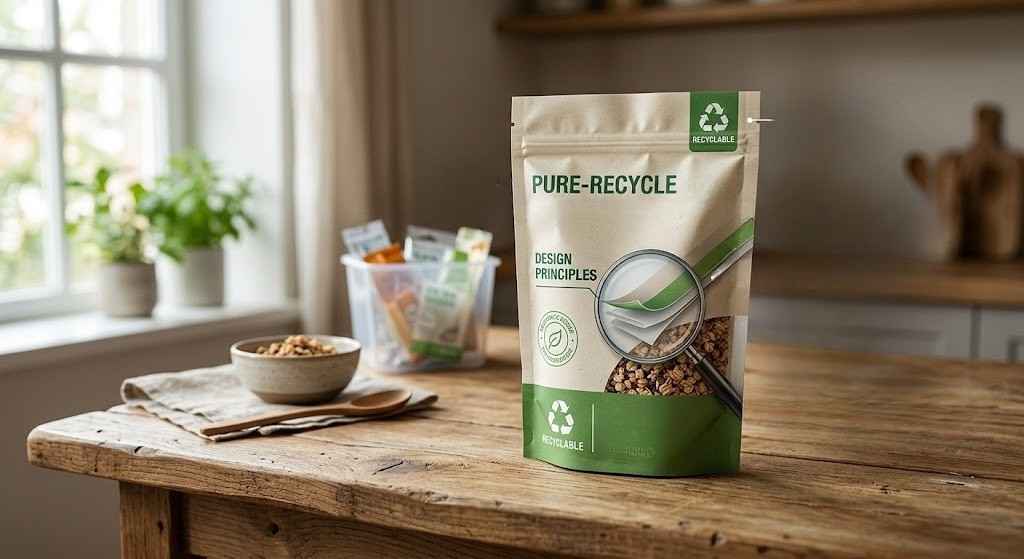
Design plays a vital role in making flexible packaging effectively recyclable. Choosing a mono-material alone is not enough. The entire structure must be engineered to support collection, sorting and reprocessing systems. Poor design choices can reduce recyclability even when the correct material family is used.
Key design considerations include:
Following these principles makes recyclable flexible packaging easier to process after use. Effective design ensures that sustainability objectives are supported at every stage of the packaging life cycle.
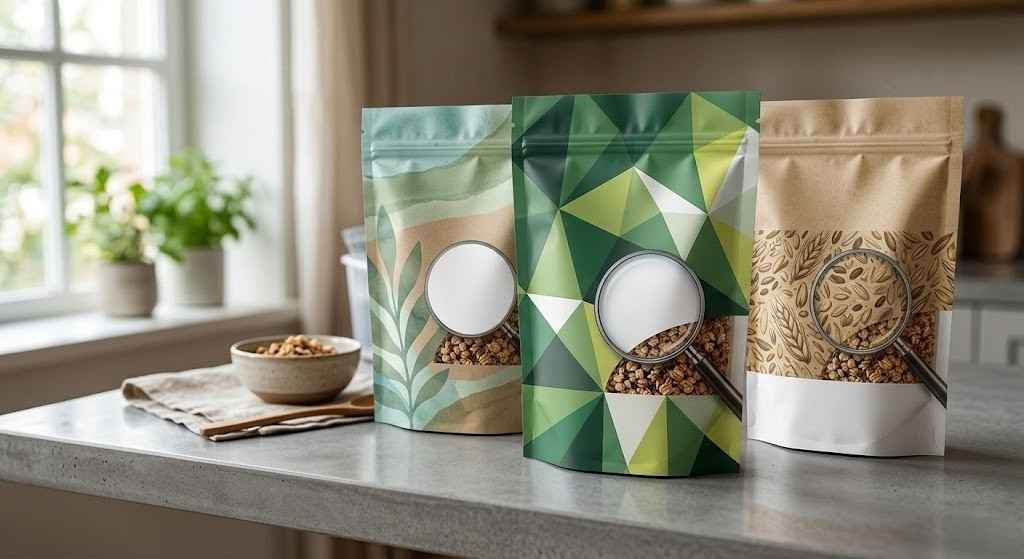
Understanding structural differences helps explain why recyclability is important. The table below provides a simplified comparison between conventional laminated packaging and recyclable mono-material packaging.
Feature | Conventional Laminated Packaging | Recyclable Mono Material Packaging |
Film Composition | Different polymers combined | Same polymer family used in all layers |
Recyclability | Not recyclable due to mixed materials | Designed for recycling compatibility |
Layer Structure | Multiple layers of different films | Multiple layers of same film type |
Environmental Impact | Higher landfill risk | Supports material recovery |
Regulatory Alignment | Increasing compliance challenges | Better alignment with sustainability policies |
Conventional laminated structures permanently combine different films. Since these films cannot be easily separated, the packaging is not recyclable, creating disposal challenges.
Recyclable mono-material structures maintain a uniform material composition across all layers. Even when multiple layers are used, they belong to the same polymer family, which improves compatibility with recycling systems.
Recyclable flexible packaging retains the key benefits of flexible formats. It remains lightweight and easy to transport.
Its strength and flexibility protect products during storage and shipping, ensuring consistent operational performance.
This allows companies to enhance sustainability without compromising supply chain efficiency.
Recyclable flexible packaging offers clear environmental advantages compared to traditional laminated packaging. Designed for recycling, it reduces waste that would otherwise end up in landfills.
By enabling polymer recovery, it supports resource conservation. Recovered materials can be reused in new applications, reducing reliance on virgin raw materials and helping to lower the carbon footprint across the value chain.
In addition, companies that adopt recyclable packaging strengthen their sustainability image. Brands can demonstrate environmental responsibility and align with global sustainability goals without compromising packaging performance.
Recyclable flexible packaging provides a practical and effective solution for modern sustainability goals. Conventional laminated packaging made from multiple film layers is not recyclable because the materials cannot be separated. Mono-material structures address this issue by keeping all layers within the same polymer family, improving recycling compatibility. With advancing technology and stable costs, recyclable flexible packaging is emerging as the preferred choice for brands focused on both responsibility and performance.
Longdapc is the leading 100% recyclable pouches manufacturer in China. Currently our high barrier of OTR and WVTR and be as small as 0.1 which is enable to meet 99% of the market needs.
Answer: It contains different film materials bonded together. These layers cannot be separated during recycling, so the structure is not recyclable.
Answer: No, It can have multiple layers, but all layers must belong to the same polymer family.
Answer: It used to be more expensive, but costs are decreasing and are now nearly comparable to conventional packaging.
Answer: Yes. Modern material improvements allow mono material packaging to meet most barrier requirements.
Answer: Recyclable packaging offers stronger performance and better compatibility with recycling systems, which makes it more practical for large scale industrial use.