
Packaging development is evolving as businesses place greater attention on recyclability, material selection and how packaging is managed after use. In the European Union, the Packaging and Packaging Waste Regulation (PPWR), Regulation (EU) 2025/40, introduces requirements that place greater emphasis on packaging recyclability and efficient resource use. The Regulation entered into force on 11 February 2025 and generally applies from 12 August 2026.
Recyclable flexible packaging can support this changing direction by considering recycling requirements during the design of flexible packaging structures. Materials and layers can be selected with the intended recycling pathway in mind while still meeting key packaging needs such as product protection, sealing and barrier performance. This makes recyclable flexible packaging a relevant option for businesses developing packaging with PPWR requirements in mind.
In this blog, we will guide you through why recyclable flexible packaging can be a suitable direction for PPWR-focused packaging development. We will also explain how recyclability, material selection, mono-material structures, packaging design and product protection can work together when developing flexible packaging for a changing regulatory environment.
Recyclability is an important part of the PPWR because Article 6 states that all packaging placed on the EU market must be recyclable. The Regulation connects recyclability with more than the materials used to make a package. Packaging must be designed for material recycling and should be capable of being collected separately, sorted into suitable waste streams and recycled at scale under the relevant conditions.
This gives packaging developers a broader aspect to consider during the design process. A package needs to perform its main function throughout its useful life, while its material structure also needs to be considered in relation to what happens after it becomes waste.
Recyclable flexible packaging supports this approach by considering recycling during the development of the packaging structure. Instead of selecting materials only for packaging performance, developers can also consider whether the structure supports the intended material recycling pathway.
The materials selected for flexible packaging influence its overall structure and recycling considerations. A packaging structure may contain several layers to provide strength, sealing or barrier properties, making material compatibility an important part of the development process.
A clear material strategy can help packaging developers understand how different layers work together. PE-based structures, for instance, can be developed around the PE polymer family, while PP-based structures can be designed around PP. The selected structure still needs to be assessed according to the applicable recycling requirements.
For PPWR-focused packaging, this means material selection should be considered with the complete packaging structure in mind. The goal is to create packaging that provides the required functions while supporting the intended recycling approach.
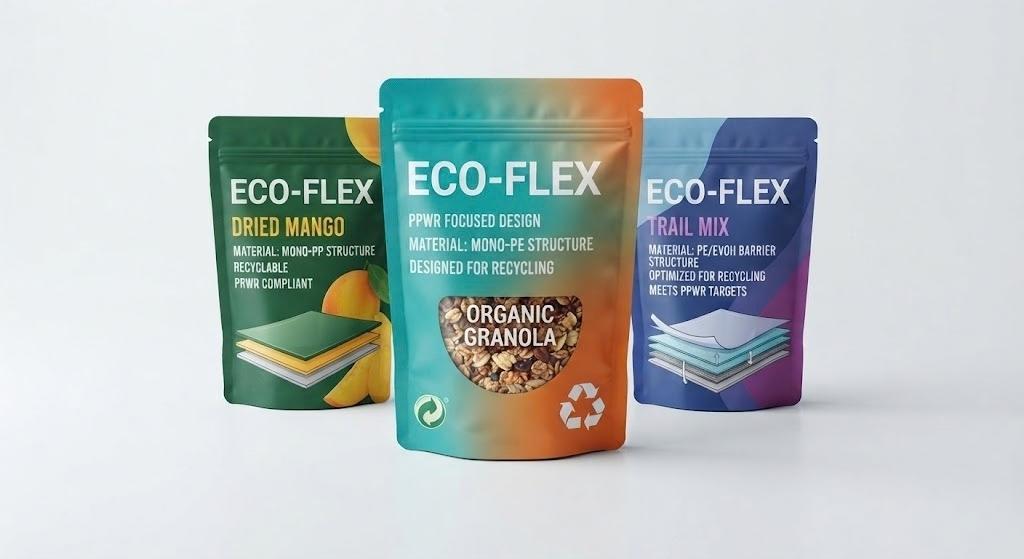
Mono-material packaging structures use materials from the same polymer family as their main structural basis. PE/PE and PP/PP are structures that follow this approach. They can provide a more consistent material structure than packaging that combines different polymer families.
This approach can be useful when developing flexible packaging with recycling in mind. A structure based on one polymer family can give developers a clearer starting point when considering material recycling and the compatibility of its layers.
However, mono-material should not be considered an automatic PPWR compliance claim. The PPWR considers the overall recyclability of packaging, including design for material recycling and the conditions related to collection, sorting and recycling at scale.
Packaging still needs to protect the product throughout storage, transportation and use. A recycling-focused structure therefore needs to maintain suitable functional performance rather than focusing only on the end-of-use stage.
Flexible packaging can be designed to provide properties such as suitable sealing strength, flexibility and protection from external conditions. Depending on the product, the structure may also need to provide resistance to moisture, oxygen or light.
Recyclable pouches brings these requirements together by allowing developers to consider product protection and recycling within the same design process. The right structure depends on the specific application, so recycling considerations should be balanced with the performance required for the packaged product.
Barrier performance can be an important requirement for flexible packaging because exposure to moisture, oxygen or light can affect certain products. A package therefore needs to provide the level of protection required for its specific application.
Recycling-focused packaging does not remove the need for suitable barrier properties. Instead, developers can consider how barrier solutions fit within the overall material structure and intended recycling pathway. This approach creates an opportunity to develop flexible packaging that protects the product while keeping recyclability as part of the material design. The barrier solution should be selected according to the product requirements and relevant technical assessments rather than assuming that one solution will suit every package.
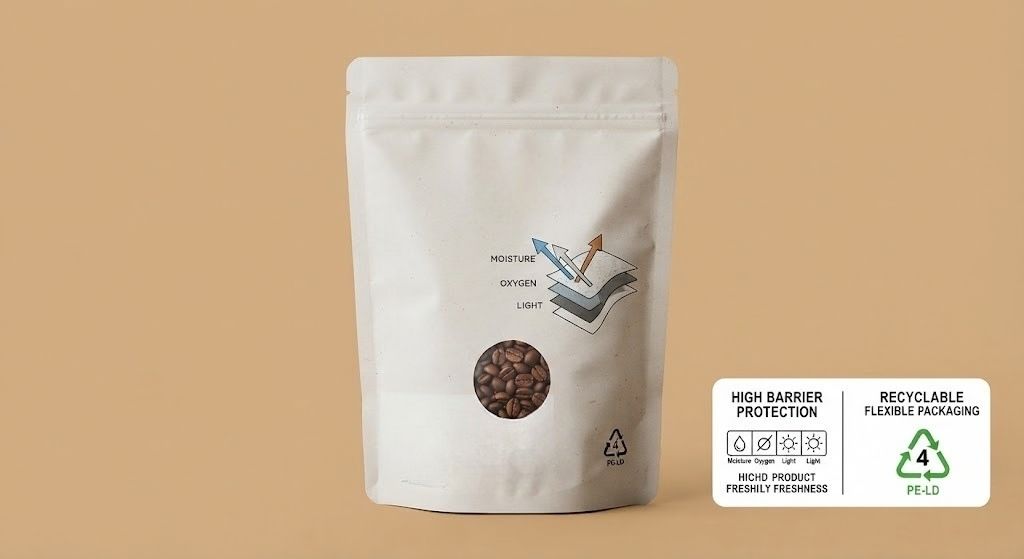
The PPWR does not define recyclability only by the material name. Article 6 connects recyclable packaging with material recycling and the ability to collect, sort and recycle packaging at scale.
This means packaging developers need to understand the intended recycling pathway when assessing a flexible packaging structure. The package design should be considered alongside the recycling system expected to collect, sort and process the material. For recyclable flexible packaging, this makes the recycling pathway an important part of the development process. A suitable structure should be considered in relation to the conditions under which it is expected to be collected, sorted and recycled.
The PPWR includes specific requirements for PFAS in food-contact packaging. From 12 August 2026, food-contact packaging cannot be placed on the EU market when PFAS are present at or above the limits specified in Article 5, unless another EU legal act already prohibits the packaging. These limits include 25 ppb for any individual PFAS, 250 ppb for the sum of specified PFAS and 50 ppm when the relevant total-fluorine measurement includes polymeric PFAS.
These requirements give packaging developers another reason to examine the complete material composition of a package. A flexible package intended for food contact needs to be assessed according to its specific application and the substances that may be present in its materials or components.
For businesses developing recyclable flexible packaging for food applications, regulatory planning should therefore include suitable information about PFAS and other relevant substances. Keeping these requirements in view can make the packaging development process more organised and help businesses prepare the information needed for compliance assessment.
PPWR-focused packaging needs to consider more than its overall design. Article 5 requires the presence and concentration of substances of concern in packaging materials and components to be minimised. The Regulation also sets a combined limit of 100 mg/kg for lead, cadmium, mercury and hexavalent chromium in packaging and packaging components, subject to the provisions and exemptions set out in the Regulation.
This makes careful material selection an important part of packaging development. Businesses can review the substances associated with their packaging materials and components to ensure that the final package is developed with the applicable PPWR requirements in mind. This approach can also help establish clearer material specifications for suppliers and packaging manufacturers.
For recyclable flexible packaging, substance considerations can be included during product development rather than treated as a separate issue at the end. Reviewing materials, inks, coatings, adhesives and other components can help businesses understand the complete composition of the package and identify the information required for regulatory assessment.
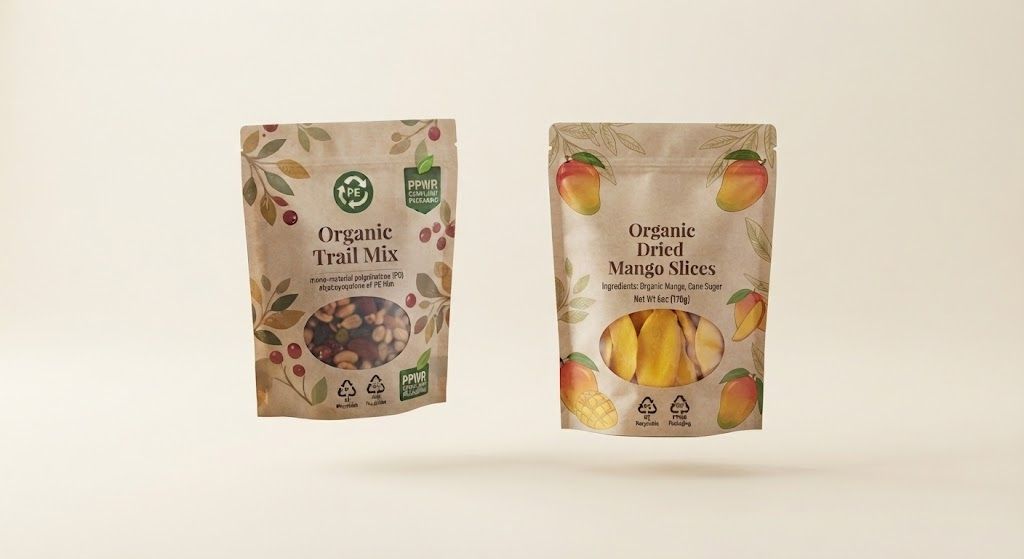
PPWR also introduces minimum recycled-content requirements for plastic packaging. Under Article 7, the required percentages depend on the type and format of plastic packaging. From the applicable date linked to 1 January 2030 or three years after the relevant implementing act enters into force, whichever is later, the Regulation sets minimum recycled-content levels calculated as an average per manufacturing plant and year. For contact-sensitive plastic packaging made from plastics other than PET, the minimum is 10%, while the general category for other plastic packaging has a minimum of 35%.
This gives businesses another area to consider when planning plastic packaging for the EU market. Recyclable packaging and recycled content address different parts of the packaging strategy. One focuses on the ability of packaging to meet the required recycling framework, while the other concerns the use of recycled material in new plastic packaging.
For flexible packaging developers, this can support a broader approach to material planning. Businesses can consider whether recycled content is suitable for the intended application while also reviewing product-contact requirements, technical performance and the relevant PPWR conditions. The use of recycled content should therefore be assessed according to the packaging type and applicable legal requirements rather than applying a general percentage to every flexible package.
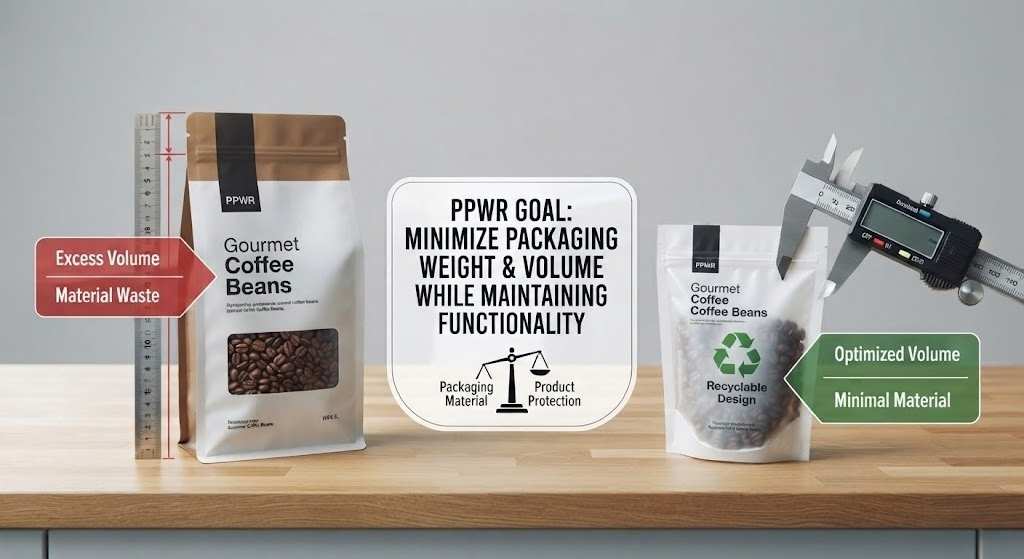
PPWR also addresses the amount of packaging used. Article 10 requires manufacturers and importers to ensure that, by 1 January 2030, packaging placed on the market is designed so that its weight and volume are reduced to the minimum necessary to ensure its functionality. The Regulation also addresses packaging features that only increase perceived product volume, including unnecessary layers, double walls and false bottoms, subject to the conditions and exemptions set out in the Regulation.
This creates an additional design consideration for flexible packaging. Developers can review whether the amount of packaging material is appropriate for the function it needs to perform. The objective is not simply to reduce material without considering performance. Instead, the Regulation connects packaging minimisation with maintaining the required packaging function. Flexible packaging can be considered within this approach because its design can be developed around the actual requirements of the packaged product. Businesses can review package dimensions, material quantity and functional requirements together to create an appropriate packaging solution.
Recyclable flexible packaging can support a broader PPWR-focused packaging strategy by bringing regulatory considerations into material selection and packaging development. Along with recyclability, businesses need to consider substance requirements, PFAS rules for food-contact packaging, recycled content and packaging minimisation. A well-planned approach can help packaging developers address these areas while maintaining the required functional performance of the package.
For businesses preparing packaging for the EU market, the PPWR provides a clear reason to evaluate packaging decisions from several perspectives rather than focusing on a single requirement. Recyclable flexible packaging can provide a practical direction when its materials, components, performance and supporting technical information are carefully considered. This approach can help businesses develop packaging that is better prepared for the different PPWR requirements as they become applicable.
Longdapac is one of the leading recyclable pouches manufacturers in China. Thanks for the PPWR, the sales is increasing dramatically recently.
Answer: Recyclable flexible packaging is designed with materials and structures that can support an appropriate material recycling pathway while providing the performance required for the packaged product. It can use a defined polymer family, such as PE or PP, and can be developed to provide suitable sealing, strength and product protection. The complete structure and all its components need to be considered when assessing recyclability. Being described as recyclable does not automatically mean that a package meets every PPWR requirement, so the relevant recycling conditions and regulatory criteria still need to be assessed. This makes careful material selection an important part of packaging development, while businesses also need to consider how the complete package fits within the relevant recycling system.
Answer: Recyclable flexible packaging is relevant to the PPWR because the Regulation places greater focus on the recyclability of packaging placed on the EU market. Article 6 connects recyclability with design for material recycling, suitable collection and sorting and recycling at scale under the applicable conditions. Developing flexible packaging with these considerations from the beginning can help businesses create structures that support the Regulation’s recycling objectives. However, each package still needs to be assessed against the applicable PPWR requirements before making a specific compliance claim. This approach can help businesses include recycling considerations earlier in the packaging development process while reviewing material choices alongside the intended packaging function.
Answer: No, mono-material packaging does not automatically prove PPWR compliance. PE/PE and PP/PP structures can provide a clear material strategy because their main structural layers belong to the same polymer family. This can support recycling-focused packaging design, but the PPWR considers more than the polymer structure itself. The complete package, its components and the applicable conditions for collection, sorting and material recycling also need to be considered. Therefore, mono-material should be viewed as a useful design approach rather than an automatic compliance claim. Businesses should also review the technical requirements that apply to the specific packaging structure to ensure that the assessment considers the complete package rather than one material characteristic.
Answer: Businesses should consider several PPWR requirements besides recyclability, including restrictions on certain substances, PFAS requirements for food-contact packaging, recycled-content requirements for certain plastic packaging and packaging minimisation requirements. These obligations apply according to the relevant provisions and packaging type, so businesses should review the requirements that apply to their specific packaging. Considering these areas together can help businesses develop a more complete PPWR-focused packaging strategy while keeping regulatory requirements connected with practical packaging needs. It can also help packaging teams identify the information they need from material and packaging suppliers. Reviewing these requirements early can make future packaging planning more organised and consistent.
Answer: Businesses can prepare by considering materials, packaging components, recycling requirements and applicable PPWR provisions during the development process. They can review the intended recycling pathway, assess relevant substance requirements and determine whether recycled-content or packaging-minimisation requirements apply to their packaging. Maintaining suitable technical information can also support the assessment and documentation process. Taking these steps early can help businesses develop recyclable flexible packaging with a clear material strategy while keeping packaging performance and applicable PPWR requirements in view. Regularly reviewing the applicable PPWR timelines can also help businesses prepare for requirements as they become applicable. A structured approach can make it easier to connect packaging development decisions with relevant regulatory expectations.