
Recyclable flexible packaging is gaining popularity as industries prioritize practical and sustainable solutions. Previously, many companies preferred conventional flexible packaging because it was more cost effective and provided strong barrier performance. This trend is shifting as new materials and advanced production techniques make recyclable options more competitive. Today, businesses are increasingly focusing on packaging that meets long term environmental goals without compromising on performance.
An important factor driving this shift is the change in cost trends. Recyclable flexible packaging, particularly mono material structures, was previously seen as expensive and challenging for large scale production. Advances in material science and manufacturing efficiency are now lowering costs while enhancing quality. This development is making recyclable packaging more accessible to a broader range of industries.
In this article, we will explain how cost trends are driving the growth of recyclable flexible packaging. We will also cover material structures, production improvements, market demand, and performance advancements that are helping close the gap with conventional packaging.
In the past, recyclable flexible packaging faced a clear cost disadvantage compared to conventional packaging. Conventional materials often used multi layer structures that were well established in the market. Large scale production of these materials made them more affordable and widely available. As a result, many businesses continued using them despite their limited recyclability.
Recyclable packaging, on the other hand, relied on mono material structures such as PE or PP. These materials needed different processing techniques and precise design to deliver similar performance. This added complexity raised production costs and limited their use in cost sensitive industries.
Today, the cost gap is much smaller than before. Improved production efficiency and growing demand are making recyclable packaging more cost competitive. Many companies now consider it a practical option rather than a premium choice.
Mono material structures play an important role in making recyclable flexible packaging more cost effective. These structures use the same type of material across multiple layers, which simplifies recycling. At the same time, they help manufacturers maintain strength and flexibility without combining different materials.
Mono material packaging can have several layers, but all layers are made from the same base material such as PE. This design reduces complexity in recycling and supports a more sustainable packaging system. It also allows manufacturers to streamline production processes over time.
As production methods advance, the cost of producing mono material structures continues to decrease. This makes recyclable packaging more accessible and easier for different industries to adopt.
A major factor in lowering the cost of recyclable packaging is the growth in production scale. As more companies adopt recyclable solutions, manufacturers produce larger volumes of mono material films, leading to greater efficiency and lower cost per unit.
Large scale production also enables manufacturers to invest in advanced equipment and optimized processes. These improvements reduce material waste and enhance output quality, further lowering the overall cost of recyclable packaging.
This trend mirrors what happened with conventional packaging in the past. As production increases, costs naturally decrease, making the product more accessible to the market.
Material technology has advanced significantly in recent years, making recyclable packaging more cost effective. New developments in PE and PP materials provide improved strength, flexibility and durability without raising costs.
These advancements also enhance the barrier performance of mono material packaging. Previously, lower barrier properties were a concern, but modern materials can now meet most application requirements, reducing the need for complex multi material structures.
As technology continues to improve, manufacturers can achieve better results using fewer resources. This directly lowers costs and makes recyclable packaging a more viable alternative to conventional options.
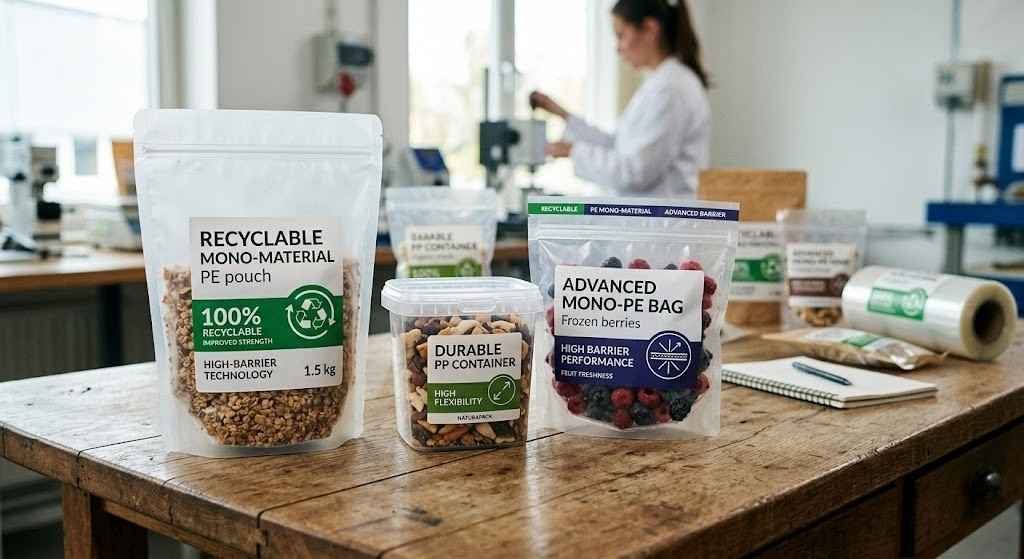
Many global and regional brands are making strong commitments to improve their packaging systems. These efforts focus on environmental responsibility and staying competitive, influencing the entire supply chain.
Their actions include:
These initiatives are creating steady demand for recyclable flexible packaging, helping the market grow and become more stable over time.
Efficient use of raw materials is another reason why costs are becoming more manageable. Modern production systems are designed to minimize waste during manufacturing. This improves material utilization and reduces unnecessary expenses.
Mono material structures further simplify the handling of production waste. With all layers made from the same material, it is easier to recycle scrap and reuse it in manufacturing, lowering overall material costs. Reducing waste not only cuts expenses but also supports sustainability goals, creating a strong balance between cost efficiency and environmental responsibility.
The supply chain for recyclable packaging has become more organized and efficient. Previously, limited suppliers and specialized materials increased costs and caused delays. Today, more suppliers offer mono material solutions, improving availability.
Improved supply chain management also reduces transportation costs and lead times. Manufacturers can source materials more easily and maintain consistent production schedules, helping control overall costs.
As the supply network grows, recyclable packaging becomes more reliable and accessible for businesses of all sizes.
Businesses are now focusing on long term cost planning rather than short term savings. Conventional packaging may seem cheaper initially, but it does not support future sustainability goals, which can result in higher costs over time.
Recyclable packaging provides better value by aligning with environmental strategies and lowering future risks. Companies are beginning to view it as an important investment rather than an added expense. As more industries adopt this approach, recyclable flexible packaging continues to gain acceptance. This shift plays an important role in making it more accessible and widely used.
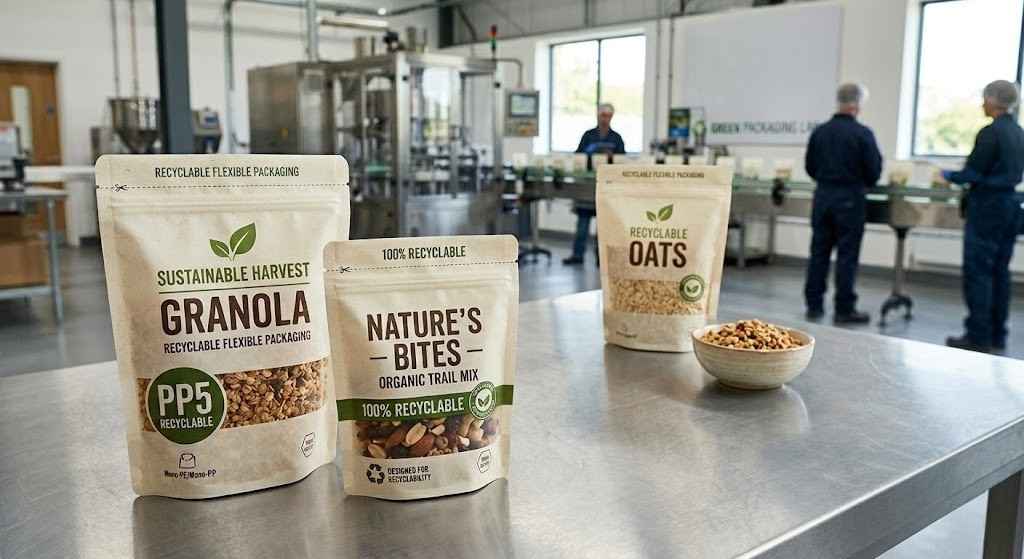
Recyclable flexible packaging has achieved notable improvements in cost, performance and sustainability.
The table below highlights the key differences compared to conventional multi material packaging.
Feature | Conventional Flexible Packaging | Recyclable Flexible Packaging |
Material Structure | Multi material layers such as PET/PE | Mono material layers such as PE/PE |
Recyclability | Not recyclable | Designed to be recyclable |
Cost | Traditionally lower | Becoming similar due to improved production |
Barrier Performance | High | Meets most barrier requirements now |
Sustainability | Limited environmental benefits | Stronger environmental performance |
Consumer Perception | Less eco-friendly | Preferred for sustainability goals |
Recyclable flexible packaging is emerging as a practical solution for modern businesses. With better material design, efficient production, and strong industry support, it provides a balance of performance, cost and sustainability that conventional packaging cannot achieve.
Market demand is an important factor influencing cost changes. More businesses are choosing recyclable packaging to meet sustainability goals and customer expectations, which encourages manufacturers to increase production.
Higher demand also leads to more competition among suppliers. This competition helps control pricing and encourages innovation. As a result, companies can access better quality materials at more competitive prices.
The rising preference for sustainable packaging is not just a trend. It is becoming a standard requirement in many industries, supporting long term cost stability.
In the past, companies often avoided recyclable packaging because of performance concerns. Lower barrier properties and durability issues made it less reliable for certain applications, forcing businesses to rely on conventional materials.
Now, recyclable mono material packaging can meet nearly all barrier requirements. This reduces the need for alternative materials or complex structures. As performance improves, companies can confidently adopt recyclable solutions.
In addition, this change helps lower overall costs, as businesses no longer need to invest in multiple packaging types for different products.
Government policies are playing an important role in making recyclable flexible packaging more accessible. Many countries are introducing regulations that encourage the use of sustainable materials and reduce reliance on non recyclable structures. These policies are motivating companies to rethink their packaging strategies and adopt better solutions.
Regulations also create a more structured environment for manufacturers. Clear guidelines help companies choose appropriate materials and design packaging that meets sustainability goals, reducing confusion and supporting better long term decisions.
As policies continue to evolve, they promote wider adoption of mono material packaging. This support helps lower barriers to entry and makes recyclable options more practical for various industries.
Processing and conversion techniques have advanced significantly, making it easier to produce mono material packaging. Modern equipment provides better control over film thickness, strength and sealing properties, maintaining quality without adding production complexity.
Advanced conversion methods also enable manufacturers to create multi layer structures using the same material. This keeps the packaging recyclable while delivering the required performance and ensures better consistency across large production runs.
As these techniques become more widespread, production becomes faster and more efficient. This helps lower operational costs and makes recyclable packaging more accessible to a broader market.
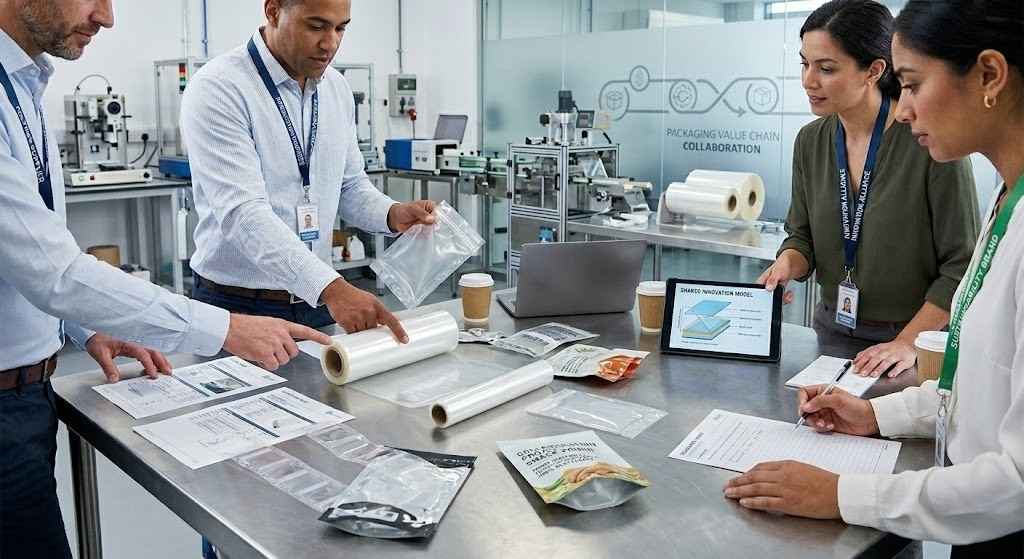
Collaboration across the packaging value chain is becoming more common. Different stakeholders are working together to enhance the performance and availability of recyclable flexible packaging.
This includes material suppliers, manufacturers and brand owners.
This collaborative approach helps address challenges more effectively and accelerates the development of practical solutions for real world applications.
Consumer awareness has grown significantly in recent years. People are now more informed about packaging materials and their environmental impact, influencing purchasing decisions and encouraging companies to adopt better packaging solutions.
Customers also seek clear information about packaging and prefer products that are easy to understand and aligned with sustainability goals. This is motivating brands to simplify packaging structures and use mono material solutions.
As consumer expectations continue to rise, businesses are adjusting their packaging strategies. This shift is helping recyclable flexible packaging become more common and widely accepted.
The packaging industry is investing heavily in research and development to enhance recyclable solutions. These efforts focus on creating better materials, improving production efficiency, and boosting overall performance, supporting steady long term progress.
Innovation is helping overcome previous limitations. Manufacturers are developing new methods to improve strength, flexibility, and usability without altering the mono material structure, ensuring the packaging remains practical for various applications.
As investment and innovation continue, recyclable flexible packaging is becoming more reliable and accessible. This progress is shaping the future of packaging and promoting a more sustainable industry.
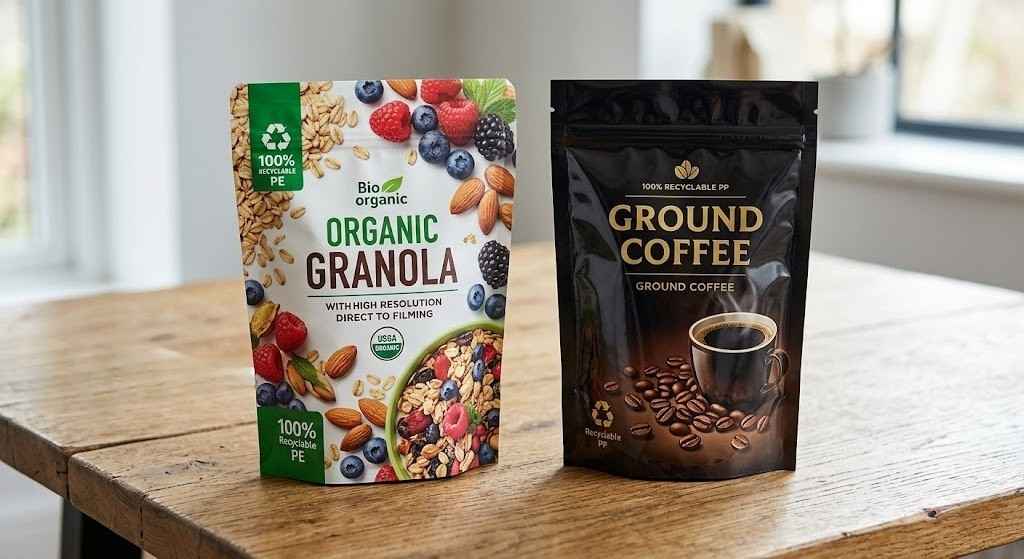
Printing technology has improved to support mono material packaging without affecting recyclability. High quality printing can now be applied directly to PE or PP films, enabling brands to maintain strong visual appeal and overcoming earlier concerns about design limitations.
Improved design flexibility also allows companies to create packaging that meets both functional and marketing needs. Brands can use different finishes, textures and layouts without compromising the material structure, which is important for product presentation.
As printing and design capabilities advance, businesses are more confident in adopting recyclable packaging. This reduces the need for alternative materials and supports wider use across industries.
Recyclable flexible packaging is becoming more practical as costs decrease and industry adoption grows. Mono material structures now provide reliable performance while maintaining efficient production. While this type of packaging is designed to be recyclable, it is important to note that it is not always recycled in real world conditions due to system limitations. Even with this challenge, it still represents a more responsible and sustainable option compared to conventional multi material packaging, which cannot be recycled.
LongdaPac is the leading recyclable packaging supplier in China. Currently we have been supplying that for more than 6 years. Our technology is very stable now, and the cost is competitive. When more and more customers choose to use recyclable packaging, the cost will go down a lot.
Answer: Recyclable flexible packaging uses mono material structures, whereas conventional packaging is made of multiple different layers. This difference makes recyclable packaging better suited for recycling processes.
Answer: No, mono material packaging can have multiple layers, but all layers are made from the same material such as PE or PP.
Answer: No, it is not always fully recycled in real world conditions, as recycling depends on effective collection and processing systems.
Answer: The cost was higher in the past, but it is now approaching that of conventional packaging thanks to improved production and increased demand.
Answer: Companies are adopting it to support sustainability goals and reduce reliance on non recyclable multi material structures.