
Packaging requirements are changing as the European Union moves toward a more circular packaging system. Flexible packaging plays an important role in this shift because it can protect products while using relatively little material. However, some conventional flexible packaging structures combine several different materials, which can make recycling more difficult. This is increasing interest in recyclable flexible packaging structures that are designed to better support recycling requirements.
Recyclable flexible packaging is becoming more relevant as businesses prepare for the requirements introduced by the Packaging and Packaging Waste Regulation (PPWR). Regulation (EU) 2025/40 entered into force on 11 February 2025 and generally applies from 12 August 2026. The regulation covers packaging placed on the EU market and introduces requirements related to packaging sustainability, recyclability, substances of concern and waste management.
In this blog, we will explain why recyclable flexible packaging could become more important under PPWR. We will also cover how PPWR requirements affect flexible packaging, why material structure matters, what businesses need to consider and how recyclable packaging can support preparation for future requirements.
Article 6 of the PPWR states that all packaging placed on the market must be recyclable. The regulation also requires recyclable packaging to be designed for material recycling and to be capable of producing secondary raw materials of sufficient quality. It must also be suitable for separate collection, sorting and recycling at scale in accordance with the applicable requirements.
This is particularly important for flexible packaging because different flexible structures can have different recycling potential. A packaging format may be flexible and lightweight but still face recycling challenges when its materials are difficult to separate or recover.
As a result, recyclability is becoming an important design consideration rather than simply an environmental claim. Businesses need to assess the complete packaging structure and consider how it is expected to move through the recycling process.
Conventional flexible packaging can use different film materials in a laminated structure. A structure combining materials such as PET and PE can provide useful performance characteristics but may create challenges for material recycling because the different layers are not necessarily designed to remain within the same compatible material stream.
Recyclable flexible packaging can take a different approach by using mono-material structures. PE-based structures can use PE across the relevant layers, while PP-based structures can use PP across the relevant layers. A mono-material structure can still contain multiple layers, but those layers are based on the same primary polymer family.
This approach can help simplify the material structure and make it more suitable for recycling systems. However, being mono-material does not automatically mean PPWR compliance. Recyclability depends on the complete packaging design, applicable technical criteria and whether the packaging can meet the relevant collection, sorting and recycling requirements.
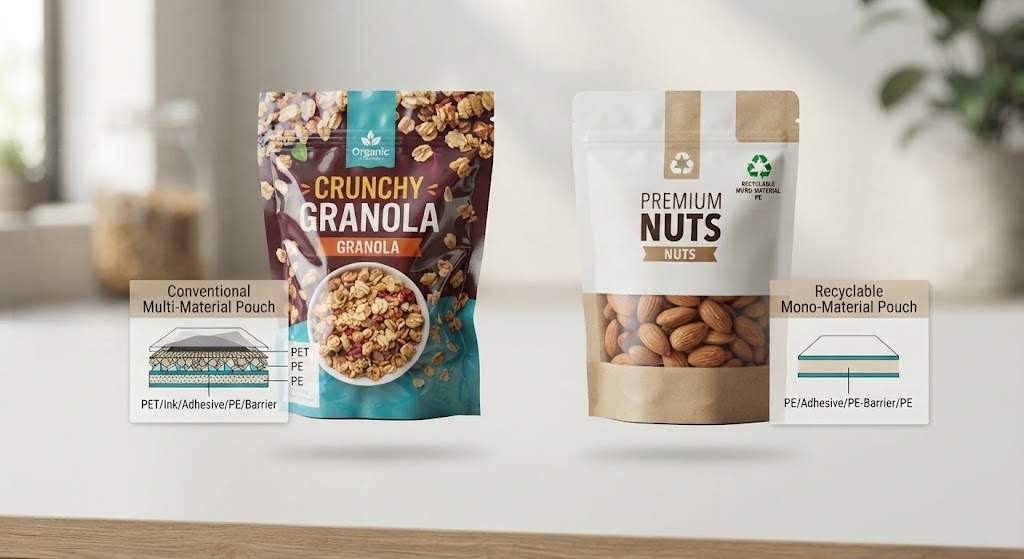
Flexible packaging is used across many product categories because it can provide product protection, convenience and efficient material use. However, its future development cannot depend only on these functional benefits. Regulatory requirements are adding another important consideration: how effectively packaging can fit into a circular material system.
This gives recyclable flexible packaging a stronger position in packaging development. Instead of treating recycling as an additional feature, businesses can consider recyclability during the early stages of material selection and package design.
This shift is especially relevant for companies that supply products to EU markets. A packaging structure that meets current commercial needs may require further evaluation as PPWR requirements become more detailed and progressively stricter.
Recyclability cannot replace the basic function of flexible packaging. Packaging still needs to protect products from factors such as moisture, oxygen, light or contamination when these barriers are required. The packaging structure must provide the level of protection needed for the specific product while also maintaining its functional performance during filling, transportation and storage.
Earlier recyclable structures were sometimes associated with higher costs and weaker barrier performance. Advances in material development have improved this situation, allowing recyclable structures to meet more demanding protection requirements while maintaining a focus on recycling compatibility. This gives packaging designers greater flexibility when considering recyclable material options for different applications.
This balance is important because packaging that does not adequately protect its product can create other forms of waste through product damage or spoilage. The goal is therefore not simply to make packaging recyclable but to develop packaging that combines necessary product protection, reliable performance and a suitable recycling-oriented structure.
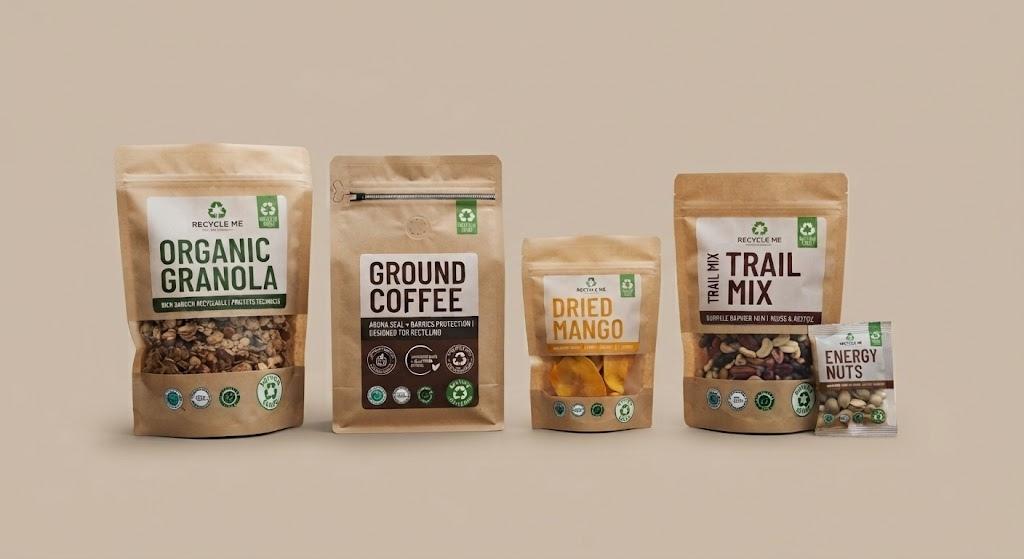
The PPWR introduces its requirements in stages. According to the European Commission’s current guidance, the general requirement that all packaging placed on the market be recyclable applies from 12 August 2026. The detailed design-for-recycling requirements under Article 6(2)(a) apply from 1 January 2030 or 24 months after the relevant delegated acts enter into force, whichever is later. The recycled-at-scale requirement is linked to a later stage from 2035 under the regulation’s framework.
This phased approach gives businesses an opportunity to evaluate their packaging structures before the later requirements become fully applicable. Moving toward recyclable flexible packaging can help companies develop packaging strategies that align with future regulatory expectations rather than waiting until each requirement becomes urgent.
The key point is that recyclable flexible packaging should be viewed as part of a broader packaging strategy. A well-designed structure needs to balance recycling potential, product protection, chemical requirements, technical performance and applicable PPWR criteria. This makes careful material selection and packaging design increasingly important for businesses targeting the EU market.
Recyclable flexible packaging should be selected according to the needs of the product it will contain. Different products may require different levels of flexibility, puncture resistance, seal strength or mechanical durability. These requirements can influence the choice of film structure.
The packaging also needs to remain stable during filling, transportation and storage. A material that performs well in one application may not provide the same results in another application with different handling conditions.
For this reason, material selection should begin with the required performance and then consider suitable recyclable options. This helps ensure that the shift toward recyclable packaging does not compromise the practical function of the package.
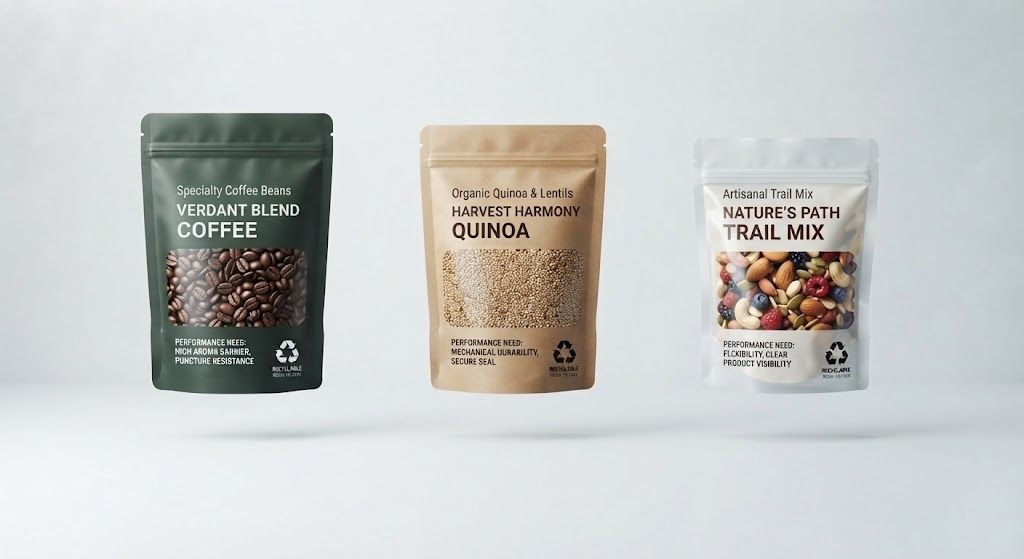
PPWR addresses substances in packaging as well as recyclability. Article 5 requires substances of concern in packaging to be minimised. It also sets a combined limit of 100 mg/kg for lead, cadmium, mercury and hexavalent chromium in packaging and packaging components.
The regulation also introduces specific PFAS restrictions for food-contact packaging. From 12 August 2026, food-contact packaging cannot be placed on the EU market when PFAS concentrations reach or exceed the specified limits, including 25 ppb for an individual PFAS, 250 ppb for the specified sum of PFAS and 50 ppm for PFAS including polymeric PFAS.
This means packaging development needs to consider both material recyclability and chemical requirements. A recyclable structure still needs to meet all other applicable PPWR conditions.
Converting processes can play an important role in producing flexible packaging. Printing, lamination, slitting and pouch-making all need to work properly with the selected structure. A material may appear suitable during initial evaluation but may still require process adjustments during manufacturing.
Converters can assess how a new structure performs on production equipment and whether any changes are needed to maintain consistent output. This can be particularly important when a business moves from an established packaging structure to a newer recyclable alternative.
Production trials can therefore provide useful information before full-scale manufacturing begins. They allow technical teams to identify processing issues early and make the necessary adjustments to achieve reliable packaging performance.
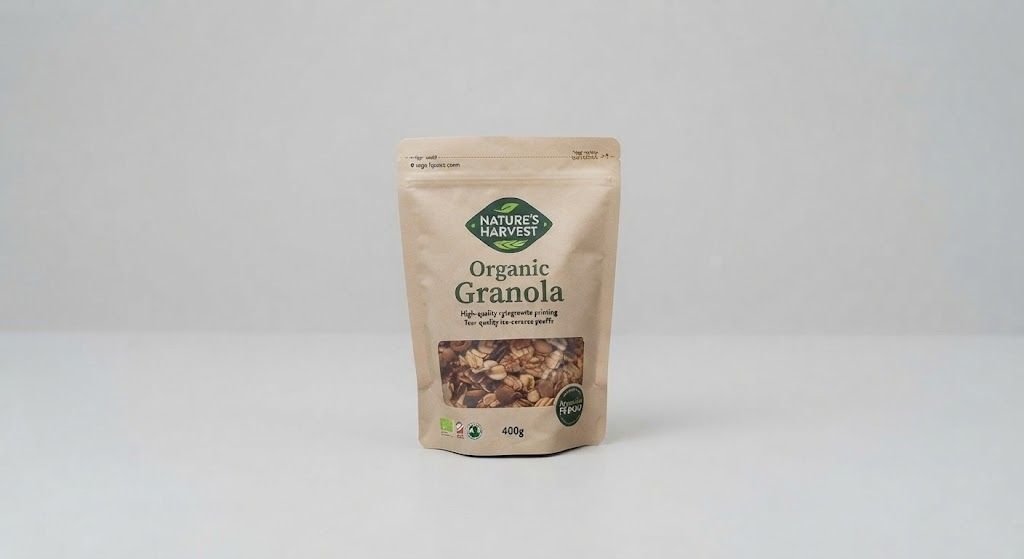
Recyclable flexible packaging could become increasingly important under the PPWR as the European packaging sector moves toward stronger recyclability and sustainability requirements. For businesses supplying packaging to the EU market, this creates a need to look more closely at material structures, product protection, chemical requirements and recycling pathways. Mono-material structures such as PE-based or PP-based designs can provide a useful direction, but their suitability depends on the complete packaging design and applicable PPWR criteria rather than on the material type alone.
Preparing for these requirements at an early stage can help businesses make better packaging decisions and reduce the need for rushed changes later. By combining recyclable design with the required barrier performance, manufacturing compatibility and product protection, companies can develop flexible packaging that meets practical needs while supporting the transition toward a more circular packaging system. As PPWR requirements continue to develop, careful material selection and thoughtful packaging design will become increasingly important for businesses targeting the European market.
Longdapac is one of the leading recyclable flexible packaging suppliers in China. After PPWR, more and more customers are willing to switch from conventional material to recyclable material. The purpose for PPWR is sustainability, and recyclable packaging is the perfect solution of sustainability.
Answer: Recyclable flexible packaging is designed with a material structure that is more suitable for existing or intended recycling processes, while conventional flexible packaging may contain combinations of different polymer types that can make material recovery more difficult. Recyclable structures can use compatible material systems, including mono-material PE or PP designs, depending on the application and required performance. The difference is not simply the appearance or flexibility of the package but how its complete structure is designed for its intended recycling pathway. This means the film, layers and relevant components need to be considered together when evaluating whether the finished package is suitable for recycling.
Answer: No, using a mono-material structure does not automatically make flexible packaging compliant with PPWR. Mono-material construction can support a more suitable approach to material recycling, but PPWR considers the complete packaging design and the requirements that apply to it. The packaging must meet the relevant recyclability conditions, including requirements related to material recycling and the applicable collection, sorting and recycling systems. Other factors can also matter, such as packaging components and restrictions on certain substances. Therefore, businesses should assess the complete packaging structure against the relevant PPWR requirements instead of treating the use of one polymer family as proof of compliance.
Answer: Recyclable flexible packaging is receiving more attention as the EU moves toward stricter packaging requirements that place greater importance on recyclability and resource efficiency. PPWR establishes requirements for packaging placed on the EU market and provides a framework for improving how packaging fits within a circular economy. This makes packaging design increasingly important for companies supplying products to European markets. Businesses may therefore need to review existing packaging structures and consider whether alternative designs can better meet current and future requirements. The growing focus is also encouraging companies to consider recyclability earlier in the packaging development process rather than waiting until a packaging structure is already established.
Answer: Yes, recyclable flexible packaging can be designed to provide the level of product protection required for a particular application. Flexible packaging may need to protect products from moisture, oxygen, light or other external factors depending on the product. Advances in material development have improved the performance of recyclable structures, allowing packaging designers to consider recycling goals alongside protection requirements. However, performance depends on the selected structure and application, so no single recyclable film is suitable for every product. Proper material selection and technical testing are therefore important to ensure that the packaging provides reliable protection while also meeting relevant recycling and regulatory objectives.
Answer: Before switching to recyclable flexible packaging, businesses should review the complete packaging structure and identify the technical requirements of the product and packaging format. Important considerations can include material composition, required barrier properties, seal performance, strength, flexibility, production compatibility and the components used in the finished package. Businesses should also examine the applicable PPWR requirements and obtain reliable technical information from packaging suppliers and converters. Testing should be carried out before large-scale production to confirm that the selected structure performs correctly during packaging operations and product use. A planned evaluation can help businesses choose a recyclable structure that is technically suitable rather than making a change based only on a general recyclability claim.