
Modern industries depend on packaging to protect products, preserve quality and ensure efficient distribution. Packaging is also essential for companies to manage sustainability and environmental responsibility. As industries expand and global supply chains grow, the need for packaging solutions that are both efficient and eco-friendly continues to rise.
Flexible packaging has been a popular choice in many industries because it provides a lightweight design, efficient use of materials and strong protection for a variety of products. Manufacturers in food, personal care, pharmaceutical, and household sectors often rely on flexible packaging to keep products safe during storage and transport.
In this article, we will guide you through why recyclable flexible packaging is becoming the standard in modern industries. We will also explore the differences between conventional and recyclable structures, the role of mono-material technology, advancements in barrier performance, and the main reasons companies are adopting recyclable flexible packaging solutions.
Sustainability has become an important priority for businesses worldwide. Companies are expected to minimize environmental impact and adopt packaging solutions that support long-term environmental goals. As a result, many industries are shifting toward packaging systems that are easier to handle after use.
Flexible packaging already uses less material than many traditional packaging types. Its lightweight design helps reduce transportation weight and lowers overall resource consumption. These advantages make flexible packaging a valuable part of sustainable packaging strategies.
Recyclable flexible packaging enhances these benefits by allowing materials to be recovered and reused after use. This reduces waste and supports a circular packaging system where materials remain useful resources instead of ending up in landfills.
Recyclable flexible packaging has been designed to address the recycling challenges of traditional laminated structures. Instead of combining different types of film, recyclable solutions use layers made from the same material.
This approach is known as mono-material packaging. Although multiple layers may exist, all layers are made from the same material, allowing the packaging to move through recycling systems more efficiently. Such a structure may use PE laminated with another PE layer. Because all layers are made from the same material, the packaging can be processed within polyethylene recycling streams.
Mono-material technology is an important innovation in recyclable flexible packaging. This approach focuses on maintaining strong packaging performance while using layers from a single material family.
Many recyclable flexible packaging structures use polyethylene-based films. In fact, mono-material PE accounts for the majority of recyclable flexible packaging solutions today. A smaller portion of these structures is made from polypropylene.
These materials enable manufacturers to create multiple functional layers while keeping the packaging compatible with recycling processes. This approach allows industries to maintain performance without relying on mixed materials that are difficult to recycle.
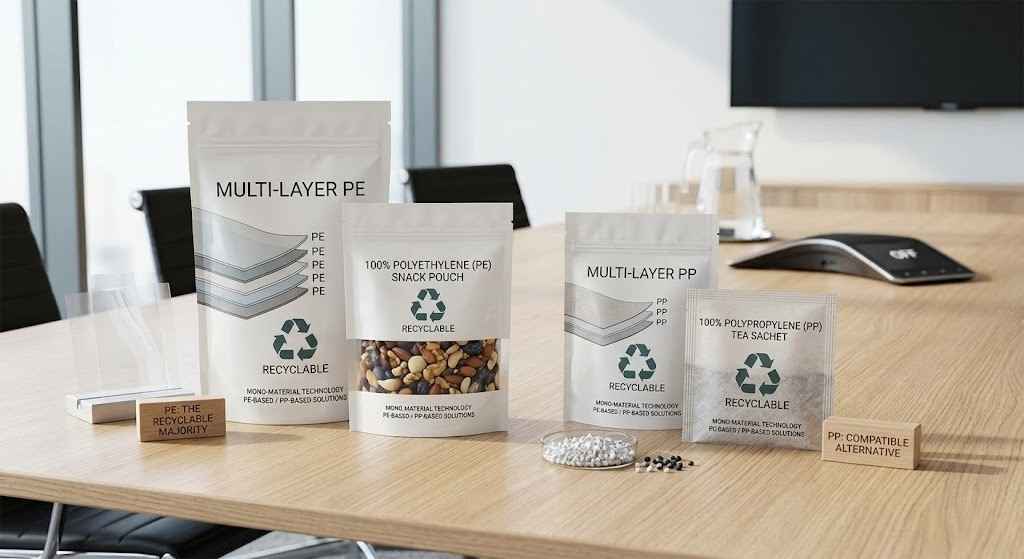
Conventional flexible packaging has been widely used for many years because it provides strong protection and reliable performance. However, its structure often combines different types of laminated films to achieve the necessary barrier properties.
A common case is the combination of PET and PE layers. These films are laminated to create a durable package that protects products from moisture, oxygen and contamination. While this structure performs effectively, it presents a recycling challenge.
Because the packaging contains different materials laminated together, separating them during recycling is difficult. As a result, most conventional flexible packaging cannot be easily recycled.
The development of recyclable packaging has been greatly supported by the use of polyethylene and polypropylene films. These materials provide flexibility, durability and compatibility with recycling systems.
Most recyclable flexible packaging structures are made from mono-material polyethylene. Polyethylene is widely used because it offers excellent flexibility, strong sealing properties and good resistance to moisture.
Polypropylene is also used in recyclable packaging, although it accounts for a smaller share compared to polyethylene. Together, these two materials form the foundation of modern recyclable flexible packaging systems.
The packaging industry has seen clear trends in the materials used for recyclable flexible packaging. Polyethylene-based solutions dominate the market due to their flexibility and ease of processing.
More than ninety percent of recyclable flexible packaging today uses mono-material PE structures. This strong presence demonstrates how widely polyethylene is accepted as a reliable recyclable packaging material.
Polypropylene-based structures make up a smaller portion of the market. They account for roughly ten percent of recyclable flexible packaging solutions but continue to grow as technology advances.
Many companies are considering recyclable flexible packaging as part of their long-term sustainability strategies. The decision to adopt recyclable packaging involves several technical and operational factors.
Businesses typically evaluate the following:
These considerations help companies determine whether recyclable flexible packaging can effectively replace their current packaging systems.
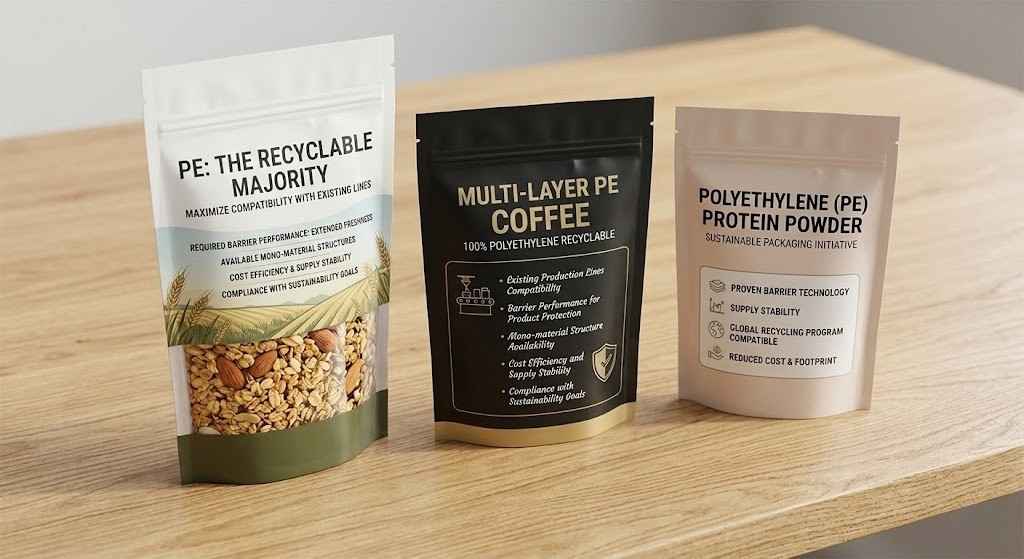
The main difference between conventional flexible packaging and recyclable flexible packaging lies in their material structure. Conventional packaging uses mixed film laminates, while recyclable solutions focus on mono-material designs.
A simple comparison of these two types of structures is shown below.
Feature | Conventional Flexible Packaging | Recyclable Flexible Packaging |
Material Structure | Multiple layers of different films | Multiple layers of the same material |
Composition Type | Mixed film laminate | Mono material laminate |
Recycling Ability | Not compatible with recycling systems | Fully compatible with recycling systems |
Environmental Impact | Limited sustainability benefits | Supports sustainable packaging and circular use |
This difference in structure is the primary reason recyclable flexible packaging is attracting attention in modern industries.
Barrier performance is an important factor in packaging design. Packaging must protect products from moisture, oxygen, and other environmental conditions that could affect product quality and shelf life.
In the past, conventional multi-material laminates offered stronger barrier properties than early recyclable solutions. This made some companies hesitant to adopt mono-material structures.
Recent technological advancements have greatly improved the barrier performance of recyclable flexible packaging. Modern mono-material structures can now meet almost all barrier requirements for a wide range of packaged products.
When recyclable flexible packaging first appeared on the market, it often had higher production costs compared to conventional flexible packaging. This was mainly due to new materials and developing manufacturing processes.
As technology has advanced and production volumes have grown, the cost difference between recyclable and conventional packaging has gradually narrowed. Manufacturers have become more efficient in producing mono-material films and laminates.
The cost of recyclable flexible packaging is now much closer to that of conventional packaging. This improvement makes recyclable solutions more practical for companies across many industries.
Flexible packaging provides several advantages that benefit modern industrial supply chains. Its lightweight design reduces transportation weight and helps lower shipping costs across global distribution networks.
The material also requires less storage space than many rigid packaging formats, allowing manufacturers and retailers to manage inventory more efficiently.
In addition, flexible packaging can be produced in a wide range of shapes and sizes. This versatility enables companies to package many different products while maintaining consistent performance.
Modern industries are increasingly adopting recyclable flexible packaging because it supports sustainability goals and enhances material recovery after use. Many manufacturers are redesigning their packaging structures to reduce waste and follow responsible production practices.
Several industries are already using recyclable flexible packaging for various products, including:
These industries choose recyclable flexible packaging because it helps maintain product protection while improving the environmental profile of their packaging systems.
The demand for recyclable flexible packaging is expected to keep growing as industries strengthen their sustainability commitments. Many companies are already redesigning packaging structures to ensure they are compatible with recycling systems.
Packaging manufacturers are expanding production capabilities to meet the rising demand for mono-material films. This expansion makes recyclable packaging solutions more accessible to businesses than before.
As market demand grows, recyclable flexible packaging is likely to become a standard choice for many consumer and industrial products. Ongoing technological advancements will continue to support this growth.
Packaging design plays a major role in the success of recyclable flexible packaging. A well-designed package must protect products, provide reliable sealing and remain compatible with recycling systems after use.
Design engineers carefully select film thickness, sealing layers and protective coatings when creating recyclable structures. Even though all layers come from the same material family, each layer serves a specific function within the packaging system.
A properly designed mono-material structure maintains strength, flexibility and product protection. This allows manufacturers to replace conventional laminated packaging while still meeting the functional requirements of modern applications.
The production of recyclable flexible packaging involves specialized manufacturing processes. Film extrusion, lamination and sealing technologies are adapted to ensure that all layers remain within the same material family.
Manufacturers often produce polyethylene-based films that provide strength and flexibility. These films are then laminated using compatible materials to maintain the mono-material structure needed for recyclability.
Advanced production techniques allow manufacturers to combine multiple layers of polyethylene while preserving product protection. This process ensures the final packaging remains fully recyclable within polyethylene recycling systems.
Innovation has played a major role in enhancing recyclable flexible packaging. Researchers and packaging engineers continue to develop new film structures that deliver stronger performance while maintaining mono-material compatibility.
Advanced polymer technology enables manufacturers to produce films with improved strength and flexibility. These advancements help recyclable packaging compete with traditional laminated materials that were once considered more reliable. Continuous innovation also improves processing efficiency during production. As technology continues to advance, recyclable flexible packaging solutions will expand across a wider range of product categories.
Recyclable flexible packaging continues to gain attention because it provides several functional benefits while supporting sustainability goals. Companies can maintain packaging efficiency while improving environmental responsibility.
Some major benefits include:
These advantages allow manufacturers to maintain packaging performance while adopting solutions that support long-term environmental strategies.
The packaging industry is moving toward solutions that balance performance with environmental responsibility. Recyclable flexible packaging supports this shift by using efficient mono-material structures that are more compatible with recycling systems.
Unlike conventional laminated packaging, which combines different films and is difficult to recycle, mono-material structures help industries reduce waste and use resources more efficiently. This makes recyclable flexible packaging an important step toward sustainable modern packaging.
Environmental responsibility is one of the strongest motivations for the shift toward recyclable flexible packaging. Industries seek ways to reduce packaging waste and improve material recovery after products are used.
When packaging materials can move through recycling systems, they remain valuable resources instead of becoming permanent waste. This reduces pressure on landfills and supports circular use of materials.
Recyclable flexible packaging supports environmental protection by enabling better waste management and promoting responsible use of packaging materials within modern industrial systems.
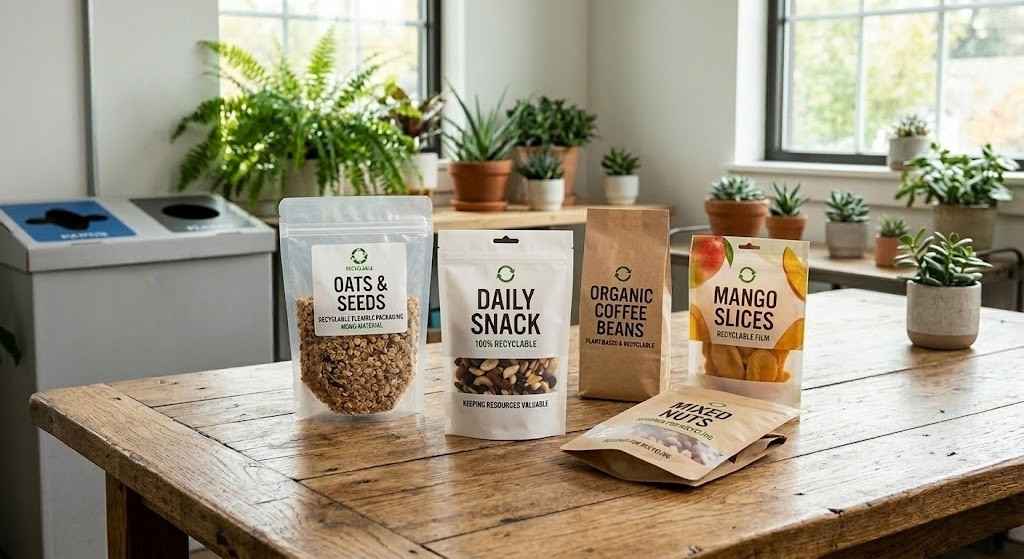
Recyclable flexible packaging is becoming increasingly important in modern industries as companies seek solutions that support sustainability and efficient material management. Conventional flexible packaging often combines different laminated films, making recycling difficult. Recyclable flexible packaging focuses on mono-material structures, where all layers belong to the same material family. Even when multiple layers are used, relying on a single material improves compatibility with recycling systems. Continuous advancements in packaging technology, barrier performance, and manufacturing processes are helping industries adopt recyclable flexible packaging solutions.
When biodegradable and recyclable packaging are both sustainable. Biodegradable packaging quality is not good enough to meet packaging production and barrier needs. So sustainable is the only solution for the sustainable packaging now. Longdapac is the leading recyclable packaging manufacturer in China and we start to work from 2020 on this project. Currently our quality is almost as good as coventional materials.
Answer: Recyclable flexible packaging consists of packaging structures made from mono-material films, allowing the material to be processed more efficiently through recycling systems after use.
Answer: Conventional flexible packaging is typically made by laminating different film materials, which makes it difficult to separate them during recycling.
Answer: Mono-material packaging refers to structures made from a single type of material. While multiple layers may be present, all layers belong to the same material family.
Answer: Polyethylene is the most widely used material for recyclable flexible packaging. Polypropylene is also used in some structures but accounts for a smaller portion.
Answer: Industries are adopting recyclable flexible packaging because it supports sustainability goals, enhances material recovery and helps companies transition to more responsible packaging systems.