
Plastic pollution has become one of the most serious environmental challenges in the modern world. Every year, millions of tons of plastic waste are produced worldwide. A large portion of this waste is not properly recycled or managed. As a result, it builds up in landfills, oceans, rivers and natural environments. This causes long-term damage because plastic takes hundreds of years to decompose. It also harms marine life, disrupts ecosystems and contributes to environmental imbalance on a global scale.
Recyclable flexible packaging is now emerging as a practical and sustainable alternative to help reduce this growing problem. It is made from lightweight materials designed to be recycled after use. Unlike traditional rigid plastic packaging, it uses fewer raw materials while still offering strong protection for products. This makes it both environmentally friendly and functionally efficient. Many industries are now shifting toward this solution because it helps reduce waste and supports the circular use of materials.
In this article, we will explore why recyclable flexible packaging is considered one of the most effective solutions for reducing global plastic pollution. We will also discuss its environmental benefits, material efficiency, importance in industries and long-term impact.
The packaging industry is undergoing a major transformation due to increasing environmental concerns. Companies around the world are shifting away from traditional plastic packaging and adopting more sustainable solutions. This change is driven by environmental responsibility, government regulations and consumer demand.
Recyclable flexible packaging has become an important part of this transformation. It provides a balance between performance and sustainability. Businesses prefer it because it reduces environmental impact while maintaining product safety and quality. This global shift shows that sustainable packaging is no longer an option but a necessity for modern industries.
Another important advantage of flexible packaging is its recyclability. Many modern flexible packaging materials are specifically designed so they can be collected, sorted and processed into new products after use. This makes them more environmentally responsible compared to many traditional packaging options.
This recycling capability plays a key role in reducing the amount of waste that ends up in landfills and oceans. It also supports the development of circular systems where materials are reused repeatedly instead of being discarded after a single use. Such systems help conserve natural resources and reduce environmental pressure.
In addition, improved recycling potential makes this type of packaging a strong and practical solution for long-term environmental sustainability.
The production of recyclable flexible packaging generally requires less energy compared to traditional packaging materials. This leads to a lower carbon footprint during the manufacturing process.
Lower material usage also results in reduced emissions during transportation and storage. Because this type of packaging is lightweight, it helps decrease fuel consumption in logistics operations.
Additionally, these factors together contribute to reducing greenhouse gas emissions and support environmentally friendly and climate-conscious practices.
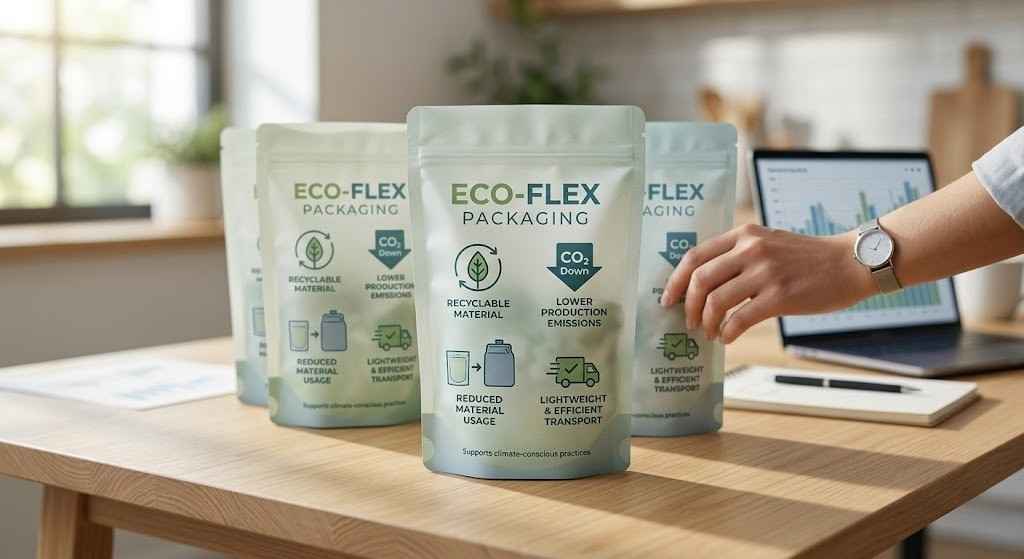
Recyclable flexible packaging is both environmentally friendly and cost efficient. It helps reduce the use of raw materials, which directly lowers production costs.
Its lightweight structure also plays an important role in reducing shipping and transportation expenses. Businesses can deliver larger quantities of products while using less fuel, less space and overall fewer resources.
This strong combination of sustainability and cost efficiency makes it a highly practical and attractive option for companies around the world.
One of the most important benefits of recyclable flexible packaging is its ability to reduce plastic waste at the source. It uses significantly less plastic material compared to rigid packaging options such as bottles, jars and containers.
Because less material is used, the total amount of waste generated after product consumption is also reduced. This helps in lowering the overall environmental burden caused by plastic disposal. Over time, this reduction in waste plays a major role in controlling global plastic pollution.
Modern consumers are becoming increasingly aware of environmental issues and are actively choosing products that use sustainable and recyclable packaging. This growing awareness is influencing buying decisions and shaping market trends across many industries.
As a result, brands are shifting towards recyclable flexible packaging to meet customer expectations. Companies that adopt eco-friendly packaging often strengthen their reputation and build long-term trust and loyalty with their customers.
With environmental awareness continuing to rise worldwide, the demand for sustainable packaging solutions is expected to grow even further in the coming years.
Recyclable flexible packaging is increasingly being adopted across a wide range of industries. The food and beverage sector is among the largest users, followed by cosmetics, pharmaceuticals and household goods.
These industries benefit greatly from its flexibility, durability and eco-friendly nature. It allows them to meet both practical packaging needs and environmental responsibilities without compromising product quality.
Its widespread use highlights its growing importance in modern industrial systems, where efficiency and sustainability are equally valued.
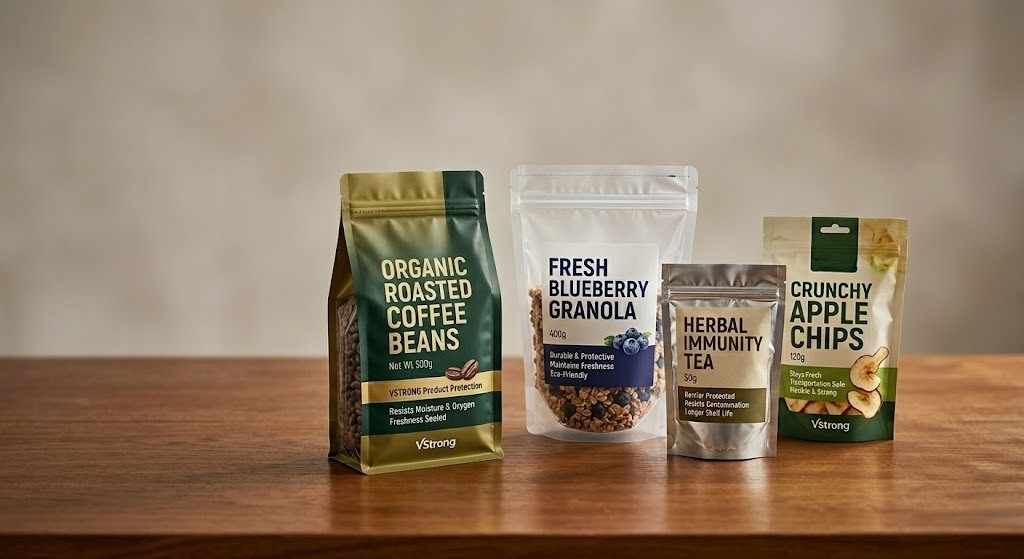
Despite being lightweight, flexible packaging offers strong and reliable protection for products. It helps maintain freshness, reduces the risk of contamination, and supports a longer shelf life, which is essential for food and other sensitive items.
Modern packaging technology has significantly improved its performance, allowing it to resist moisture, oxygen and external damage. This ensures that products stay safe and stable during storage, handling and transportation, even under challenging conditions.
Its unique ability to combine durability with sustainability makes it highly valuable across many industries. It is widely used in sectors such as food, beverages, pharmaceuticals, and consumer goods due to its practical and eco-friendly nature.
One of the most important roles of recyclable flexible packaging is its contribution to a circular economy. In a circular system, materials are continuously reused, recycled and kept in circulation for as long as possible instead of being discarded after a single use.
This approach reduces the demand for new raw materials and significantly lowers waste generation. It also supports a more efficient and sustainable production cycle, where resources are managed in a responsible and balanced way. By encouraging recycling and reuse, flexible packaging plays a crucial role in building a cleaner and more sustainable future for upcoming generations.
The packaging industry has undergone significant changes due to continuous advancements in material science and engineering. Recyclable flexible packaging is one of the key results of this progress. Modern manufacturing methods now enable companies to create packaging that is thinner, stronger and more efficient compared to traditional alternatives.
Advanced production technologies make it possible to combine multiple material layers in a way that enhances durability while maintaining a lightweight structure. These improvements help ensure that products stay well protected during storage and transportation without adding extra environmental impact.
Another major advancement is the use of smart manufacturing systems that help reduce material waste during production. This leads to less scrap generation, which further supports sustainability objectives. Innovation in this sector is not only improving overall performance but also making recycling simpler and more effective in the long term.
Landfills are becoming increasingly overloaded in many parts of the world due to the continuous rise in waste generation, especially plastic waste. Conventional packaging materials often take decades or even centuries to break down, which results in serious long-term environmental harm.
Recyclable flexible packaging helps ease this pressure by reducing the amount of waste that ends up in landfill sites. Since it is designed for recycling, a large portion of this material can be recovered and reused instead of being permanently discarded.
This reduced dependence on landfills also contributes to better land quality and lowers the release of harmful gases produced during waste decomposition. Over time, it supports healthier soil conditions and promotes more sustainable land management practices.
One of the most serious impacts of plastic pollution is its damage to oceans and other water bodies. Every year, millions of marine animals are harmed because plastic waste enters aquatic ecosystems.
Recyclable flexible packaging helps reduce this problem by lowering overall plastic consumption and promoting effective recycling systems. When less plastic waste is produced, the likelihood of it reaching oceans and rivers decreases significantly.
This also supports the protection of marine life by reducing the risk of ingestion and limiting disruption to natural habitats of aquatic species. Cleaner water systems help maintain ecological balance and contribute to the preservation of biodiversity in marine environments.
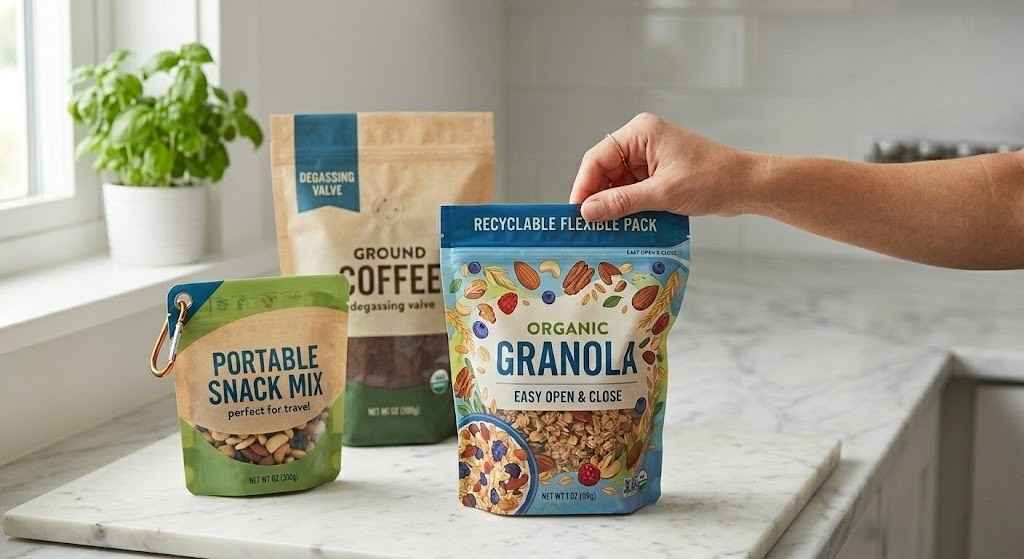
Modern consumers prefer packaging that is easy to handle and convenient for everyday use. Recyclable flexible packaging effectively meets these expectations.
It is lightweight, easy to carry and simple to open, making it suitable for a wide range of products. Many food and beverage items now use flexible packaging because it enhances the overall user experience. Its portability also makes it well suited for travel friendly products. Consumers find it more practical compared to bulky and rigid packaging options, which contributes to its increasing popularity.
Storage efficiency plays an important role for businesses involved in large-scale production and distribution. Recyclable flexible packaging offers a clear advantage in this area due to its lightweight and compact design.
It requires less warehouse space compared to rigid packaging, which allows companies to store a greater number of products within the same area. This improves inventory management and helps reduce overall storage costs.
In logistics operations, lighter packaging also reduces transportation weight, which enhances fuel efficiency and lowers shipping expenses. These combined advantages make supply chain processes more efficient while also supporting environmental sustainability.
Many businesses today are actively working to reduce their environmental impact. Recyclable flexible packaging plays an important role in helping companies achieve their sustainability goals.
By using less material and improving recyclability, companies can significantly lower their environmental footprint. This supports environmental reporting requirements and strengthens corporate responsibility initiatives.
It also improves brand reputation, as customers increasingly prefer environmentally conscious companies. As a result, sustainable packaging has become a crucial part of modern business strategies.
The demand for sustainable packaging solutions is expected to increase rapidly in the coming years. Governments are introducing stricter regulations on plastic usage, while consumers are also demanding more environmentally friendly alternatives.
Recyclable flexible packaging is likely to play an important role in this future transformation. Ongoing research and innovation will continue to enhance its recyclability, strength and environmental performance.
As industries shift toward more circular systems, flexible packaging will become an essential part of global sustainability efforts.
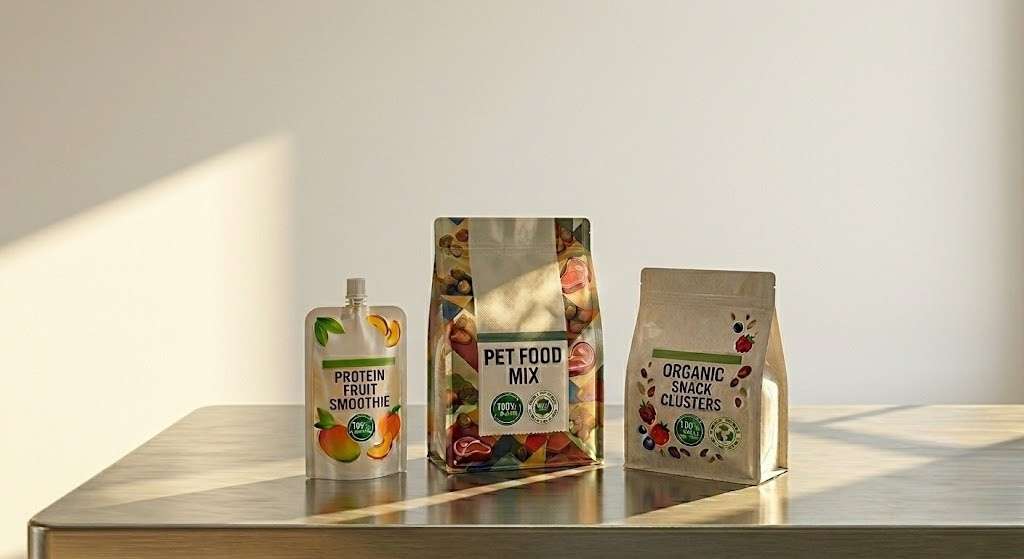
Recyclable flexible packaging has become an important solution for reducing global plastic pollution. It provides a practical balance between functionality and environmental responsibility by using fewer raw materials, producing less waste, and supporting recycling systems. Its lightweight structure, energy efficiency and reduced carbon footprint make it a strong alternative to traditional packaging methods that significantly contribute to environmental damage.
In the long term, the adoption of recyclable flexible packaging can significantly support global sustainability goals. It helps industries shift toward more responsible production practices while also meeting consumer demand for eco-friendly products. As recycling systems improve and awareness grows, this type of packaging will play an even greater role in creating a cleaner, healthier and more sustainable future for the world.
LongdaPac is one of the leading recyclable flexible packaging suppliers in China.
Currently we shipped more than 50,000 tons of recyclable packaging all over the world so far. And the it is obviously that the quantity is keep growing up. This will prove that recyclable is one of the best way for sustainable market.
Answer: Recyclable flexible packaging is a type of packaging made from lightweight materials that can be reused or processed into new products after use. It is designed to reduce waste and support sustainability.
Answer: It helps reduce plastic pollution by using fewer raw materials, producing less waste, and supporting recycling systems that prevent plastic from ending up in landfills and oceans.
Answer: Yes, it is designed to be durable and protective. It helps protect products from moisture, air, and contamination while remaining lightweight and eco-friendly.
Answer: Companies prefer it because it reduces production and transportation costs, improves efficiency, and supports their environmental and sustainability goals.
Answer: Not all flexible packaging is recyclable. However, modern advancements are increasing the availability of recyclable options and industries are working to improve recycling compatibility.